
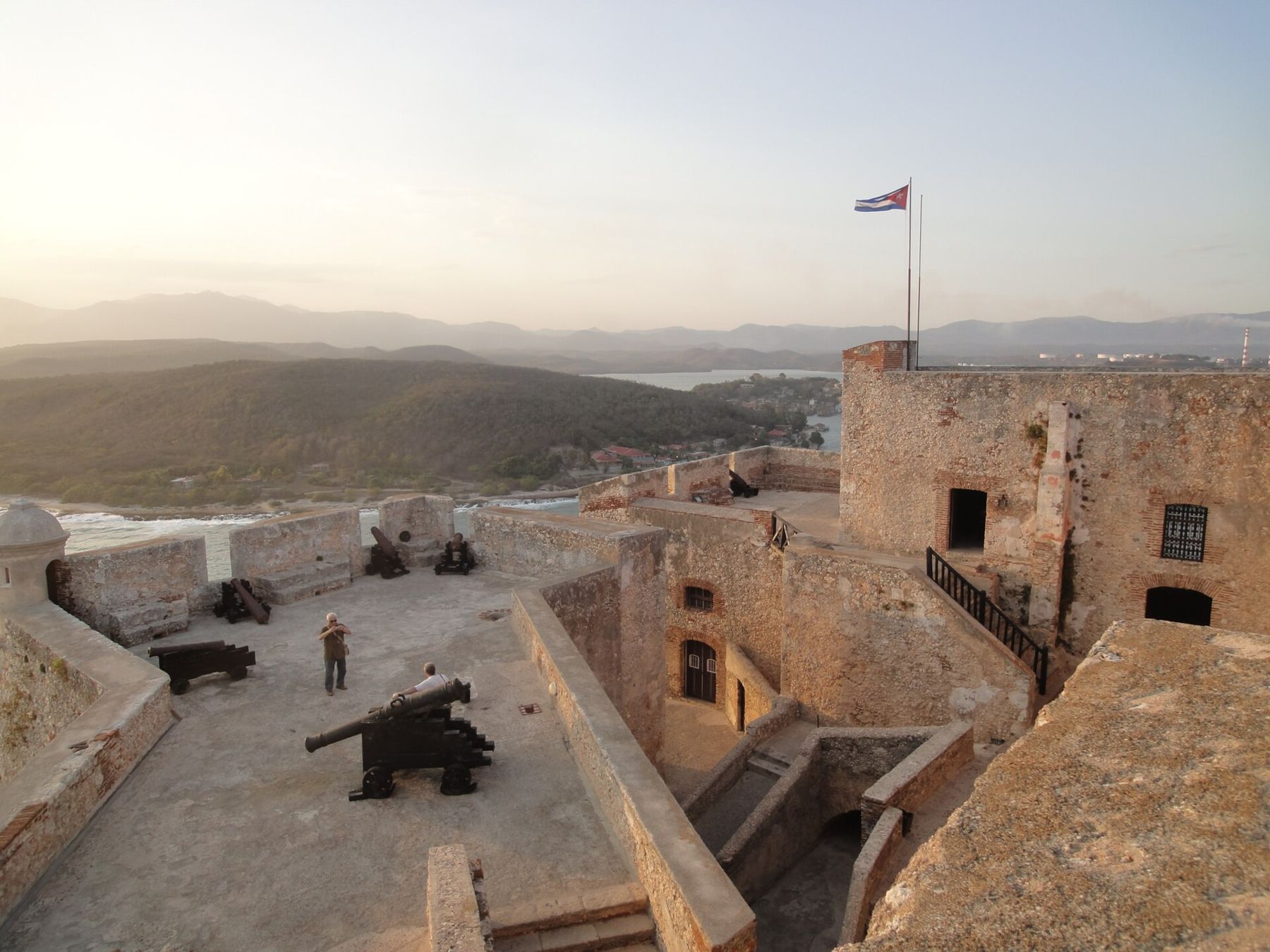
Santiago de Cuba lies at the far eastern end of the island, on a deep bay ringed by the mountains of the Sierra Maestra. It is Cuba's second city, founded by the Spanish in 1515, and for a few decades it was the island's first capital before power moved to Havana. Its position, closer to Haiti, Jamaica and the rest of the Caribbean than to Havana, has shaped its people, its music and its temperament.
The city climbs steeply from the waterfront, and its streets are lined with balconied houses, small squares and long stairways. It is hot almost all year and busier and louder than the towns of the centre. Give it time; Santiago is not a place to rush through in a day.
The hills make walking hard work. Taxis and motorcycle taxis cover longer distances, and many streets climb by steps rather than pavements.
Parque Céspedes and the old centre
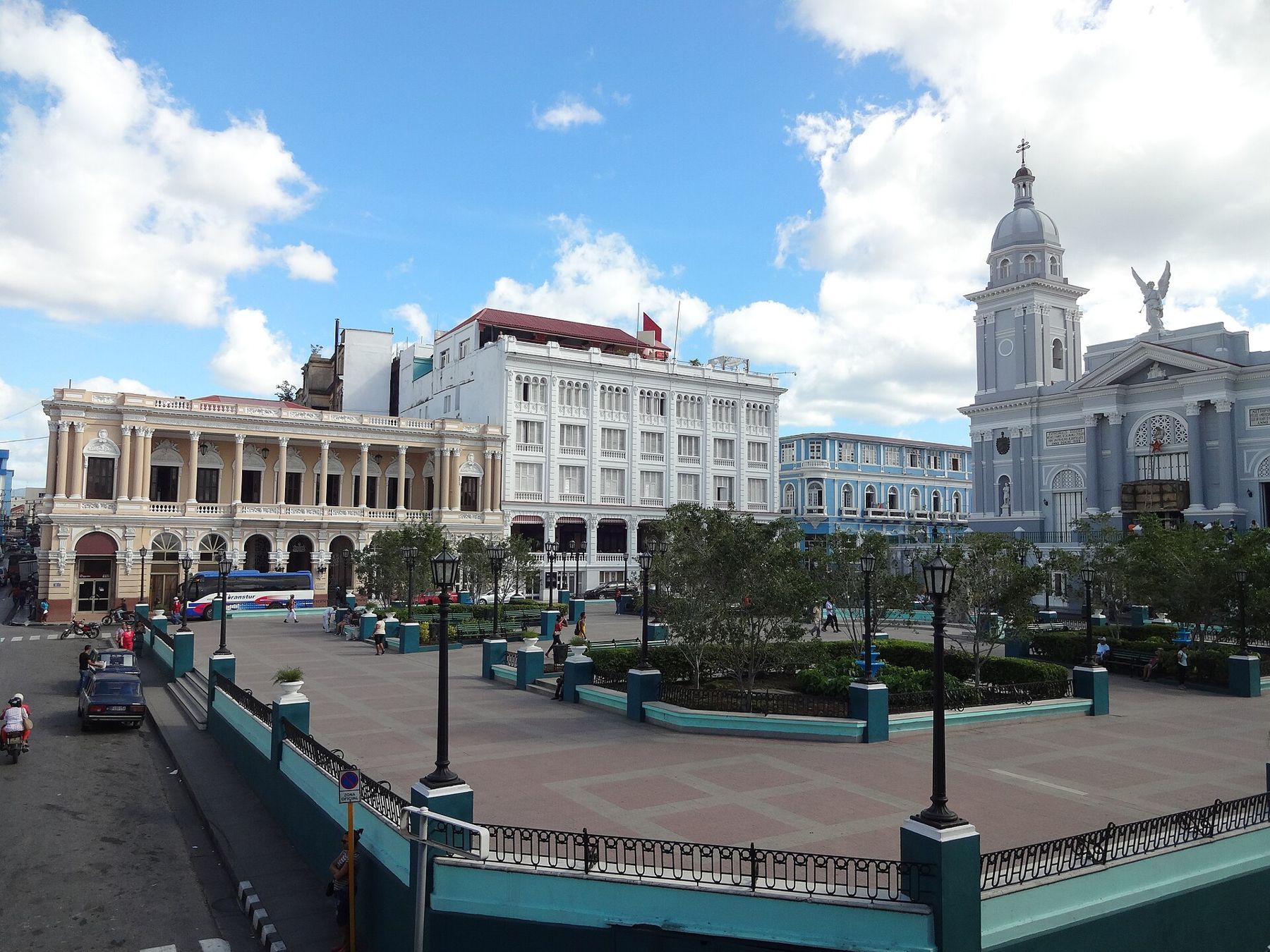
The centre of the old city is Parque Céspedes, named after Carlos Manuel de Céspedes, the landowner who freed the people he enslaved and began the first war of independence in 1868. Around the square stand the cathedral, with its two towers and an angel over the door, the town hall, and a house said to be one of the oldest in Cuba, the residence of the conqueror Diego Velázquez, now a museum of colonial furniture and decoration.
i
Photograph by Z thomas, CC BY-SA 4.0From the balcony of the town hall, Fidel Castro spoke to the city on 1 January 1959, the day the revolutionary government took power. The square is the city's living room, full day and night, and a good place to sit and watch. Expect to be approached by people offering everything from guided walks to cigars; a firm but friendly refusal works.
Walk downhill towards the bay along the old streets, or uphill to the steep stairway of Calle Padre Pico for views over the rooftops. Calle Heredia, near the square, is known for music and cultural centres.
The Moncada barracks and the road to 1959
On 26 July 1953, a group of young rebels led by Fidel Castro attacked the Moncada barracks, then the second-largest military base in the country. The attack failed, many of the attackers were killed or captured, and Castro was put on trial. But the date gave its name to the movement that took power five and a half years later. Today the yellow building is a school, and part of it is a museum about the attack, with the bullet marks on the façade restored. The story is told from the official point of view.
The city played a large part in the war that followed, and it was here that the revolutionary government was first proclaimed. The city had already seen one war end. In 1898 Santiago was the scene of the final battles of the Spanish-American War: United States troops fought their way onto the hills east of the city, including San Juan Hill, and on 3 July the Spanish fleet was destroyed as it tried to leave the bay. The city surrendered soon after, and Spanish rule in Cuba came to an end.
For the decisive battle of the 1950s war, in the centre of the island, see Santa Clara.
Santa Ifigenia, the cemetery of the nation
Santa Ifigenia Cemetery, on the western side of the city, holds many of the figures of Cuban history. The largest monument is the mausoleum of José Martí, the poet and leader of the independence movement, killed in battle in 1895, where an honour guard changes at regular intervals through the day. Nearby lie Carlos Manuel de Céspedes and Mariana Grajales, mother of the independence general Antonio Maceo. Since 2016 the ashes of Fidel Castro have rested in a large granite boulder close to Martí's tomb.
Santiago is not a place to rush through in a day.
The cemetery also holds musicians, writers and families from every period of the city's life, with marble tombs, simple graves and sculpture. Musicians buried here include Compay Segundo, who was still playing son in his nineties. Dress respectfully and go in the morning, when it is cooler.
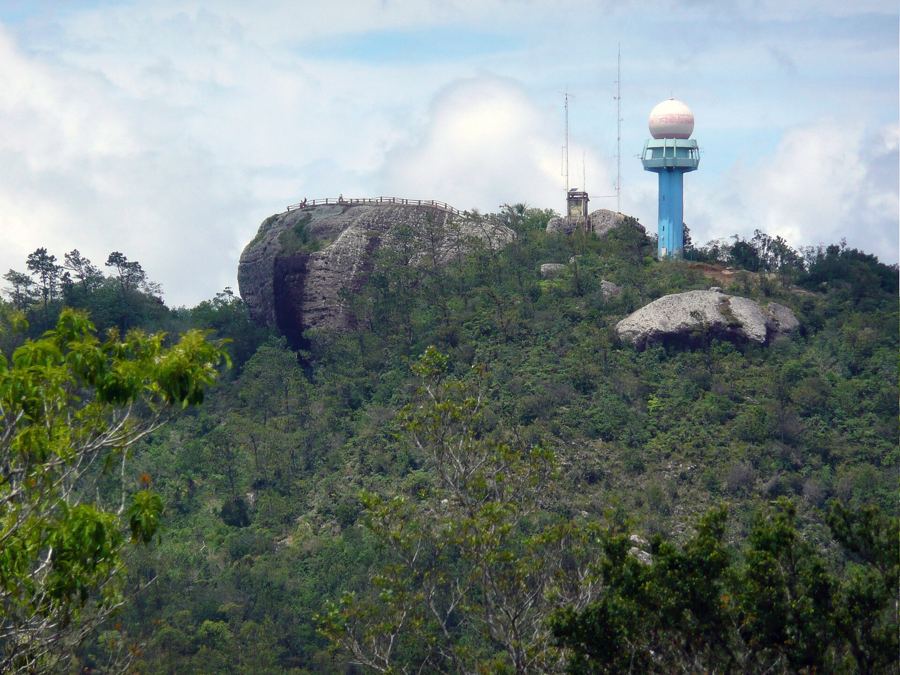 Further along · The eastEl Cobre's basilica and the Gran Piedra
El Morro, the castle on the bay
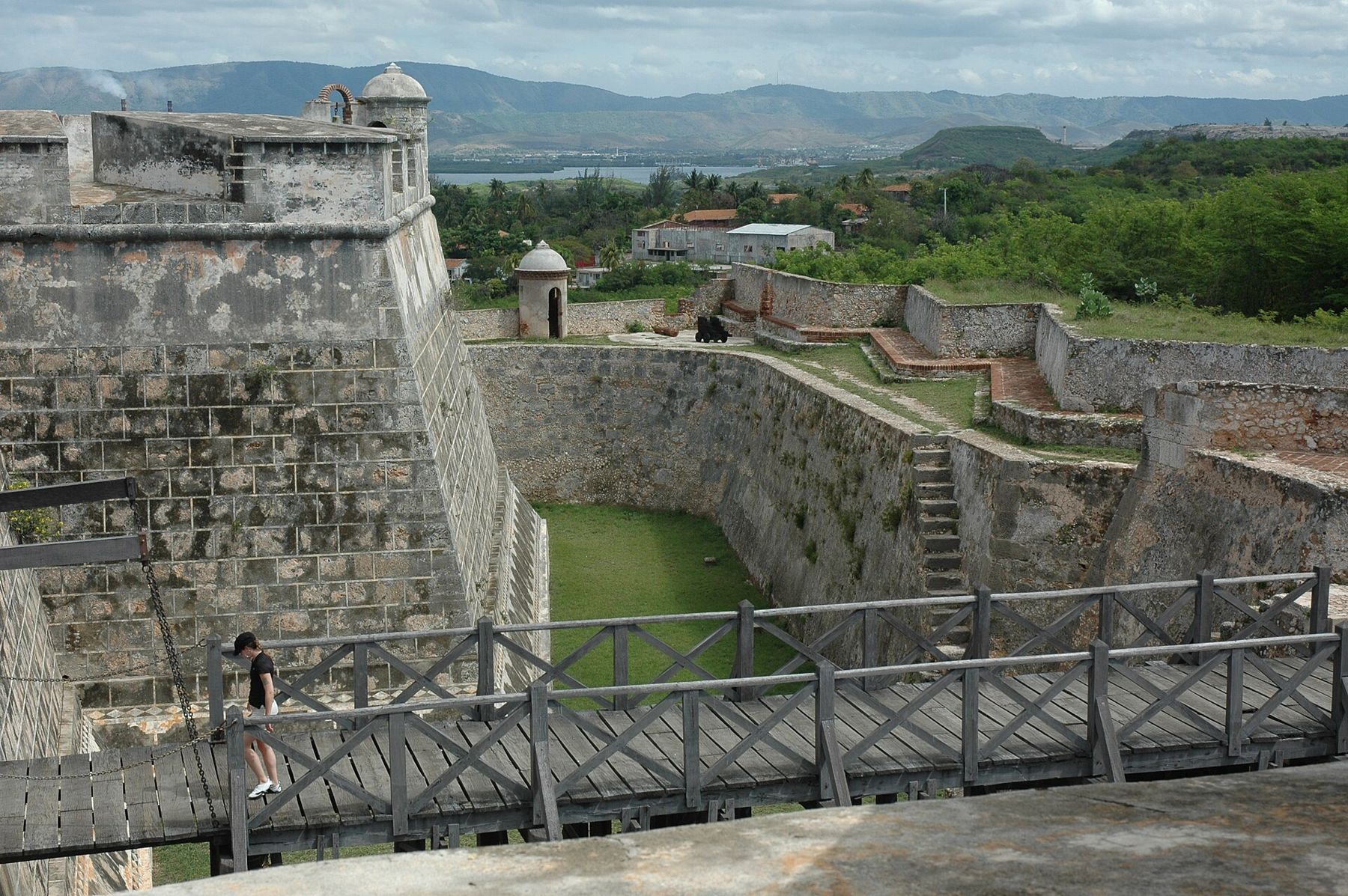
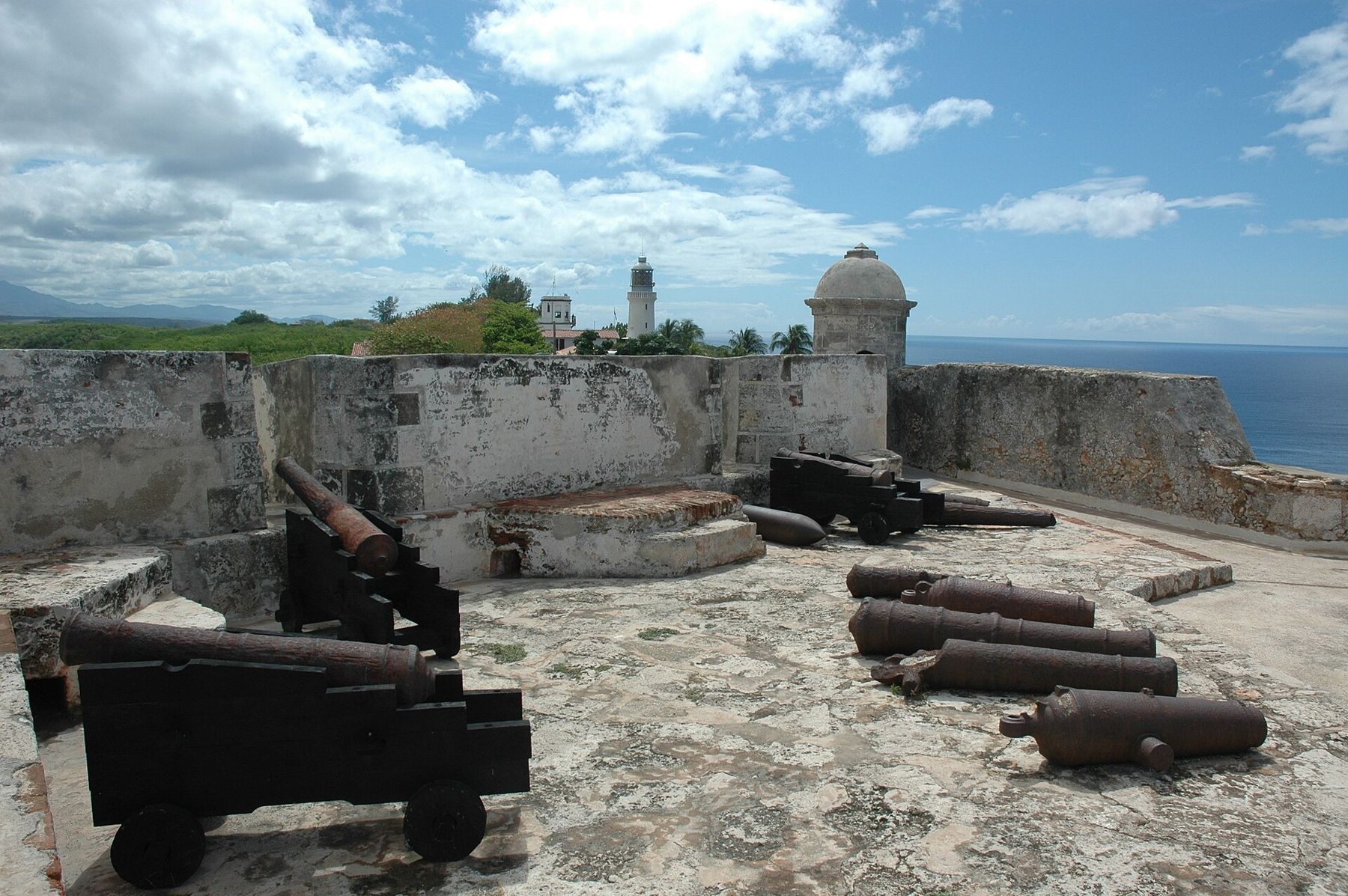
At the mouth of the bay, about ten kilometres south of the centre, the Castillo de San Pedro de la Roca, known as El Morro, rises in terraces up a cliff above the Caribbean. It was designed in the seventeenth century by the Italian engineer Giovanni Battista Antonelli to defend the city against pirates and rival powers, and it was rebuilt several times. UNESCO listed it as a World Heritage site in 1997 as one of the most complete examples of Spanish military architecture in the Americas.
i
Photograph by Ron Van Oers, CC BY-SA 3.0 igoInside you walk across drawbridges and through stone rooms to gun platforms with old cannon and a view along the coast. A lighthouse stands on the headland beside it. Allow a couple of hours for the visit and the views. The castle houses a museum about piracy in the Caribbean, and in the evening a ceremonial cannon is fired at sunset on some days; ask locally. The road out passes the shore of the bay, and a small ferry crosses to the island of Cayo Granma, a fishing settlement in the bay.
i
Photograph by Ron Van Oers, CC BY-SA 3.0 igo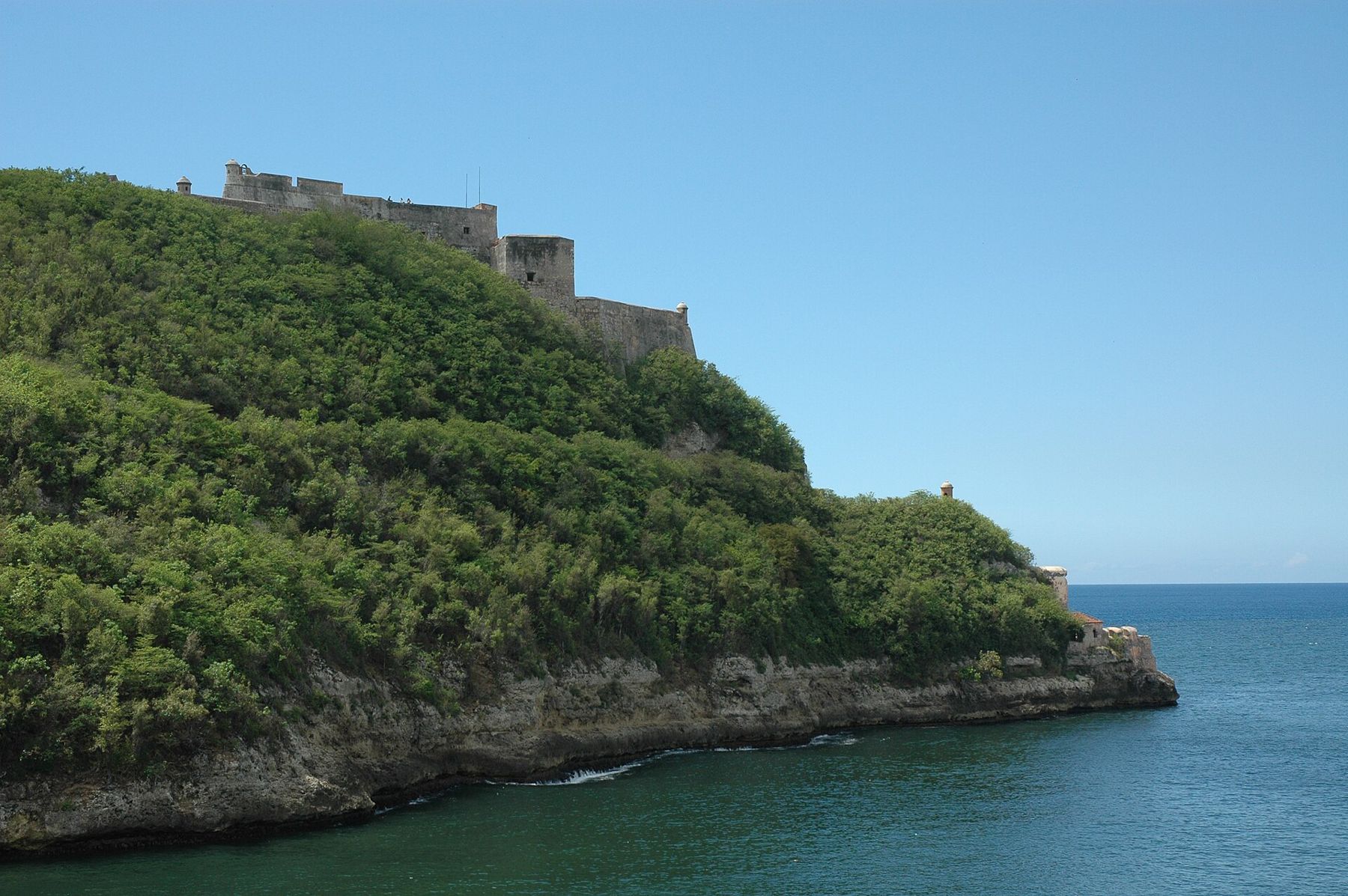
i
Photograph by Ron Van Oers, CC BY-SA 3.0 igoMusic and carnival
Santiago is one of the homes of son, the music that blends Spanish guitar and song with African rhythm and that grew in the countryside of eastern Cuba before it spread to Havana and the world. The city also has a strong tradition of trova, songs of love and politics sung to guitar. You will hear both in cultural centres, on the street and from open windows. The influence of French and Haitian settlers who arrived after the Haitian Revolution survives too, in dance and in drumming traditions.
In July the city holds its carnival, the most famous in Cuba, with parades, music groups from each neighbourhood, and dancing in the streets late into the night. Dates and scale vary from year to year, partly with the economy, so check before you plan a trip around it. Outside July, the city's music is easiest to find at weekends, and a museum on Calle Heredia shows carnival costumes, masks and instruments.
Santiago is the base for the east. The basilica of El Cobre and the Gran Piedra are a day out; Baracoa is a long drive further east. The tourist bus network and the main railway line reach the city from Havana; see getting around the island.