

Money and connectivity are the two things most likely to trip up an independent traveller in Cuba. The country has its own systems for currency, banking and telecommunications, shaped by decades of economic crisis, a long-running US embargo and frequent reforms. What worked for a friend a year ago may not work now. This guide gives the general picture; check every detail with up-to-date official sources before you go.
The Cuban peso and cash
For many years Cuba had two currencies, the Cuban peso for locals and a convertible peso for visitors and imported goods. In 2021 the convertible peso was abolished, and the Cuban peso became the single official currency. Since then, prices have risen fast, and the economy has shifted towards foreign currency in many areas, with some state shops and services accepting only payment in foreign currencies or by card.
In practice, cash is still essential. Many travellers bring cash in a widely traded foreign currency, in good condition and in small denominations, and change it as they go. Which currency is easiest to use or change has varied over time, so check before you travel. Carry it in more than one place, and never show large amounts in public. Torn, marked or very worn notes are often refused, so bring clean ones, and foreign coins are usually impossible to change.
Work out a rough daily budget before you leave and bring a margin on top, because getting more money once you are in Cuba can be slow, costly or impossible.
Official and informal rates
There is an official exchange rate, offered at banks, airports and state exchange houses, and there is an informal rate used on the street and in much of the private economy. For years the informal rate has been far from the official one, and it moves with the economy. You will hear about it from hosts, drivers and other travellers. Changing money outside official channels carries risks, including fake notes and scams, and the rules on it change, so know what is allowed before you act.
Prices in private restaurants and guesthouses are often set in foreign currency, or in pesos at the informal rate. Ask what currency a price is in before you agree, and keep small notes for taxis, tips and street food.
Cards and banks
Cards issued by US banks generally do not work in Cuba, whether credit or debit, because of US restrictions. This applies to US-issued cards even when the holder is not a US citizen. Cards from banks in other countries sometimes work at cash machines and in larger hotels and state shops, but not everywhere, and acceptance varies with the card network and the issuing bank. Check with your bank before you go, and tell it where you are travelling.
 Further along · The craftEating at Cuban tables
i
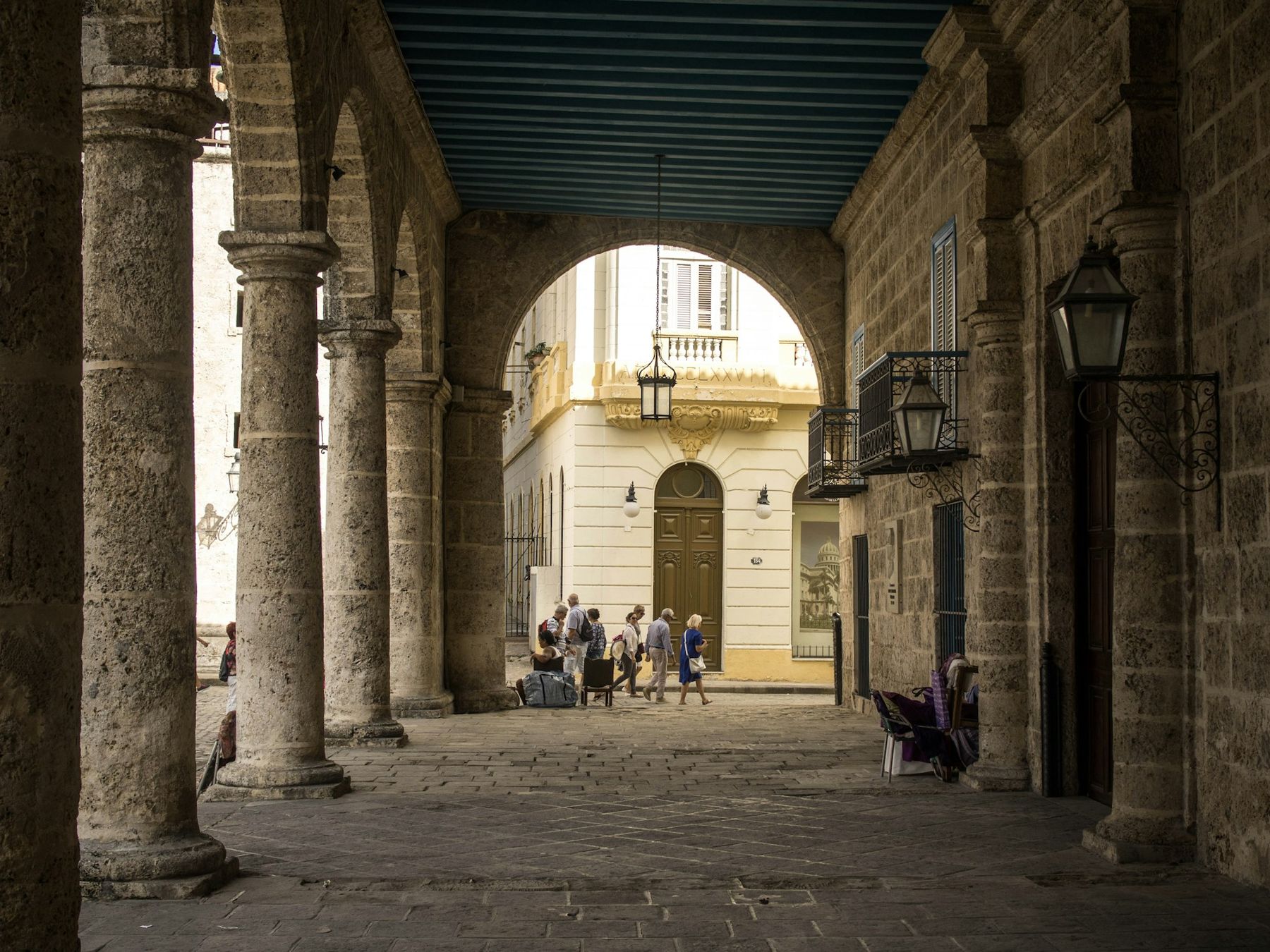
Photograph by Kieran, Unsplash LicenseCash machines exist in the bigger cities but may be empty, out of order or affected by power cuts. Never rely on one card or one machine. Bank and exchange offices often have long queues, so allow time and bring your passport. In practice, budget as though you will pay cash for nearly everything. Some travellers use prepaid cards or transfer schemes set up for Cuba; these come and go and their rules change, so research them carefully before relying on one.
Wi-Fi and mobile data
Internet access in Cuba has grown fast in the last decade. Public Wi-Fi zones appeared in parks and squares from 2015, and mobile data on phones arrived at the end of 2018. Today many people are online through their phones, and many guesthouses offer some kind of connection. Speeds vary from usable to very slow, and connections drop during power cuts. Public Wi-Fi zones are easy to spot in the evening: look for people sitting with their phones in a park or along a seafront. Voice and video calls over the internet generally work when the signal is strong enough, but expect them to freeze.
Visitors can usually buy a local SIM card or a tourist plan from the state telecom company, with passport, at its offices or at the airport, or buy access cards for public Wi-Fi. Some foreign phone plans include roaming in Cuba, often at a high cost. Some websites and apps may not work, depending on their own restrictions or on Cuban ones. Check what works before you land.
Staying connected with ease
Download offline maps, translation tools and copies of your bookings, tickets and insurance documents before you arrive. Expect to be offline for long stretches, especially in rural areas such as Baracoa or the mountains, and let people at home know that silence is normal. Blackouts affect phone charging as well as the internet, so a charged power bank helps. Write important addresses and phone numbers on paper too, including your accommodation and your embassy.
Plan practical things, like transport bookings, before you need them; see getting around the island. And keep a little cash and patience in reserve for the moments when nothing works.
Rules that change
Rules on how much currency you may bring in or take out, on what you may import, and on entry requirements for visitors exist and change from time to time. They also differ depending on your nationality and where you are travelling from. Before you book, and again before you leave, check your own government's current official travel guidance and Cuba's official entry information. This guide gives no advice on those rules; it only tells you they matter.