
Cienfuegos sits on the southern coast of central Cuba, on the shore of a large, almost enclosed bay. It is younger than most Cuban colonial towns, more orderly in its layout, and less crowded than Trinidad, its neighbour to the east. The town's broad streets, neoclassical facades and long seafront give it an air of calm prosperity, and its people call it the Perla del Sur, the Pearl of the South.
In 2005 UNESCO listed its historic centre as a World Heritage Site, as an outstanding example of nineteenth-century Spanish colonial town planning influenced by new ideas of modernity and order.
A French foundation
The town was founded in 1819 by a group of French settlers led by Louis de Clouet. Many came from Bordeaux, others from Louisiana, which had recently been sold by France to the United States. The Spanish colonial authorities encouraged white Catholic settlers to come to Cuba at the time, offering them land in sparsely populated regions. The new settlement was first named Fernandina de Jagua and was later renamed in honour of the Spanish governor of Cuba, José Cienfuegos.
The bay itself explains the choice of site. The Bahía de Cienfuegos is large and deep, with a narrow entrance that made it easy to defend, and in earlier centuries it had been a haunt of smugglers and pirates. The Spanish had already built a fort at its mouth in the eighteenth century, long before the town existed, to keep them out.
The settlers laid out the town on a strict grid of straight streets and regular blocks, unusual among the twisting colonial towns of Cuba. Through the nineteenth century, Cienfuegos grew rich on the sugar and coffee produced on the surrounding plains, worked by enslaved Africans and later by contracted labourers, and shipped from its port. Merchants and planters built themselves grand houses and public buildings in a mix of styles, giving the town its eclectic, elegant look.
Parque José Martí
The heart of Cienfuegos is the Parque José Martí, the main square, laid out on the spot where the town was founded. A star set into the ground near the centre marks the founding point. The park is shaded by trees, lined with benches and centred on a statue of José Martí, the writer and hero of Cuban independence, guarded by marble lions. A small triumphal arch on one side celebrates the founding of the Cuban republic in 1902.
i
Photograph by Burkhard Mücke, CC BY-SA 4.0Around the square stand the town's most important buildings. The Catedral de la Purísima Concepción, with its two towers and stained-glass windows, faces the park, as does the former government palace with its dome. On a corner, the Palacio Ferrer, an early twentieth-century mansion with a rooftop lookout tower, is now a cultural centre; its tower gives a fine view over the rooftops to the bay when it is open. The square comes alive in the evening, when families stroll and children play.
Walk the streets around the park and the grid makes navigation easy. The pedestrian stretch of Calle San Fernando, known locally as the Bulevar, runs from the park towards the Prado and is the town's main shopping street. The side streets are lined with single-storey houses fronted by columns and tall iron-barred windows, their facades painted in pale blues, yellows and greens. Many have been restored since the UNESCO listing; others wait their turn.
 Further along · The centreThe Zapata swamp and the Bay of Pigs
The Tomás Terry theatre
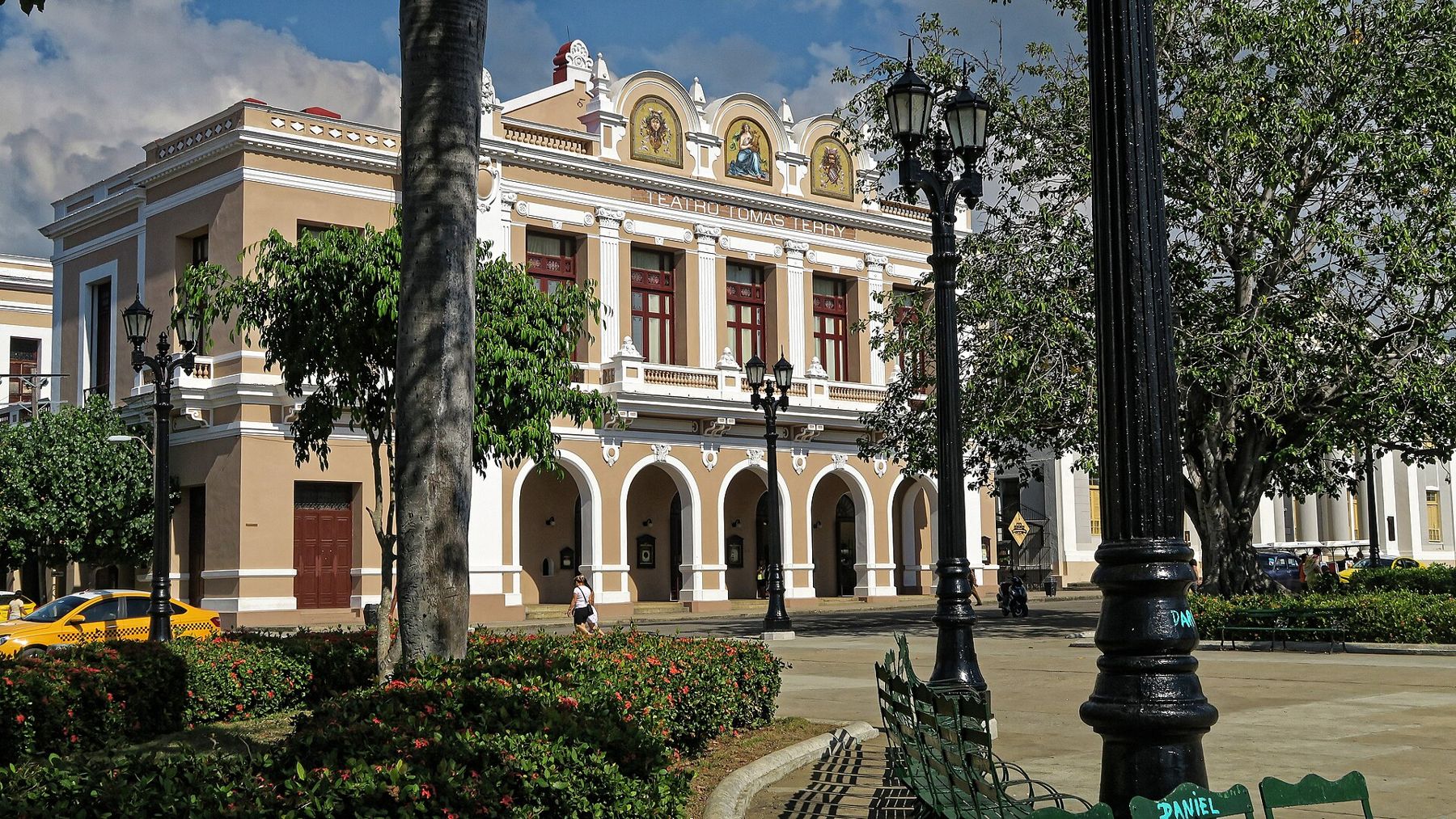
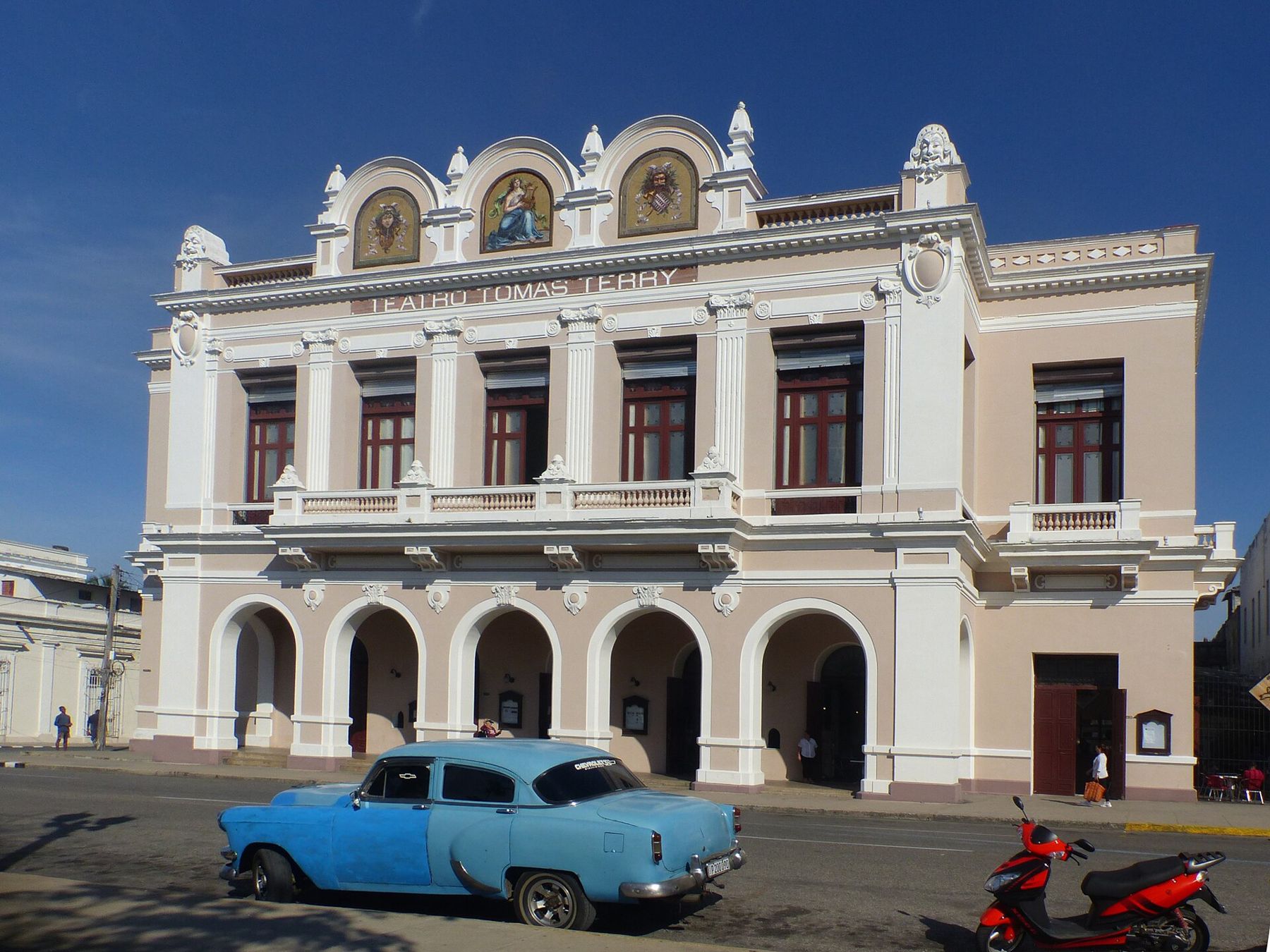
On the north side of the park stands the Teatro Tomás Terry, the town's pride. It was built in the late 1880s with funds left by Tomás Terry, a Venezuelan-born sugar magnate who had made a fortune in Cienfuegos, and opened in 1890. The facade is decorated with gold mosaics, and inside, a horseshoe-shaped auditorium of wood and plaster rises in tiers of boxes and balconies under a painted ceiling.
i
Photograph by Wolfgang Sauber, CC BY-SA 4.0Over the years the theatre has hosted opera, ballet, drama and concerts, including some of the great performers of the early twentieth century. It still stages performances, and when there is nothing on, it is often possible to look inside for a small fee. Check the programme and opening times at the door.
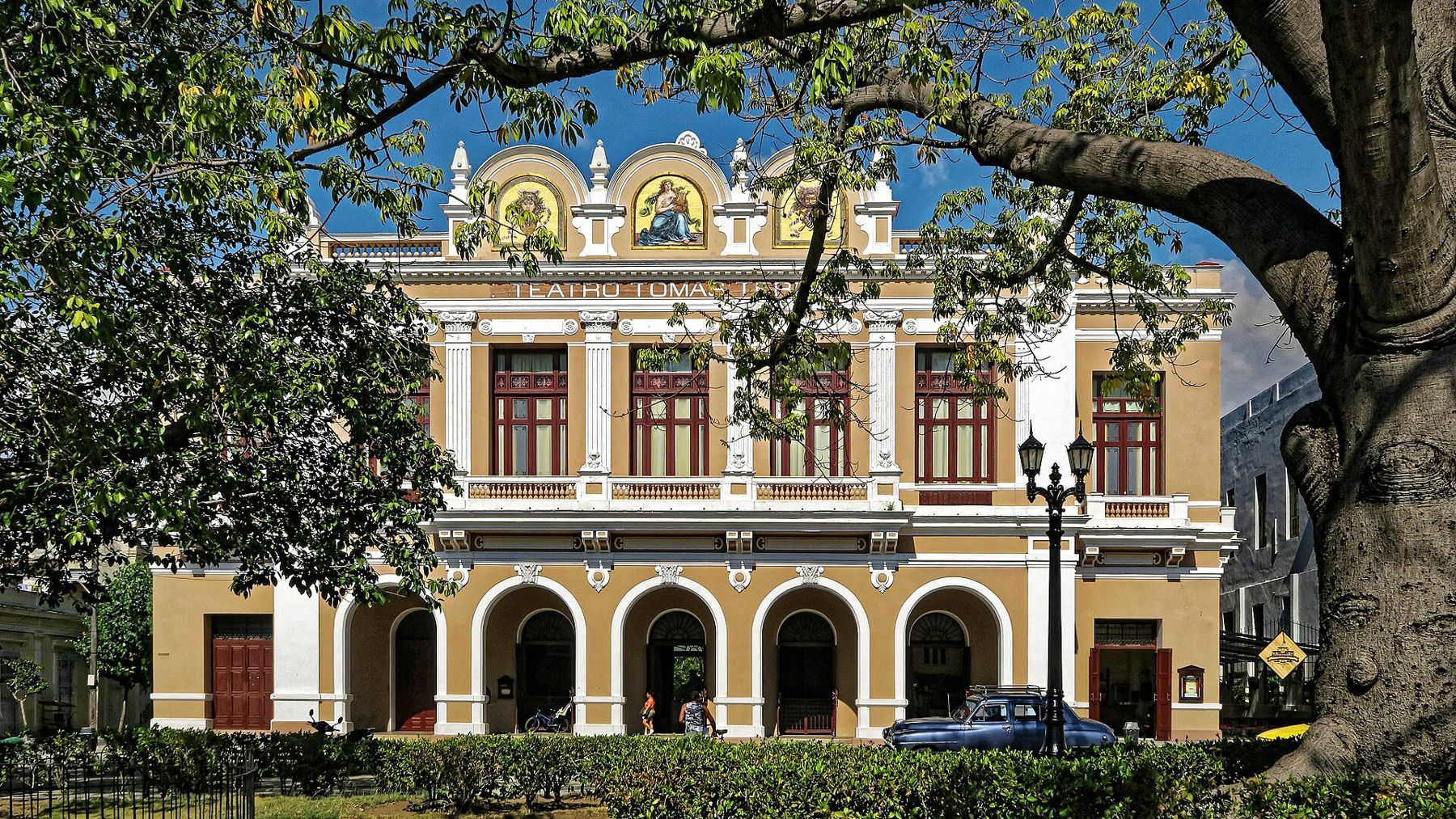
i
Photograph by Burkhard Mücke, CC BY-SA 4.0The Prado and Punta Gorda
Cienfuegos is also proud of its music. Benny Moré, one of the best-loved Cuban singers of the twentieth century, was born in Santa Isabel de las Lajas, a small town in the province, and the city remembers him with a statue on the Prado. You will hear his songs from open windows and passing cars.
From the centre, the Paseo del Prado, a wide avenue with a central promenade, runs south towards the bay. It continues as the Malecón, a seafront drive along the water. Walking the Prado in the late afternoon, with people sitting on its benches and the light softening, is one of the simplest pleasures of the town.
At the southern end, the avenue runs out onto Punta Gorda, a narrow peninsula that pushes into the bay. In the early twentieth century, wealthy families built villas here in a variety of styles, many of wood with wide verandas. Today it is quiet and residential, and the views across the bay at sunset are lovely.
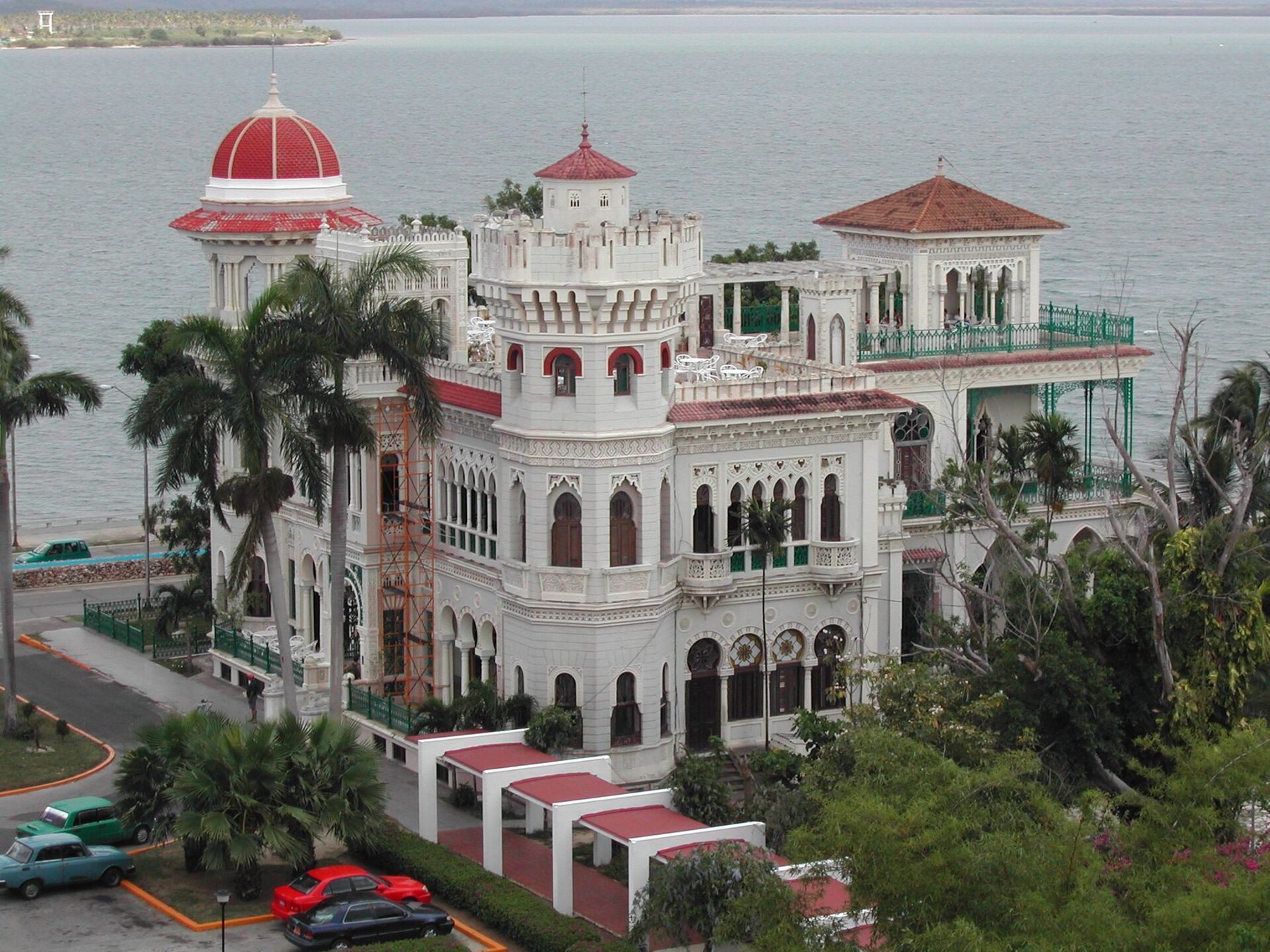
The most extraordinary building on Punta Gorda is the Palacio de Valle, built between 1913 and 1917 for a wealthy merchant, Acisclo del Valle. It mixes styles with joyful abandon: Moorish arches and tilework, Gothic battlements, Venetian details and three towers, each different. Part of it is used for dining, and its rooftop terrace, when open, gives a wide view over the bay.
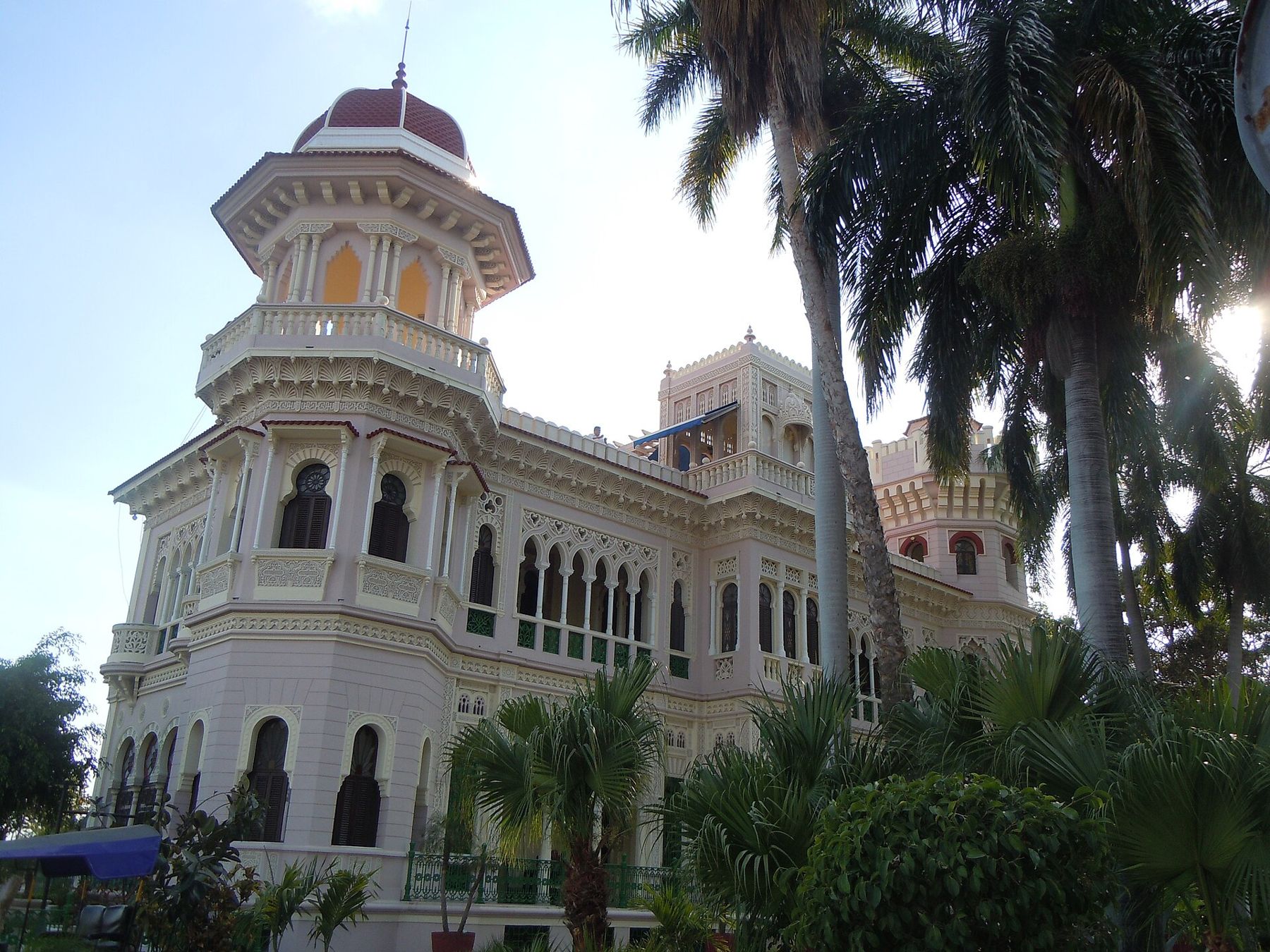
i
Photograph by Patrice78500, CC BY-SA 4.0It mixes styles with joyful abandon: Moorish arches and tilework, Gothic battlements, Venetian details and three towers, each different.
Around the bay, with soltura
At the narrow mouth of the bay, the Castillo de Jagua, completed in the eighteenth century, once guarded the entrance against pirates. It can be reached by boat across the bay or by road, and the small settlement around it is a pleasant half-day trip. Outside the town, the Jardín Botánico de Cienfuegos, founded in 1901, holds a large collection of tropical trees, including many palms.
- Timing: two days lets you see the centre, Punta Gorda and one excursion without rushing.
- Getting around: the centre is easy to walk. Horse-drawn carts and bicycle taxis run along the Prado to Punta Gorda.
- Getting there: state buses connect Cienfuegos with Havana and Trinidad. Shared taxis run on the same routes. Schedules change, so check ahead.
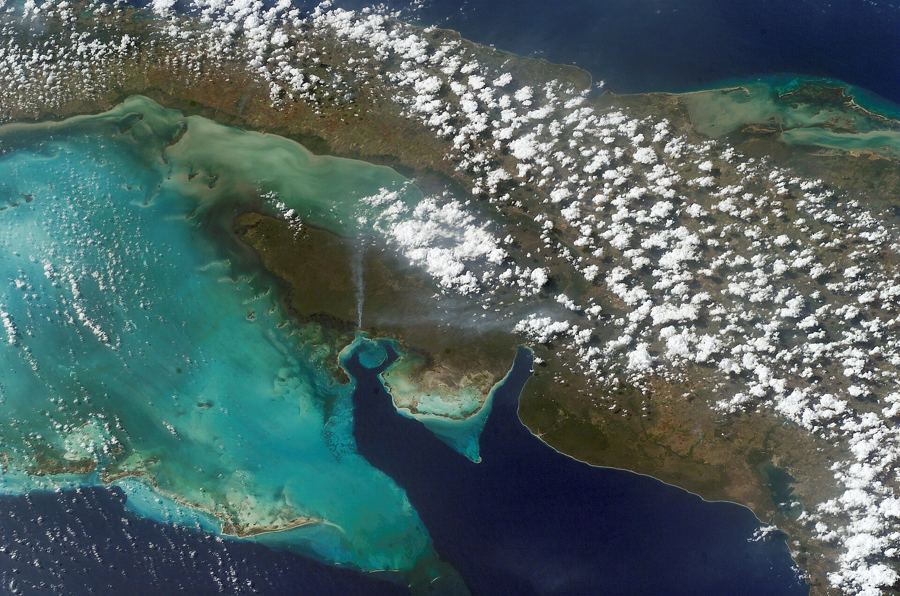
From Cienfuegos, the coast road leads east along the foot of the mountains to Trinidad, and the road north goes to Santa Clara. To the west lie the wetlands of the Zapata swamp.