
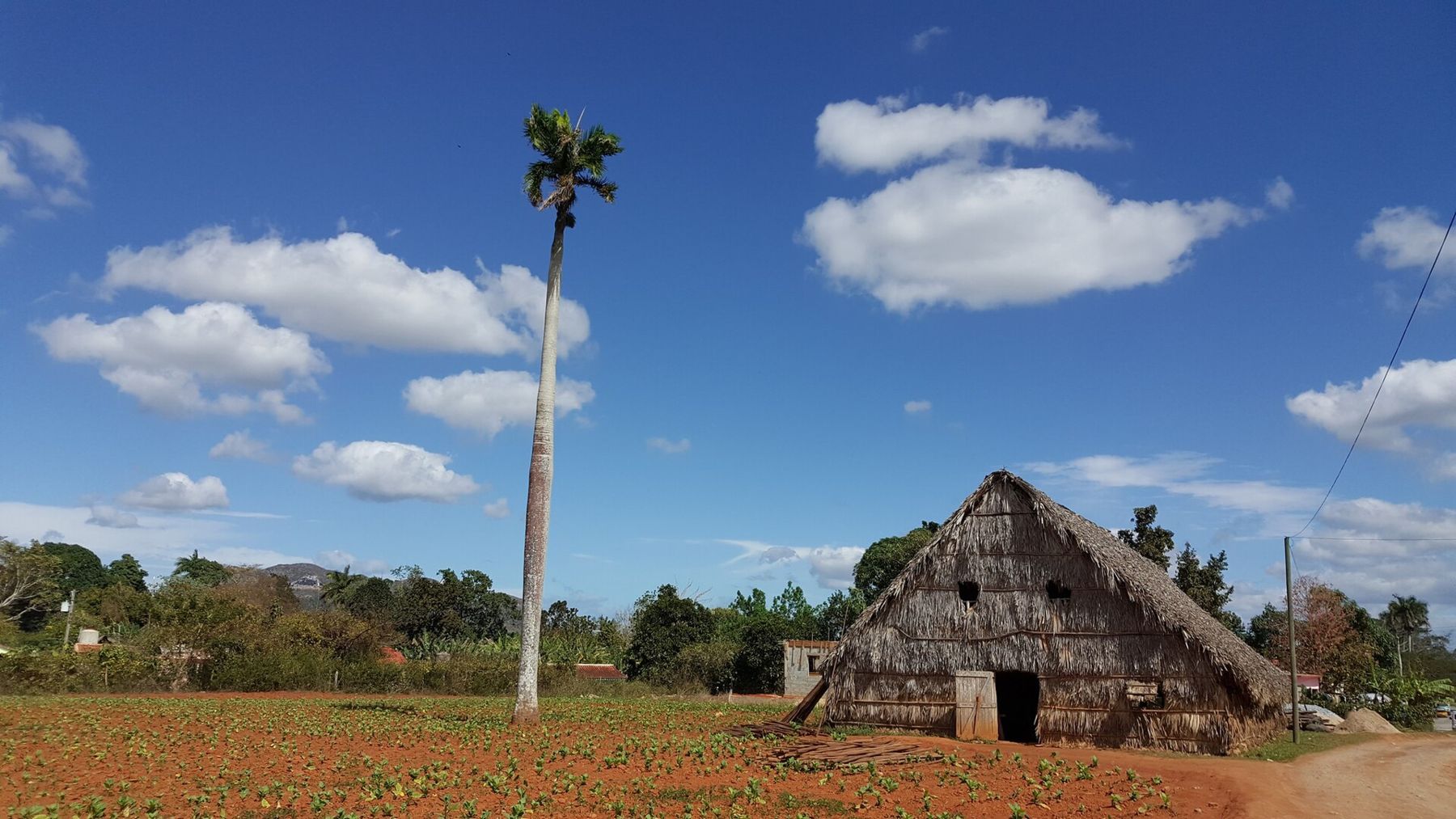
The province of Pinar del Río, at the western end of Cuba, grows most of the island's tobacco, and its heartland, a district known as the Vuelta Abajo, is famous for leaf of exceptional quality. The red and sandy soils, the mild, humid winters and generations of accumulated skill all play a part. Whether or not you smoke, watching how tobacco is grown and cured is one of the best ways to understand the countryside of western Cuba, where the crop has shaped the landscape, the calendar and the economy for centuries.
The Vuelta Abajo
The Vuelta Abajo lies to the south and west of the city of Pinar del Río, around towns such as San Juan y Martínez and San Luis. The name comes from colonial times: seen from Havana, this was the "lower turn" of the island, the far end of the road. Tobacco has been grown here since at least the eighteenth century, when it was one of Spain's most valuable colonial products and its trade was tightly controlled by the crown.
The landscape is flat and open, a patchwork of fields, palm trees and thatched barns. It is quieter and less visited than the Viñales valley to the north, though the farming is the same.
From seedbed to field
The tobacco year starts in early autumn, when tiny seeds are sown in seedbeds. After several weeks, the seedlings are pulled and transplanted by hand into the fields, usually between October and December, when the rains have eased and the weather is cooler. Fields are prepared with ploughs, often still pulled by oxen.
The plants grow quickly. Farmers remove the flower heads and side shoots so that the plant puts its energy into the leaves. Some fields, used for the fine outer leaves that wrap a cigar, are grown under cloth stretched on poles to filter the sun and keep the leaves thin and smooth. These shaded fields look like white tents spread across the countryside.
The harvest begins after a couple of months, usually from January onwards. Leaves are picked by hand, a few at a time from the bottom of the plant upwards, over several weeks. Different levels of the plant give leaves of different strength and texture, and each is kept apart.
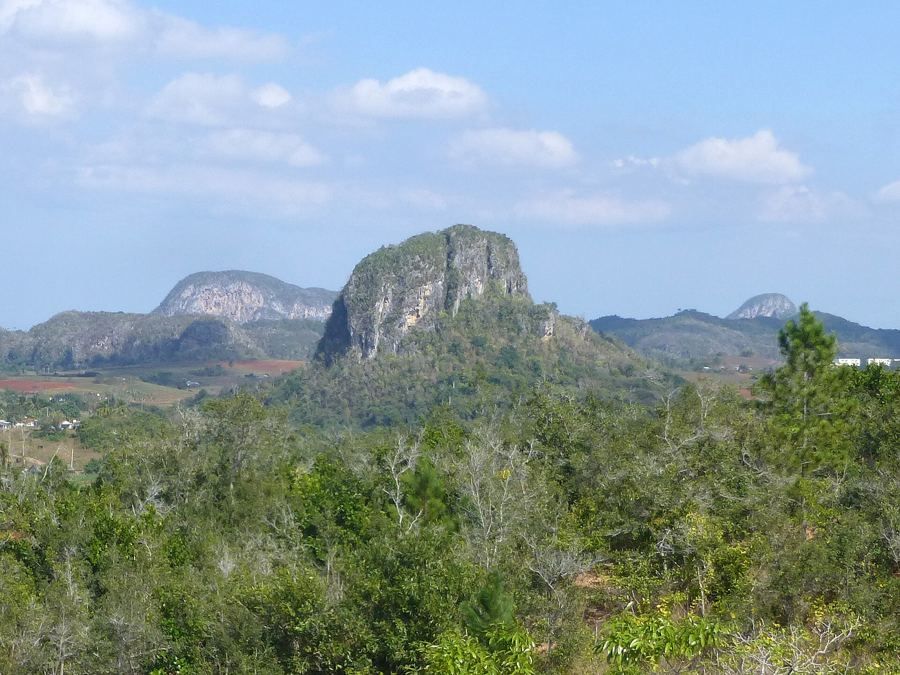 Further along · The westThe Viñales valley and its mogotes
The curing barns
The tall, steep-roofed barns you see everywhere in the west are the casas de tabaco, the tobacco houses. They are built of wood with roofs of palm thatch or, increasingly, metal sheets, and they are usually set so that their ends face east and west, which limits the heat of the sun on their long sides. Doors and vents are opened and closed to control the air and humidity inside.
The harvested leaves are sewn in pairs and hung over long poles, which are raised in tiers up to the roof. Over the following weeks, the leaves slowly dry and change from green to yellow to golden brown. This air-curing is unhurried: rushing it, or letting the barn become too damp or too dry, can spoil the crop. If you step inside a full barn, the smell of drying leaf is sweet and heavy.
Fermentation and the factory
Once cured, the leaves are moistened and stacked in large piles, where they ferment, generating their own heat. Workers check the temperature and turn the piles to keep the process even. Fermentation reduces harshness and develops flavour, and the best leaf may go through several rounds over months, followed by ageing.
The finished leaf is then sorted by size, colour and quality, and sent to factories, where cigars are rolled by hand. Pinar del Río city has a state cigar factory that has received visitors at times; visiting rules, opening hours and photography restrictions change, so check locally. Inside such factories, rollers work at long benches, shaping filler leaves, binding them and wrapping them in a final leaf with a flat blade and a little vegetable glue. Readers sometimes read aloud to the workers, a tradition dating from the nineteenth century.
Pinar del Río, the city
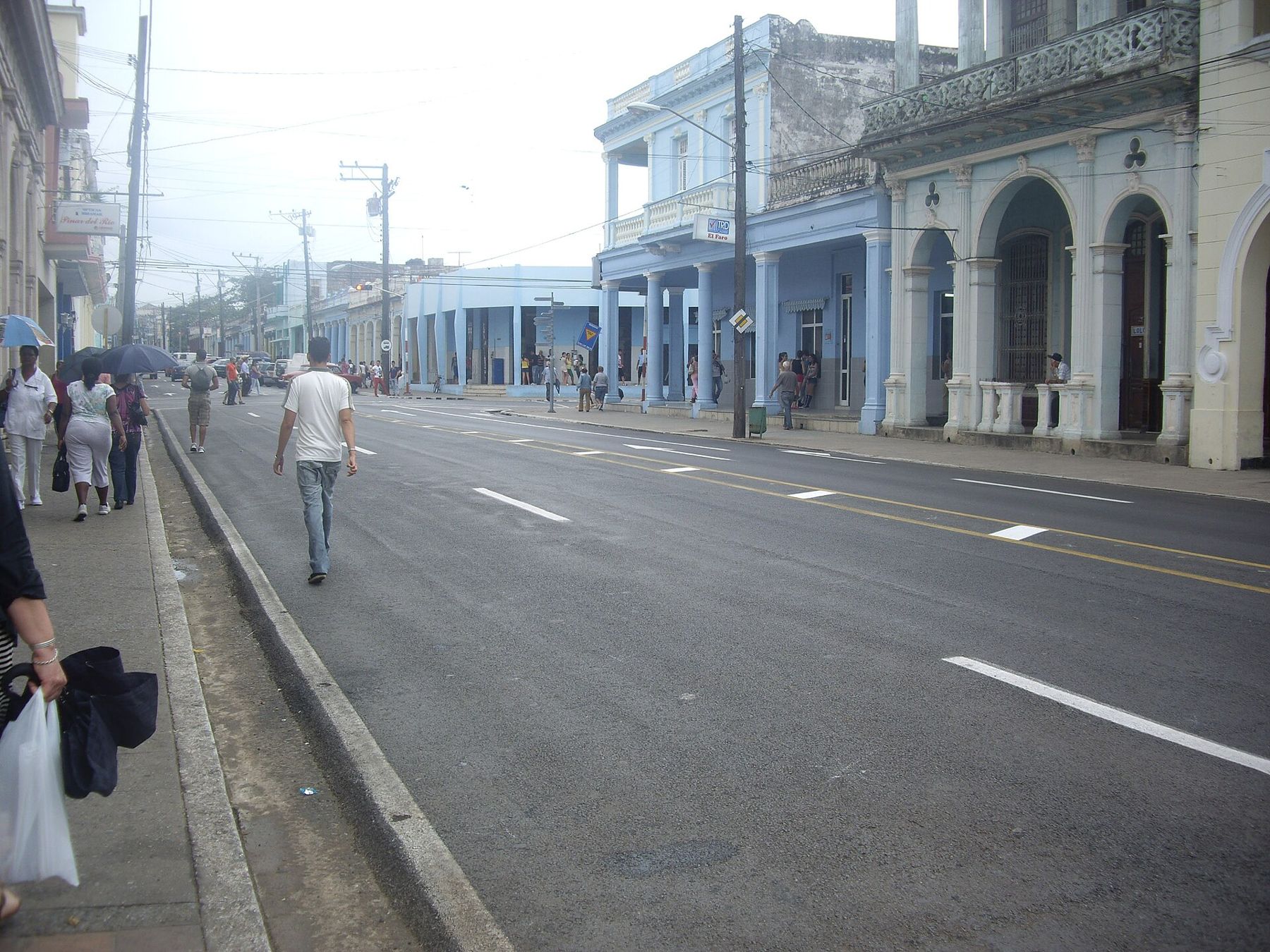
The provincial capital is a working town rather than a tourist centre, with a main street, Calle José Martí, lined with neoclassical columns and arcades that give shade to people going about their business. Its most eye-catching building is the Palacio Guasch, an eclectic early twentieth-century mansion with fanciful decoration, now housing a natural history museum.
i
Photograph by Mmoyaq, CC BY-SA 3.0A morning in the city, combined with an afternoon at a farm in the surrounding countryside, makes a good day.
Buying cigars with care
Cigars are sold everywhere in western Cuba, from state shops to farmers' porches to people on the street. Cigars sold on the street are often counterfeit or poorly stored, however convincing the box looks. If you want to buy cigars to take home, the safest route is a state shop, where you receive an official receipt.
Cuban customs rules limit how many cigars you can export without paperwork, and your home country also sets its own limits and rules on bringing them in, which differ by nationality and change. Keep your receipts and check both the current Cuban rules and your own government's official guidance before you buy.
Many farms also sell their own hand-rolled cigars directly. These are not branded products, and their quality varies. Buy them for the experience if you like, but know that they come with no guarantees.
Seeing it with soltura
- Timing: come between January and March to see the harvest and full barns. From late spring to autumn the fields are often bare.
- Getting there: Pinar del Río is a few hours west of Havana by road. Combine it with the Viñales valley, where many farms near town welcome visitors.
- Respect: farms are workplaces. Ask before photographing, and do not pick leaves or walk through planted rows.
For the forests and coffee ruins of the eastern hills of the west, see Las Terrazas and Soroa; for travel between regions, read getting around Cuba.