
Cross the Almendares river west of Vedado and Havana changes character. The streets widen, the buildings step back behind gardens, and the noise of the old city gives way to the sound of sprinklers and birds. This is Miramar, part of the municipality of Playa, laid out in the early twentieth century as a residential suburb for the well-off. After 1959 many of its owners left the country, and their houses were turned into schools, offices, embassies and homes for other families.
Most visitors see Miramar only from a taxi window on the way to somewhere else. It deserves a slower look, for its architecture, its long seafront, and the Acuario Nacional de Cuba, the country's national aquarium.
Quinta Avenida: the grand avenue
Quinta Avenida, Fifth Avenue, is Miramar's spine. It runs west from the river, parallel to the coast, with a broad central promenade shaded by trees and set with benches, stone urns and small fountains. Along both sides stand mansions in every style the early twentieth century could afford: Spanish colonial revival, art deco, neoclassical and early modernist.
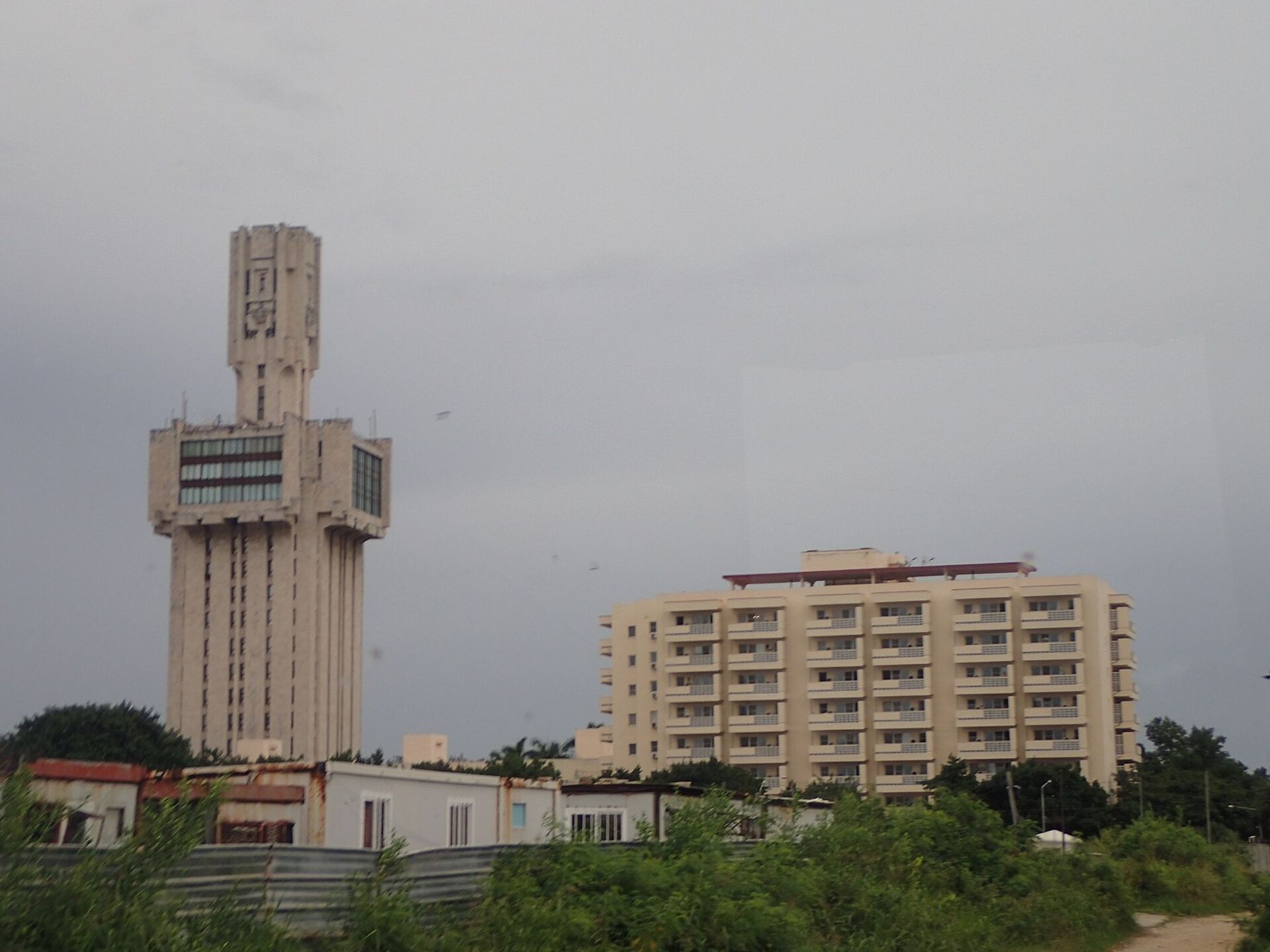
Many of these buildings now serve as embassies and ambassadors' residences, so you will see flags, guard posts and polished plaques. Photographing guarded buildings is not welcome; keep your camera for the trees, the facades of ordinary houses and the promenade itself. One building you cannot miss is the tall, angular tower of the Russian embassy, built in the Soviet era, which rises above the low roofs like a concrete sentinel.
i
Photograph by Kristen Kam McCowan, CC BY-SA 4.0The central promenade is the best way to walk the avenue. It is shaded for long stretches and almost empty in the morning, apart from joggers and people walking dogs. Side streets lead down towards the sea, where the coastline is rocky rather than sandy, with small public bathing spots cut into the reef.
Away from the avenue, the residential streets show how the district has changed. Some mansions have been carefully restored; others have been divided among several families, with extra rooms built onto terraces and gardens turned into vegetable plots or parking for old cars. Art deco apartment buildings from the 1930s and 1940s, with rounded corners and ship-like balconies, stand beside modernist houses of the 1950s with flat roofs and screens of patterned concrete. Walking a few blocks off Quinta Avenida in any direction gives a good sense of twentieth-century Havana architecture, without the crowds of the old city.
The Acuario Nacional de Cuba
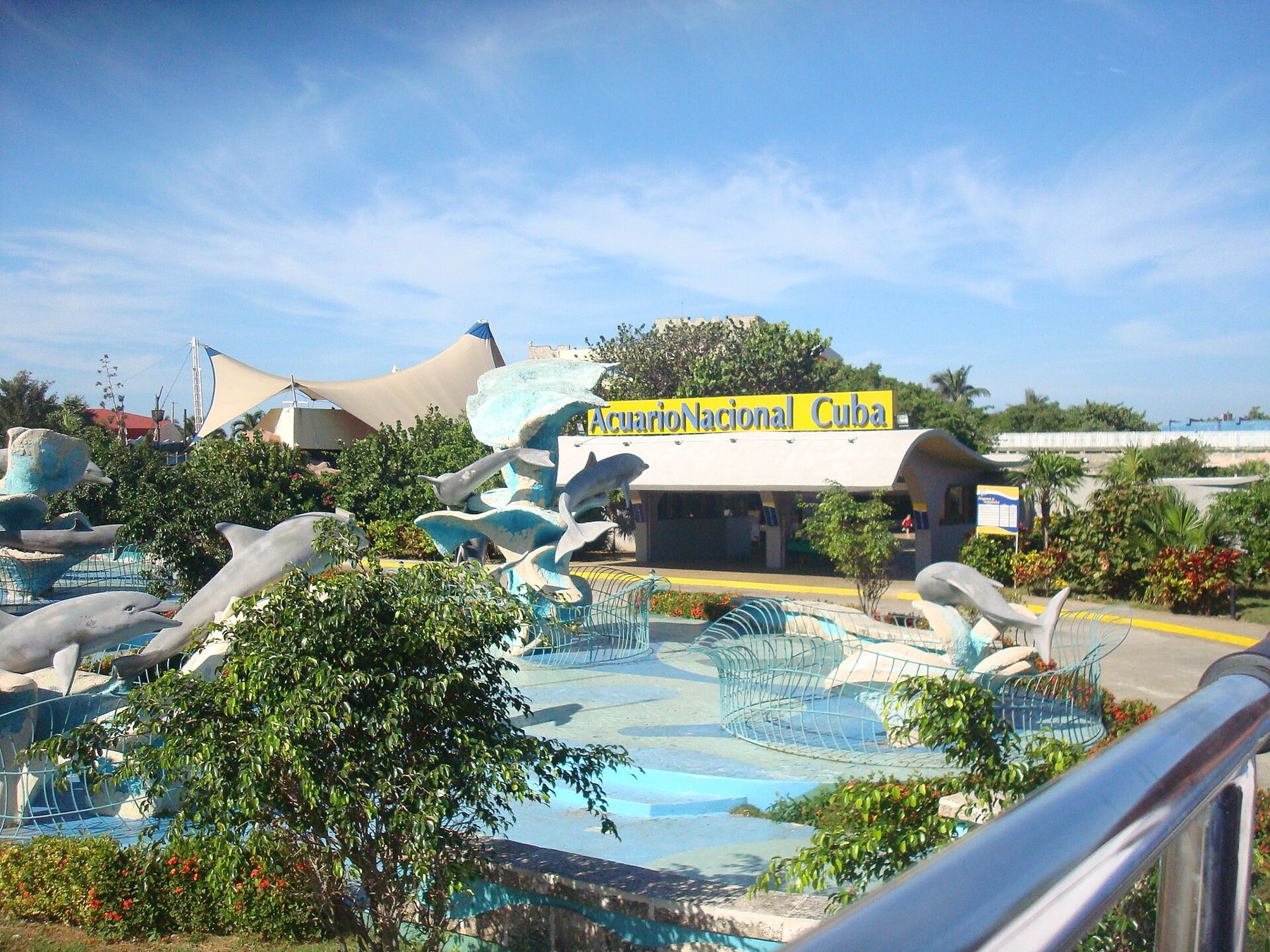
The Acuario Nacional de Cuba was founded in 1960 and stands near the sea in Miramar. It was conceived from the start as more than a place to look at fish: it is a centre for marine science and education, where Cuban biologists study the island's reefs, mangroves and coastal waters, and where school groups come to learn about them.
Inside, tanks and pools present the marine life of Cuban waters: reef fish, rays, turtles, sharks and the colourful invertebrates of the coral reefs that surround the island. Panels explain the habitats and the pressures on them. The aquarium has taken part in conservation work, including the study and care of sea turtles and the rescue of stranded marine animals, and it promotes the protection of Cuba's coasts in its educational programmes.
The aquarium is also known for its dolphin shows, held several times a day in an open-air pool, and for its sea lions. The shows draw big crowds of Cuban families, especially at weekends and in the school holidays. Visitors have different views on keeping dolphins for performance, and you can decide for yourself whether to watch; the rest of the aquarium makes a worthwhile visit either way. Show times, opening hours and entry fees change, so check before you go.
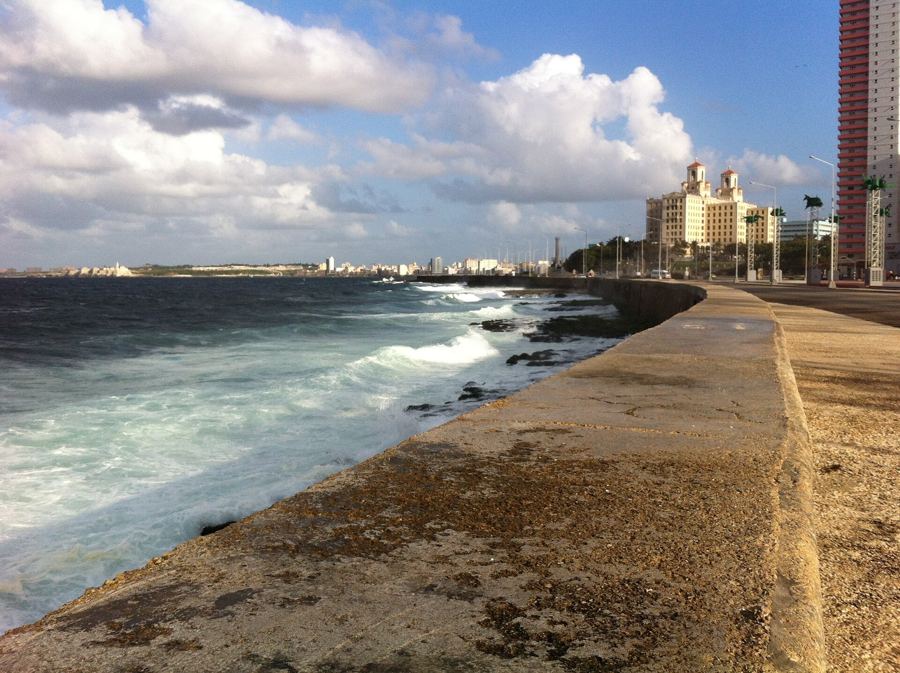 Further along · HavanaThe Malecón and Vedado, from the sea wall to the university steps
Go early. The aquarium is busiest in the afternoon and at weekends, and the tanks are easier to see without a crowd. There is little shade in the open areas, so a hat helps.
The Almendares, Havana's river
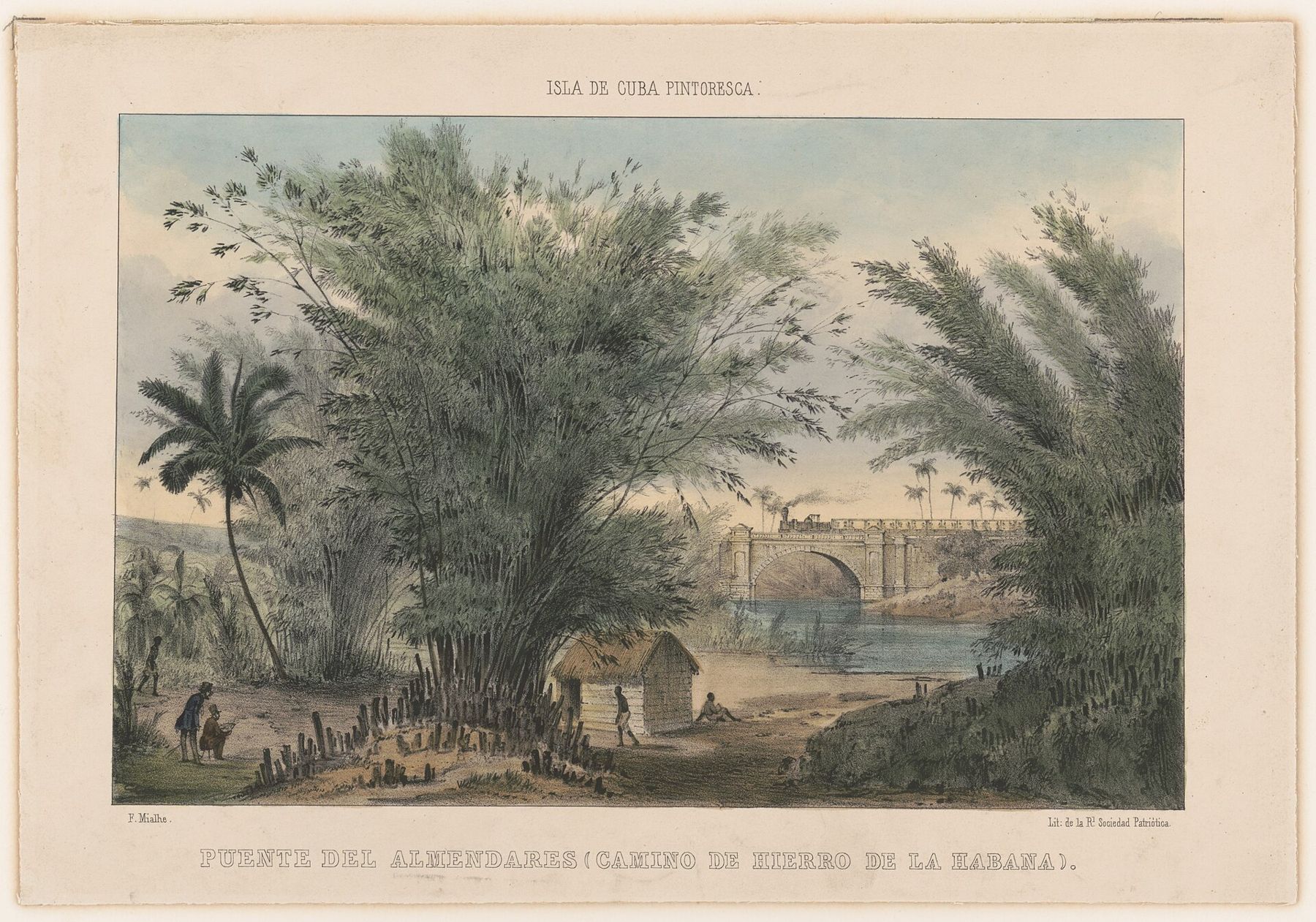
The Almendares river marks the boundary between Vedado and Miramar, and it has shaped the city for centuries. In the sixteenth century, the Spanish dug the Zanja Real, a channel that carried water from the Almendares to the old town, one of the first works of its kind in the Americas. In the nineteenth century, Havana's railway, one of the earliest in Latin America, crossed the river on a stone bridge.
i
Photograph by Popular Graphic Arts, Public domain
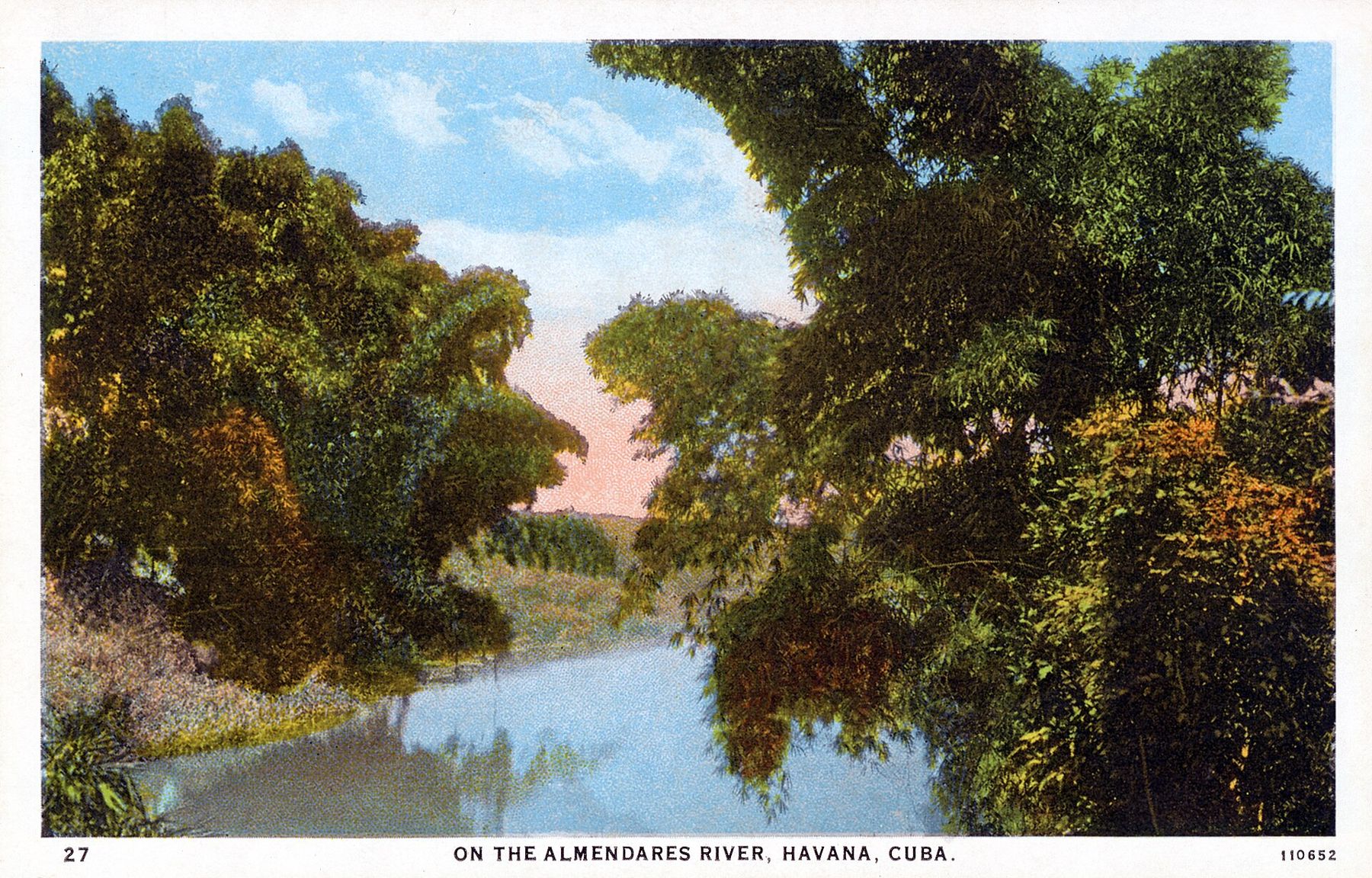
Old prints and postcards show the river lined with bamboo and tall trees, and that green edge has partly survived. Today road bridges and tunnels carry traffic across the river near its mouth, while a little upstream the banks are still wooded. The water is not clean enough to swim in, and the city has long tried to reduce the pollution that reaches it, but the riverside remains one of the greenest places in Havana.
i
Photograph by Cuban National Tourist Commission (publisher), Public domain
Old prints and postcards show the river lined with bamboo and tall trees, and that green edge has partly survived.
The Bosque de La Habana
Upstream from the bridges, the Bosque de La Habana, the Havana Forest, is a stretch of woodland along the river within the Parque Metropolitano de La Habana. Huge ceiba trees, strangler figs and lianas create a cool, shady world just minutes from busy avenues. People come here to walk, to picnic and, sometimes, to leave offerings connected with Afro-Cuban religion at the foot of the ceibas, which are held sacred. If you see bundles, coins or small offerings among the roots, leave them undisturbed.
The woods are pleasant in daylight but quiet and isolated in places, so go in the morning or early afternoon, keep to the main paths and avoid going alone after dark.
Doing Miramar with soltura
Miramar is spread out, so plan to move between its parts by taxi, shared taxi or city bus rather than trying to walk everything. A good day starts at the aquarium in the morning, continues with a walk along the central promenade of Quinta Avenida, and ends in the shade of the Bosque de La Habana or back across the river in Vedado for sunset on the sea wall.
- Getting there: from Vedado, Miramar is a short taxi ride across the river. Agree on the fare before you set off.
- Respect the embassies: do not linger or photograph guarded entrances.
- Bring cash: entry fees are paid on the spot, and card payment is not always possible. Check current prices before you go.
Back east, the seafront walk of the Malecón and Vedado links Miramar to the centre, and the colonial core of Old Havana is a twenty-minute drive away. For more coastal wildlife beyond the city, the wetlands of the Zapata swamp lie a few hours to the south-east.