
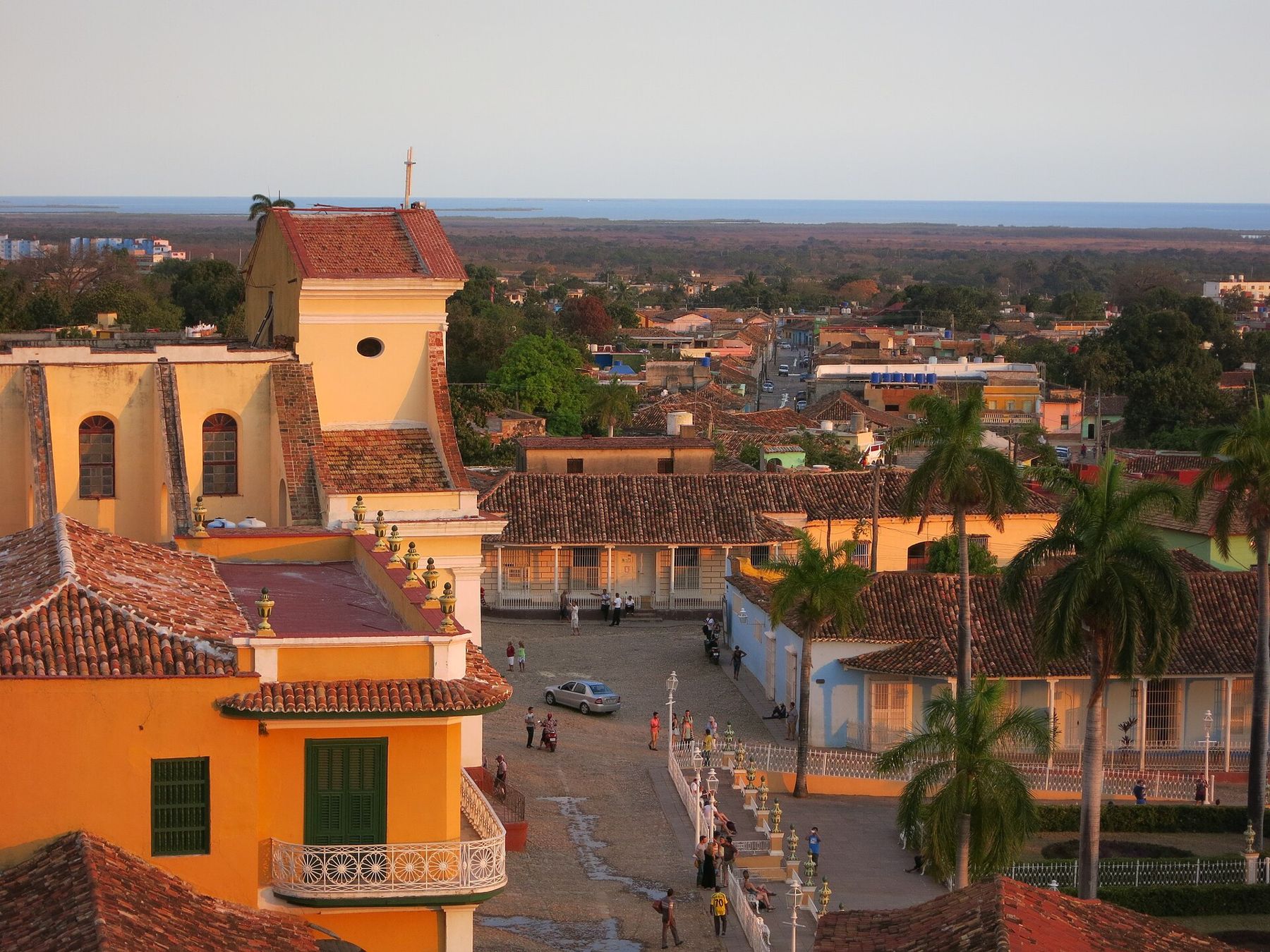
Trinidad sits on a slope between the Escambray mountains and the Caribbean, on the south coast of central Cuba. The Spanish founded it in 1514, one of the first towns on the island, but for two centuries it was a modest place of cattle, tobacco and smuggling. Then came sugar. In the late eighteenth and early nineteenth centuries the valley east of town filled with mills, and the families who owned them poured their money into houses around the main square.
That wealth did not last. Wars, falling sugar prices and the end of slavery in the 1880s drained the valley, and the railways and new ports passed Trinidad by. Nobody had the money to tear down the old houses and build new ones, so they stayed. In 1988 UNESCO listed the town together with the Valley of the Sugar Mills as a single World Heritage site, and the two make most sense seen together.
A town that sugar built and then forgot
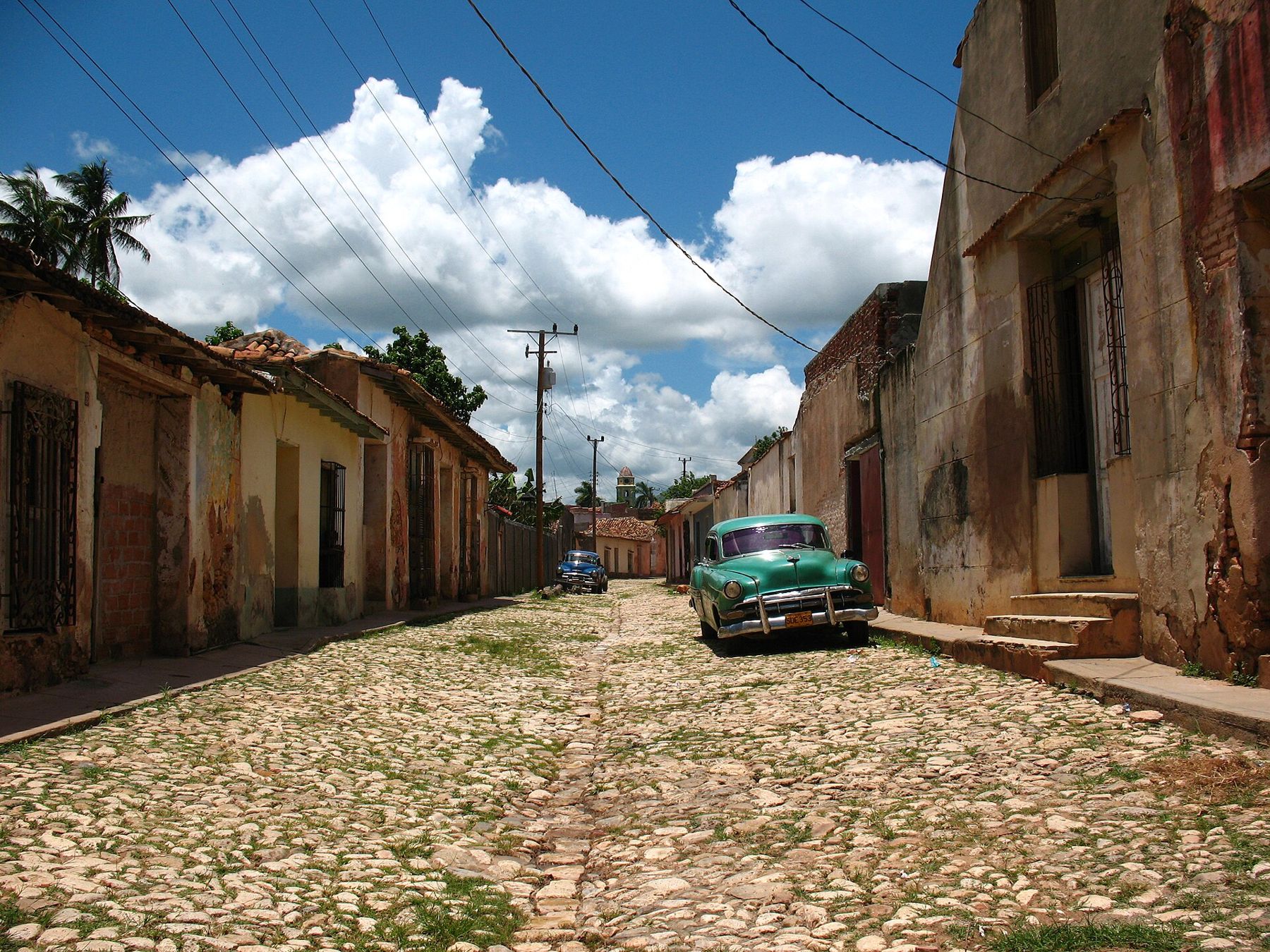
You feel the history underfoot before you see it. The streets of the old centre are paved with rounded river stones, uneven and sloping to a gutter in the middle, built to carry rainwater down the hill. Walk them slowly; they are hard on ankles and harder on wheeled luggage. Cars are few in the core, and horses and bicycles are more common than engines.
The houses are low, thick-walled and painted in strong colours, with terracotta roofs and tall windows behind wooden or iron grilles called rejas. Doors open straight onto the pavement and give glimpses of tiled floors, rocking chairs and inner courtyards full of plants. Many families still live in the centre, so treat open doorways as a view of someone's living room, not a museum.
i
Photograph by Elemaki, CC BY-SA 3.0Plaza Mayor and the mansions around it
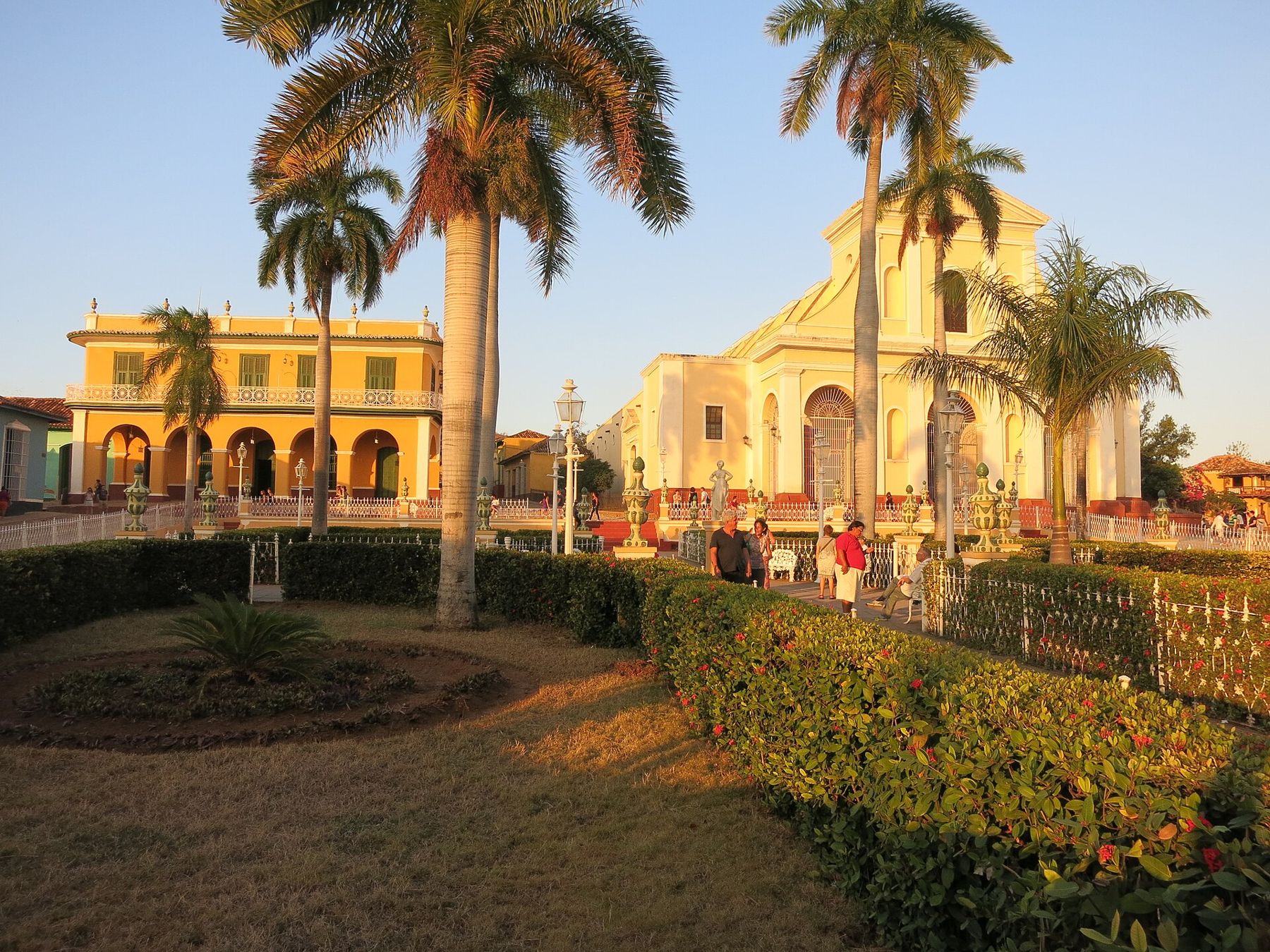
Every walk in Trinidad leads uphill to the Plaza Mayor. It is small and formal, with royal palms, white iron railings, ceramic urns and a pair of bronze greyhounds, laid out as a garden rather than an open square. On the uphill side stands the Iglesia Parroquial de la Santísima Trinidad, the town's main church, finished in the late nineteenth century on the site of older ones. Its plain yellow front hides a cool, wide interior.
i
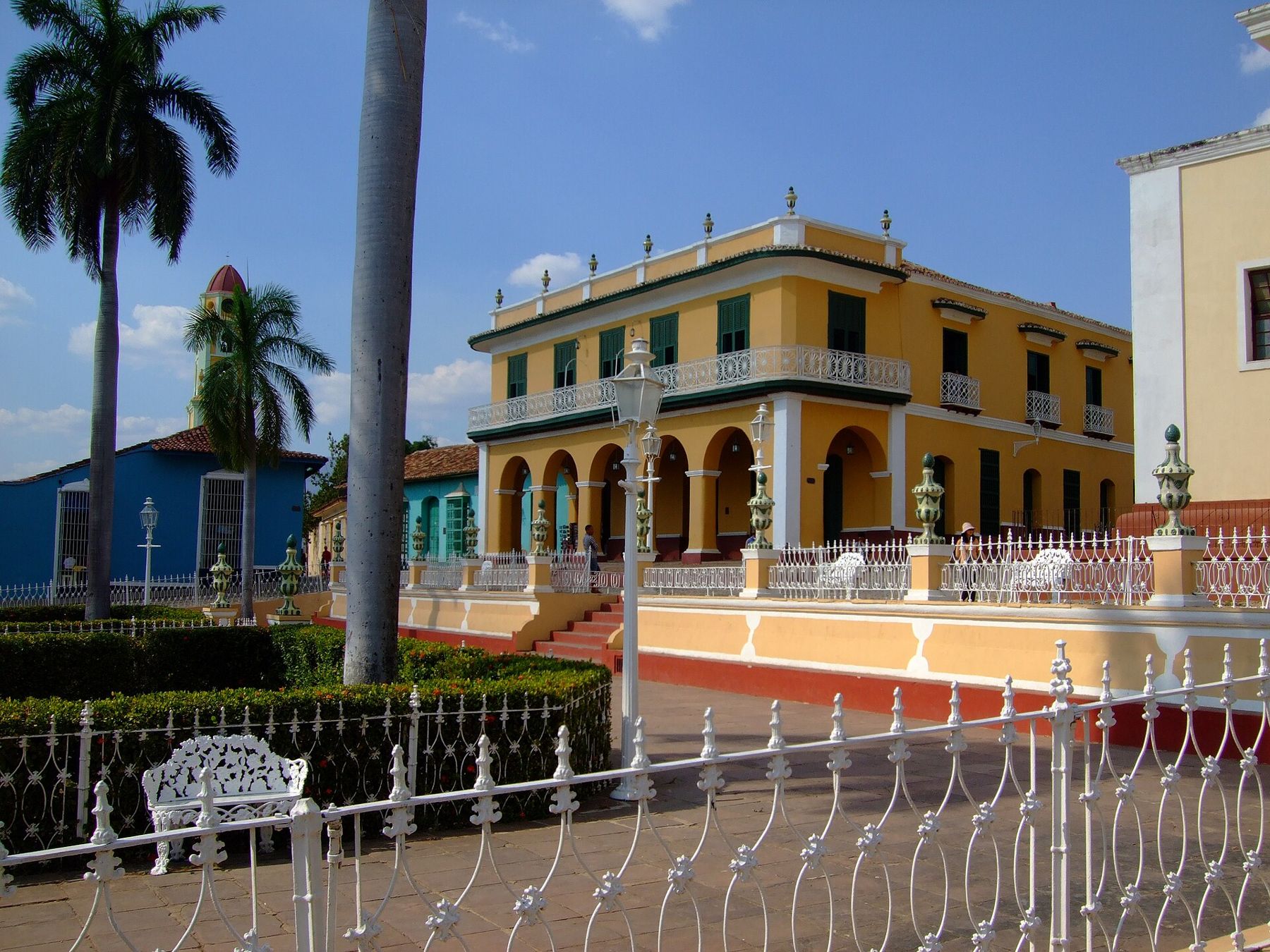
Photograph by Fanvonangelie, CC BY-SA 3.0The mansions around the square now hold museums. The Palacio Brunet, with its long wooden balcony, is the Museo Romántico, furnished with the porcelain, marble and mahogany of a nineteenth-century sugar family. Across the way the Museo de Arquitectura Colonial explains how these houses were built, from the timber roofs to the window grilles. A block away, the Palacio Cantero houses the town's history museum, and its tower is one of the best places to look over the rooftops. Opening days and hours change, and some rooms close for repairs, so check locally rather than relying on any printed schedule.
Sit for a while on a bench in the garden and watch the square wake up; it is quietest in the first hour after sunrise.
Nobody had the money to tear down the old houses and build new ones, so they stayed.
Climbing the bell tower of San Francisco
The yellow and green bell tower of the former convent of San Francisco is the symbol of the town, and you see it from almost every street. The convent buildings hold a state museum about the armed campaigns fought in the Escambray mountains in the early 1960s, when the new government put down rebel groups in the hills. It is told from the official point of view, and it is worth reading with that in mind.
i
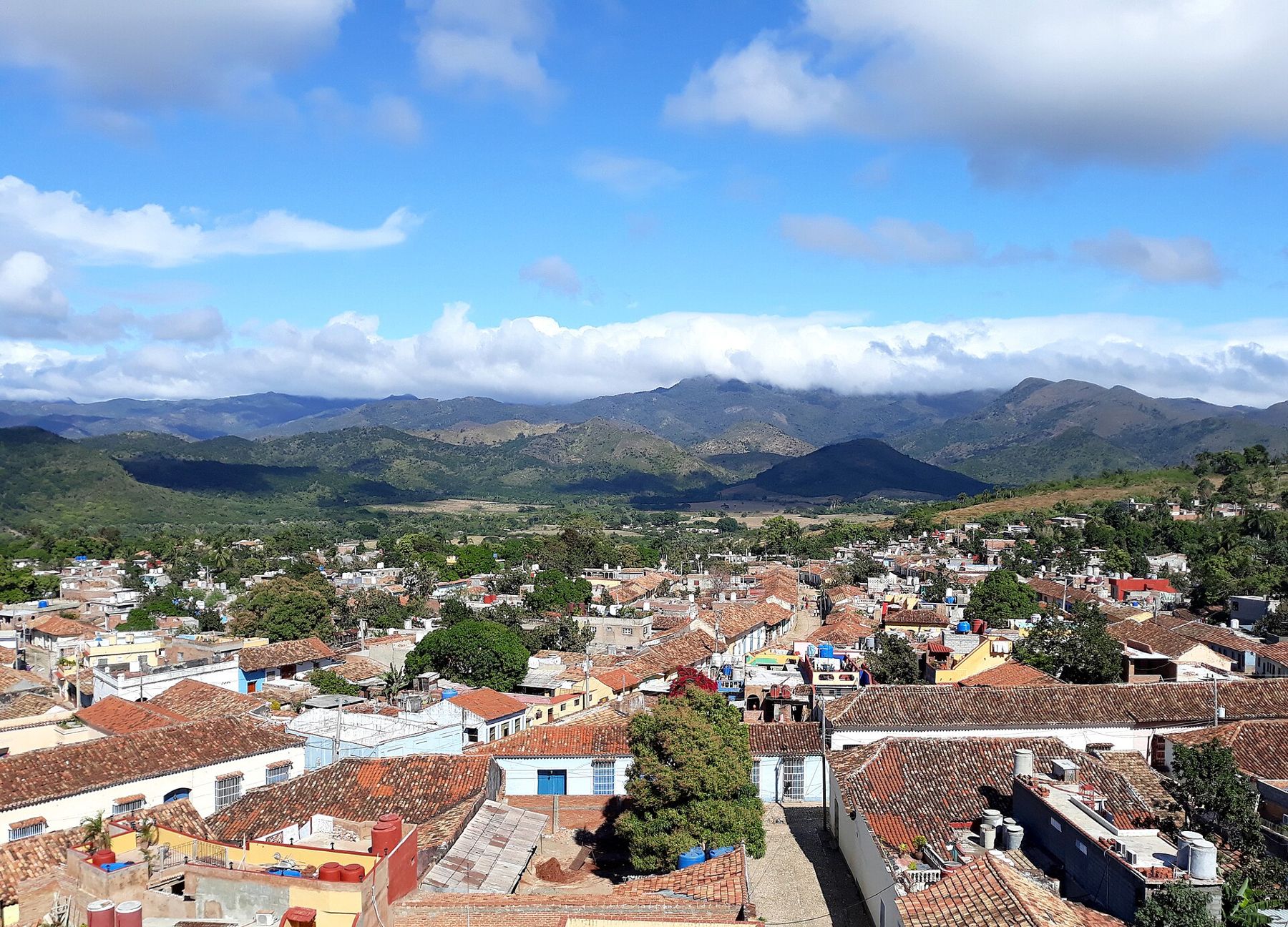
Photograph by Arnoud Joris Maaswinkel, CC BY-SA 4.0The reason most visitors come is the tower itself. Narrow wooden stairs lead up past the bells to a small platform, and from the top the whole town lays itself out: the red roofs falling towards the sea, the green wall of the Escambray behind, and on a clear day the flat line of the coast. Go in the late afternoon, when the light turns gold and the heat lets go. Access to the tower, like everything here, can change, so ask on the day.
 Further along · The centreSanta Clara, where the last battle was fought
i
Photograph by acediscovery, CC BY-SA 4.0Cobbles, grilles and the evening steps
Trinidad changes after dark. Families bring chairs onto the pavement, children play in the streets, and the broad stone steps beside the parish church fill with people. Music is played on and around those steps most evenings, from son and boleros to salsa, and you can sit on the stones and listen for as long as you like. Go once with no plan and let the evening decide.
By day, the pleasure is in wandering without a map. Streets that look straight bend and fork; a lane that seems to end opens onto a tiny square with a church or a ruined hermitage. Climb towards the top of town, where the paving gives way to dirt and the houses get simpler, for views over the whole valley. Carry water, and expect to be offered rooms, meals and horse rides; a polite no, gracias is enough.
Food is at family tables more than anywhere grand; the guide to eating at Cuban tables covers what to expect. The old centre has many street sellers too, especially of lace, embroidery and woven goods, which have long been made in the region.
Out to the sea at Ancón and into the hills
About a quarter of an hour by road south of town, the Ancón peninsula has a long, pale beach on the Caribbean, with calm, clear water most of the year. Between town and beach lies the fishing village of La Boca, at the mouth of a small river, with a rockier shore and a more local feel. Taxis and some shared transport run out to the coast; cycling is possible but the road is hot and unshaded.
North of town the road climbs into the Escambray, to the protected area around Topes de Collantes, with forest trails, waterfalls and coffee plants grown under shade trees. The air is cooler and the roads steep and slow. East of town is the sugar valley, an easy day out by road, and west along the coast is Cienfuegos and its bay, a short drive away.
Most people arrive by long-distance bus or shared taxi; the notes on getting around the island explain how those work. Give Trinidad at least two nights: one day for the centre and the towers, one for the valley or the sea. The town rewards anyone who stays long enough to see it before the day visitors arrive and after they leave.
Bring small notes for museum entries and tower climbs, and a hat; there is little shade in the upper streets at midday. Mornings are the time for photographs, when the low sun lights the colours of the houses and the plazas are almost empty.