
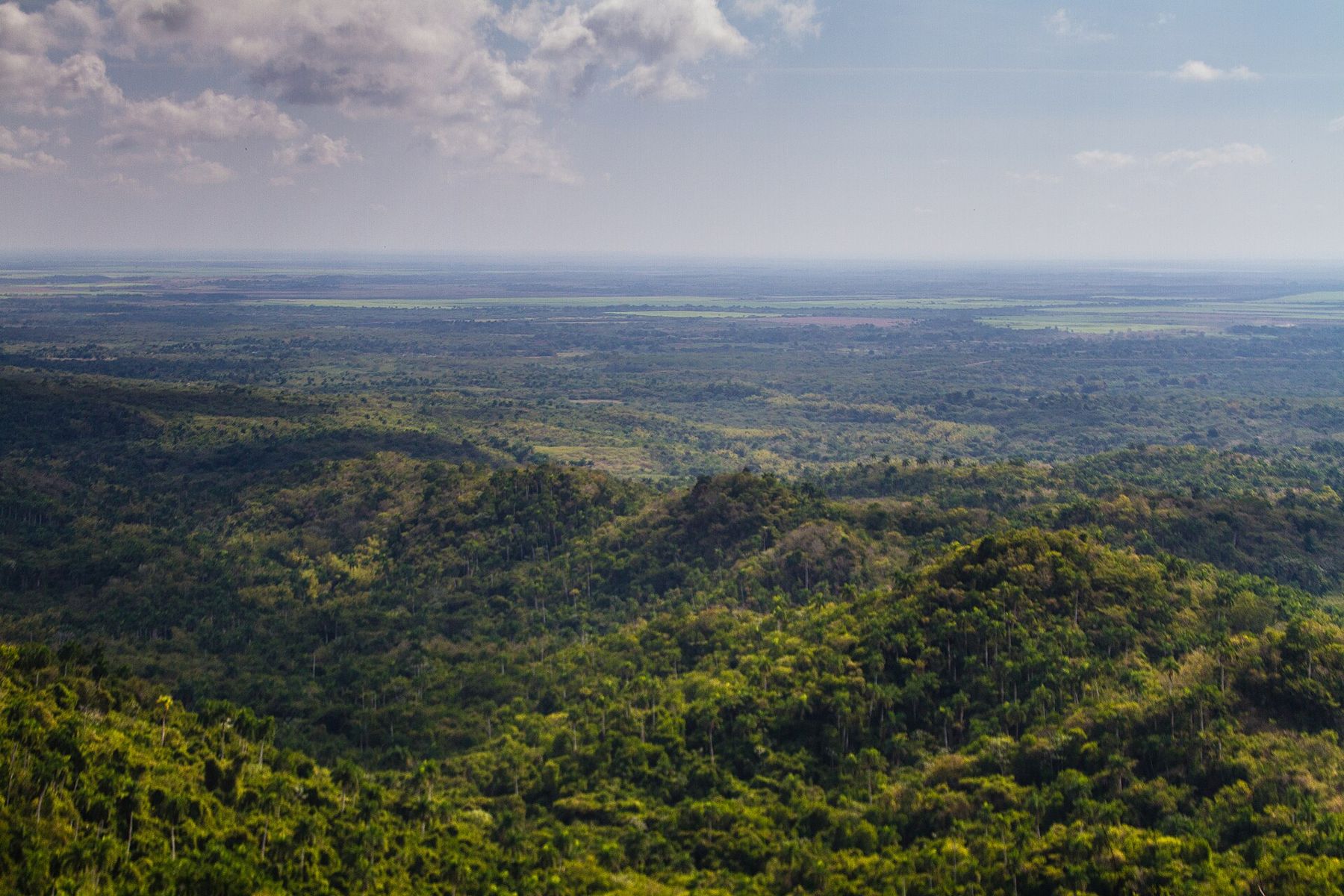
West of Havana, the motorway runs along the foot of a line of green hills. These are the Sierra del Rosario, the eastern end of the Guaniguanico mountain range that forms the backbone of western Cuba. Turn off and climb into them, and within minutes you are among forest, streams and birdsong. Two places here make an easy and refreshing trip from the capital or a stop on the way to Viñales: the community of Las Terrazas and the village of Soroa.
A forest planted by hand
A few generations ago, much of this land was bare. Centuries of logging, charcoal burning and coffee farming had stripped the hills of their forest and left the soil exposed to erosion. In the late 1960s the Cuban government launched a large reforestation project in the area. Workers cut terraces along the slopes, which give the community its name, and planted millions of trees.
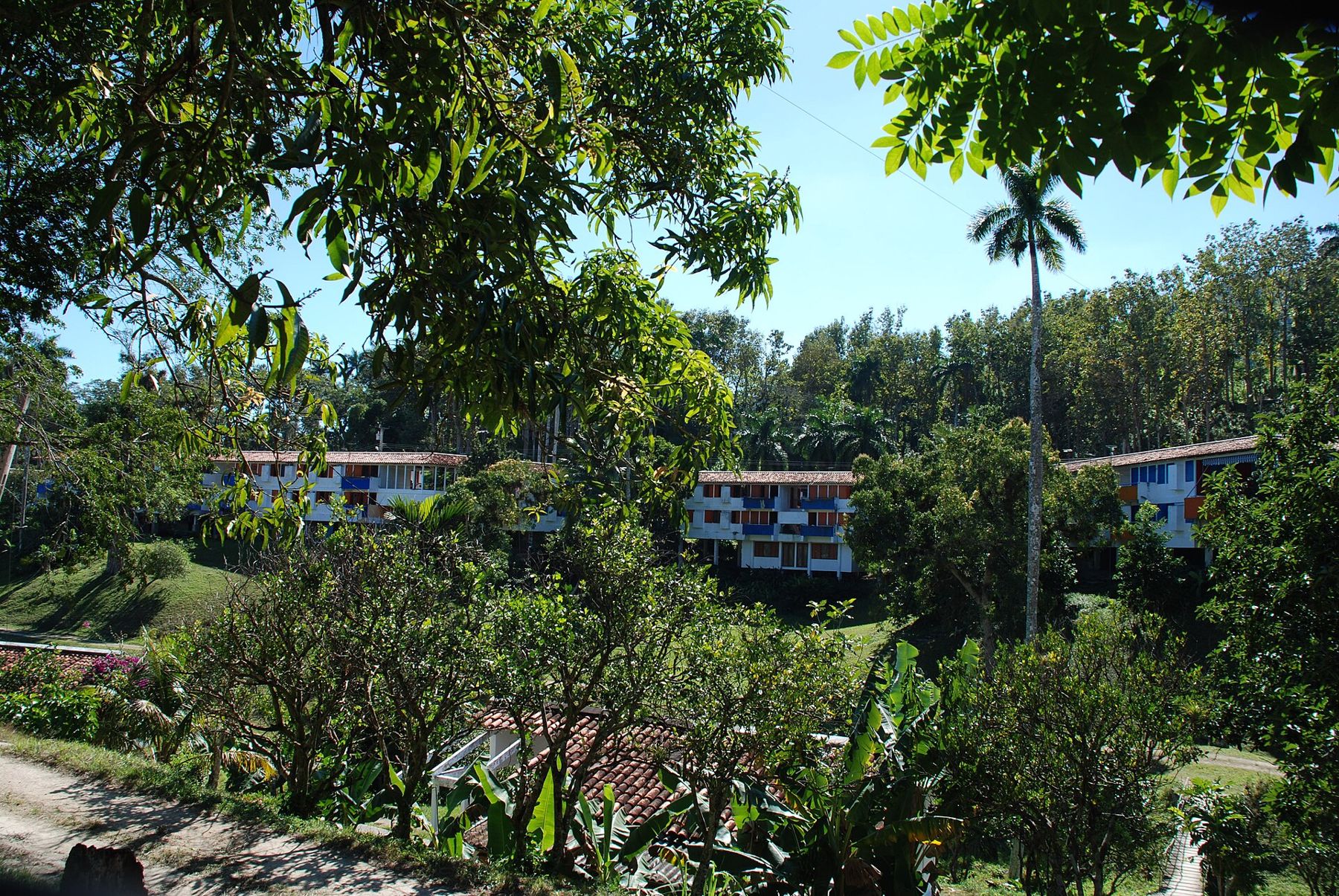
The workers and their families needed homes, and in the early 1970s a new village was built for them beside an artificial lake. Las Terrazas became a planned rural community, with apartment blocks stepping down the hillside, a school, a clinic and workshops. Today its residents work in forestry, conservation and tourism, and the village has become a model of sorts for rural development in harmony with the forest.
i
Photograph by Cosa2244, CC BY-SA 4.0In 1985 UNESCO recognised the Sierra del Rosario as a biosphere reserve, one of the first in Cuba. The protected forests are home to many bird species, including the tocororo, or Cuban trogon, the national bird, whose red, white and blue plumage echoes the colours of the flag.
The coffee ruins
In the late eighteenth and early nineteenth centuries, French planters fleeing the revolution in Saint-Domingue, now Haiti, settled in these hills and established coffee estates worked by enslaved Africans. For a few decades coffee flourished, until falling prices, competition and soil exhaustion brought it to an end in the mid-nineteenth century. The forest then slowly reclaimed the estates.
The ruins of several of these cafetales (coffee estates) survive. The best known, the Cafetal Buenavista, sits on a hilltop above Las Terrazas, with the remains of the owner's house, the drying floors where the beans were spread in the sun, a large stone wheel used to husk them, and the ruined quarters where enslaved workers lived. It is a quiet and sobering place, and the views over the hills and down to the plains are wide. Other ruined estates lie along the forest trails and can be reached on foot with a guide.
 Further along · The westThe Viñales valley and its mogotes
The San Juan river
A few kilometres from the village, the San Juan river tumbles over a series of rock ledges into clear, shallow pools. This is the favourite swimming spot in the area, popular with Cuban families at weekends and in summer. The water is cool and the setting green, with trees overhanging the rocks.
The area is managed as part of the reserve, and access is usually charged. Arrangements change, so check on arrival. Mind your footing on wet rocks, and keep the river clean: take your rubbish with you.
Soroa: orchids and a waterfall
Soroa lies a short drive west of Las Terrazas, in a narrow valley among the same hills. Its best-known sight is the Orquideario de Soroa, an orchid garden laid out on a terraced hillside from the 1940s by a Spanish-born lawyer, Tomás Felipe Camacho. After his death the garden passed to the state and is now run as a scientific and educational collection linked to the university in Pinar del Río. Hundreds of orchid species, many of them native to Cuba, grow alongside ferns, palms and flowering trees. The orchids bloom at different times through the year, with the most flowers usually in the winter and early spring.
Close by, a path leads down through forest to El Salto, a waterfall of some twenty metres that drops into a pool where you can swim. The walk is short but involves steps. After heavy rain the waterfall is at its most powerful.
Above the village, a hilltop lookout gives a long view south over the forested slopes to the flat plains and the coast beyond. On clear days the view stretches for many kilometres.
Walking and staying
The reserve has a network of marked trails through forest, past streams and ruins, many of which require a local guide. Guides can be arranged in Las Terrazas; ask at the visitor centre about current routes, fees and rules. Birdwatchers should go out early, when the forest is busiest.
Wear long trousers on the forest trails, where the undergrowth can be thick and insects persistent, and carry more water than you think you need. Mobile coverage is patchy in the hills, so agree on a meeting point if you split up.
Las Terrazas and Soroa can be seen in a long day from Havana, but staying overnight lets you enjoy the hills at dawn and dusk, when they are at their best. Accommodation in the area is limited, so plan ahead.
Doing it with soltura
- Getting there: both lie off the motorway west of Havana. Public transport is scarce, so most independent travellers come by hired car or taxi, or stop here on the way to Viñales. Fuel can be hard to find, so fill up when you can.
- Timing: weekdays are quieter. Arrive early to walk in the cool and swim at midday.
- Bring: swimwear, sturdy shoes for wet rocks and trails, insect repellent and cash for entry fees.
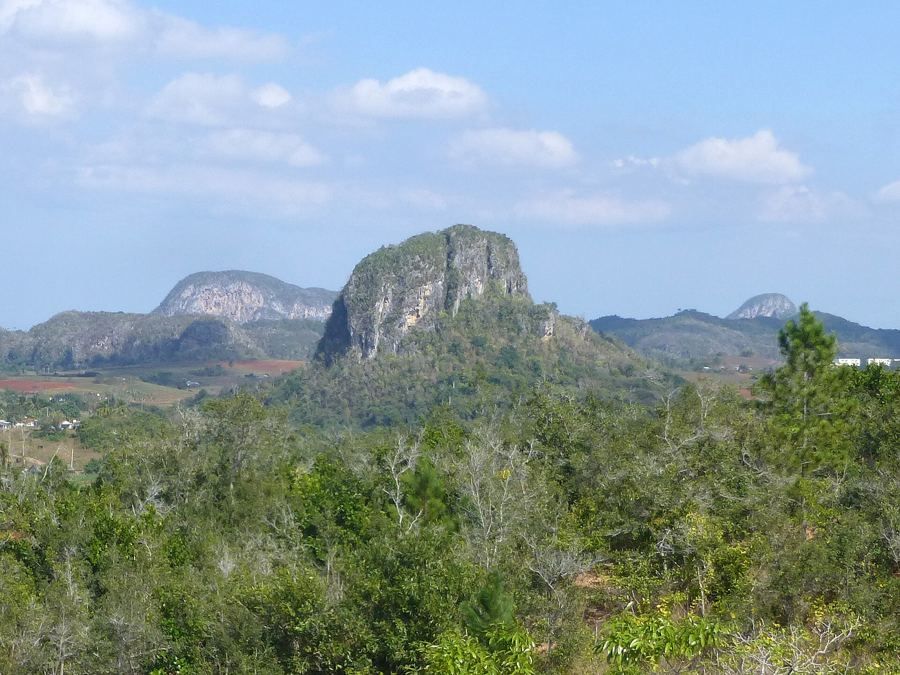
Continue west to the Viñales valley for mogotes and tobacco fields, or read about how Cuban tobacco is grown in the farmland beyond.