
Habana Vieja, the old walled city, packs five centuries into a grid you can cross in twenty minutes. The town was moved to this sheltered harbour around 1519, grew rich as the port where Spain's treasure fleets gathered before sailing home, and was ringed with stone walls in the seventeenth century. The walls came down from 1863 as the city outgrew them, but the streets inside kept their narrow, shaded plan. In 1982 UNESCO listed Old Havana and its fortifications as a World Heritage Site, and a slow, building-by-building restoration has been under way ever since.
The easiest way to understand the place is through its four main squares. Each was made for a different job: government, church, trade and market. Walk them in that order and you follow the old city's own logic.
Plaza de Armas: where the city began
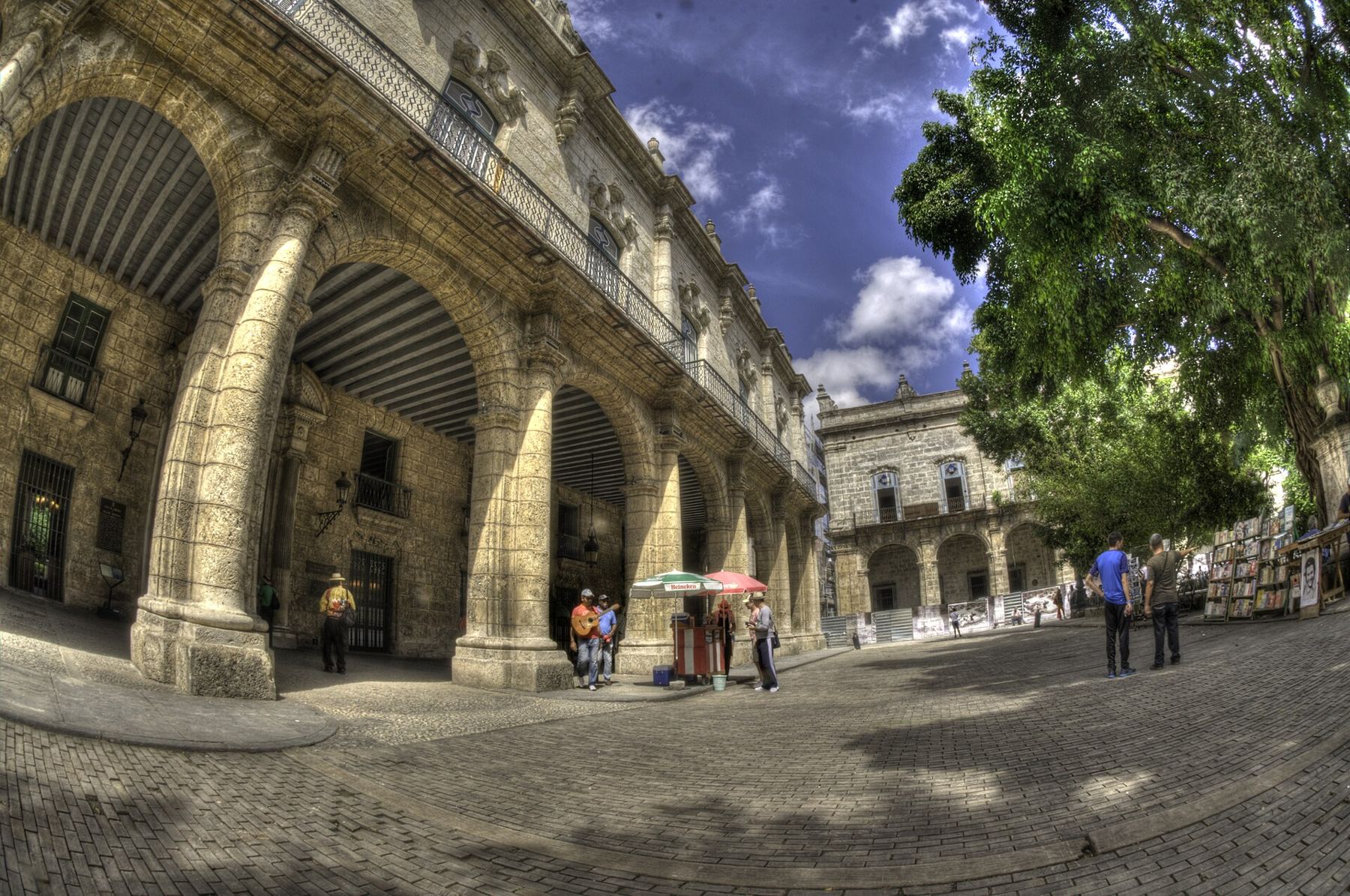
The oldest square is where soldiers once drilled, hence the name. Today its centre is a garden of royal palms and ceiba trees around a statue of Carlos Manuel de Céspedes, the planter who freed his slaves and launched the first war of independence in 1868. Second-hand booksellers set out stalls under the trees on most days, with old magazines, revolutionary-era paperbacks and the odd colonial map.
On the east side stands El Templete, a small neoclassical temple from 1828 that marks the spot where, by tradition, the first Mass and town council were held under a ceiba tree. A ceiba still grows by the railing, and some habaneros (people of Havana) walk around it on the night of 15 November, the eve of the city's founding day, for luck.
i
Photograph by Eric Marshall, CC BY 3.0The long arcaded building on the west side is the Palacio de los Capitanes Generales, seat of the Spanish governors and now the Museo de la Ciudad, the city museum. The street in front is paved with wooden blocks rather than stone, laid so carriage wheels would not disturb the governor. To the north rises the Castillo de la Real Fuerza, one of the oldest stone forts in the Americas, completed in the 1570s. The bronze weathervane on its tower, La Giraldilla, became the symbol of Havana.
Plaza de la Catedral: a baroque face of coral stone
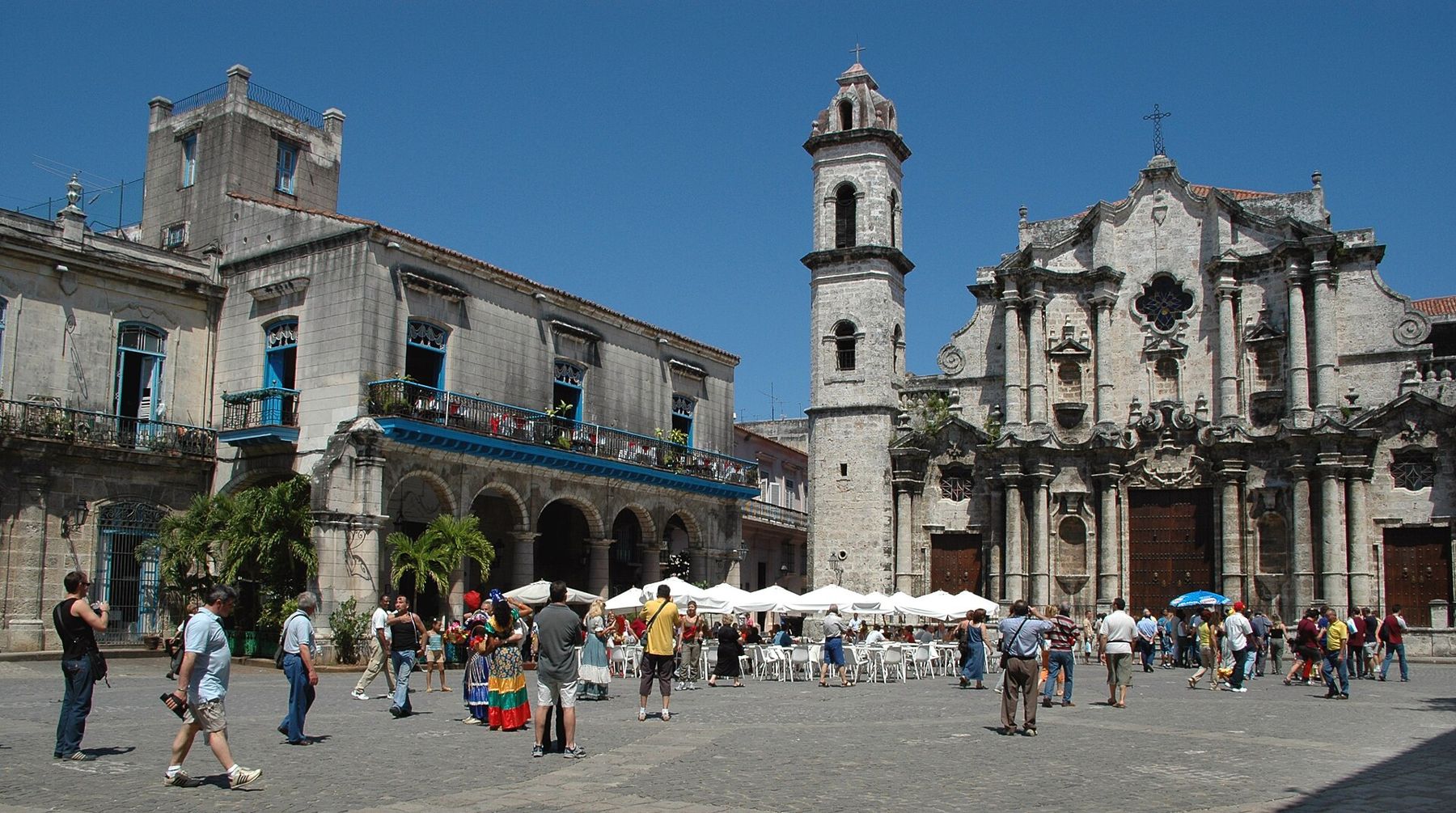
A short walk along Calle Empedrado brings you to the cathedral square, the most theatrical of the four. The cathedral was begun by the Jesuits in the eighteenth century and became a cathedral after their expulsion from Spanish lands. Its facade curves and ripples like a stage set, and its two towers are not the same width. Look closely at the stone and you can see fossil shells and coral: the city was built from limestone quarried along the coast.
i
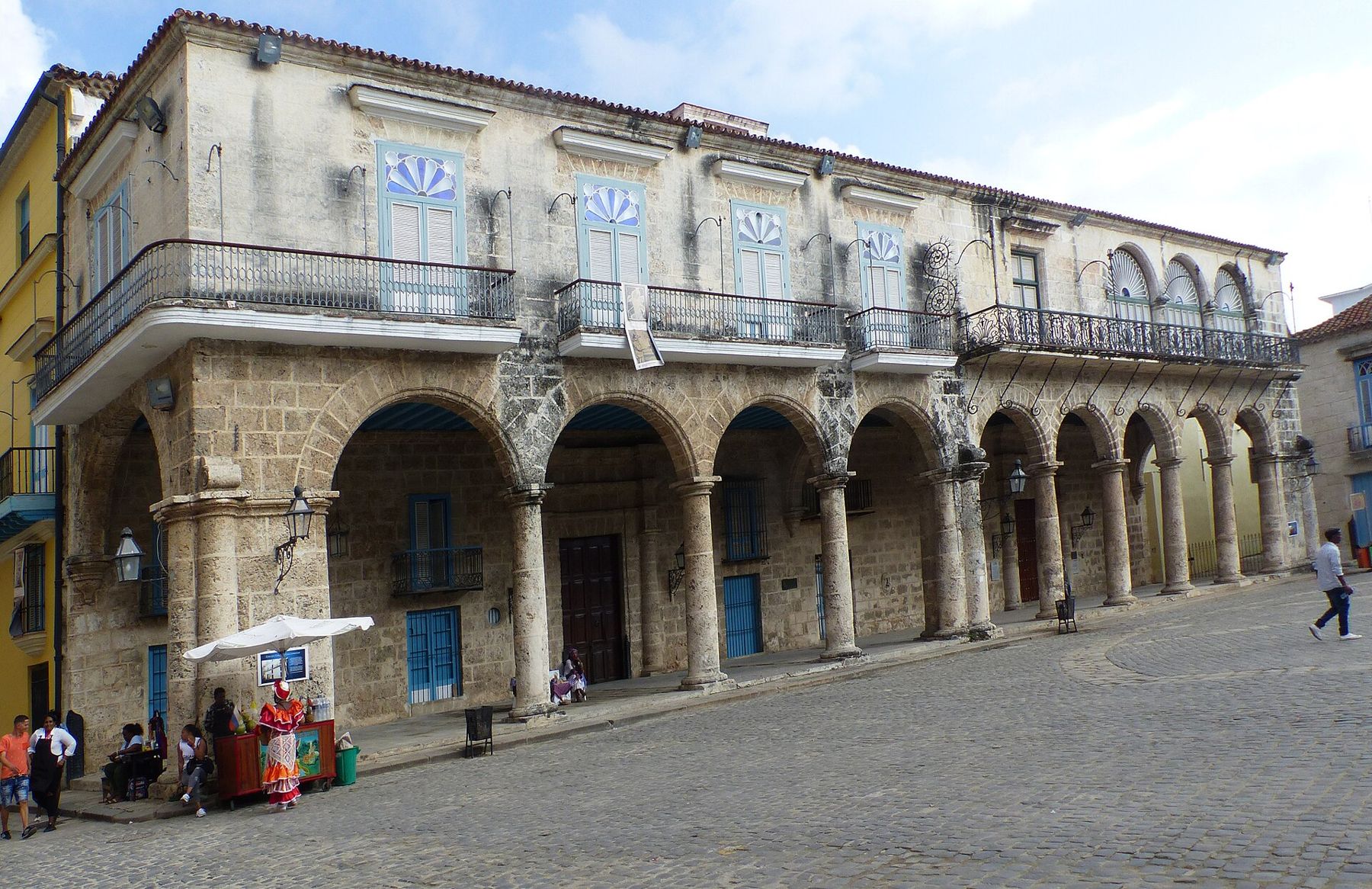
Photograph by Wolfgang Sauber, CC BY-SA 4.0The square is framed by the former palaces of colonial aristocrats, their ground floors opening onto arcades and their windows topped with half-moon panes of coloured glass called mediopuntos. These fans of blue, red and yellow glass softened the glare long before air conditioning. One of the palaces houses a museum of colonial furniture and decoration, a good way to see what lies behind those big wooden doors.
This is also the square where costumed women with baskets of flowers and cigars pose for photographs. They expect a tip if you photograph them, so ask first and agree on it. The same goes for anyone who offers to show you the way: a friendly chat on Obispo often ends in a request for money or a nudge towards a particular restaurant. A polite no and a confident step usually settle it.
Plaza de San Francisco: the harbour square
 Further along · HavanaEl Morro, La Cabaña and the nine o'clock gun
Head south along Calle Oficios and the streets open towards the water. Plaza de San Francisco de Asís sat by the docks, where merchants met ships and goods came ashore. The church and convent of San Francisco, with one of the tallest bell towers of the colonial city, is no longer used for worship; its nave serves as a concert hall for early and choral music, and the cloisters hold a museum of religious art. Check the programme at the door, since concerts are a pleasant and inexpensive way to sit in cool stone for an hour.
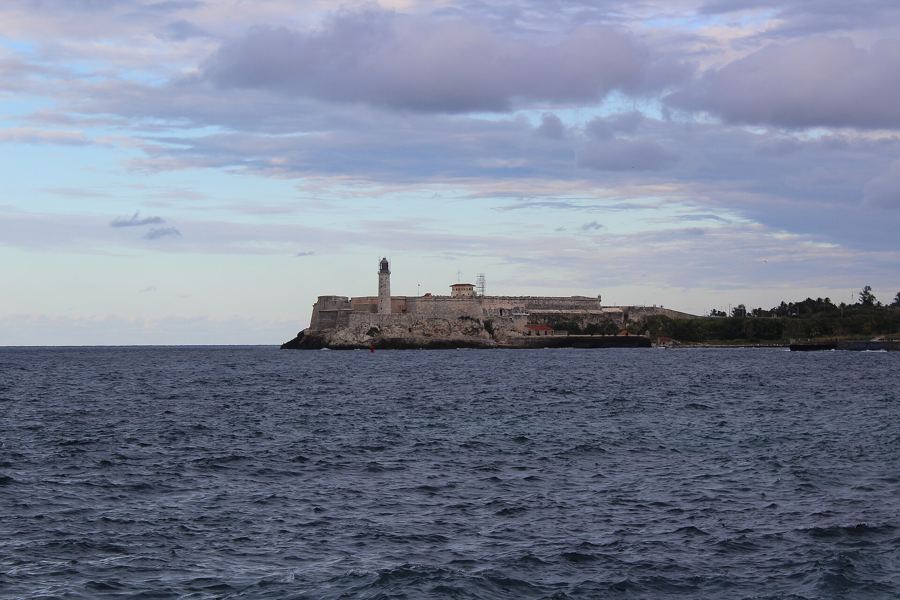
Across the square, the domed Lonja del Comercio, the old commodities exchange from the early twentieth century, has been restored as offices. In the middle, the white marble Fuente de los Leones, a fountain of lions from the 1830s, gives you a landmark. From here the harbour fortresses are visible across the water, and the wider story of how Havana was defended starts to make sense.
Plaza Vieja: the market square reborn
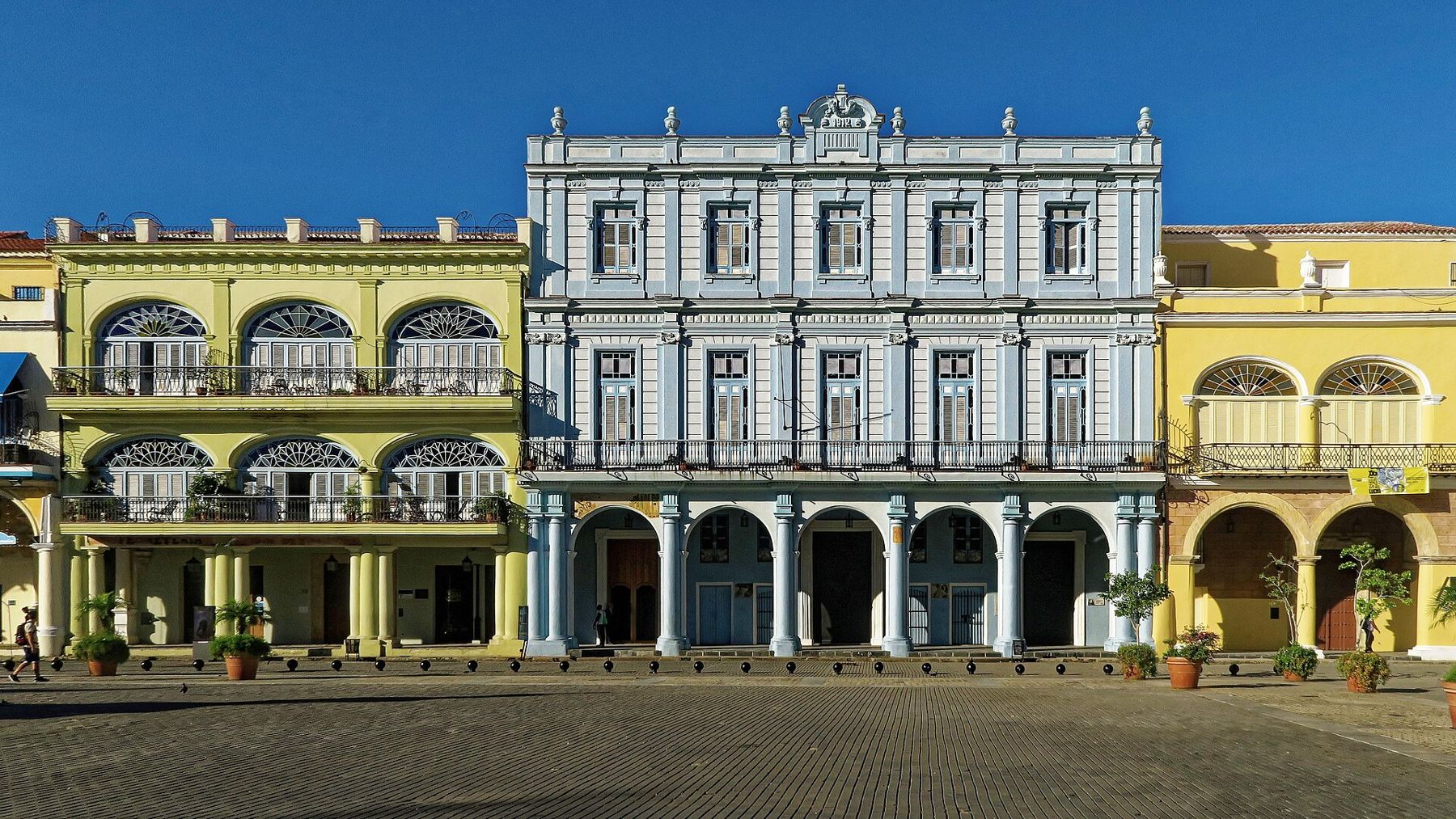
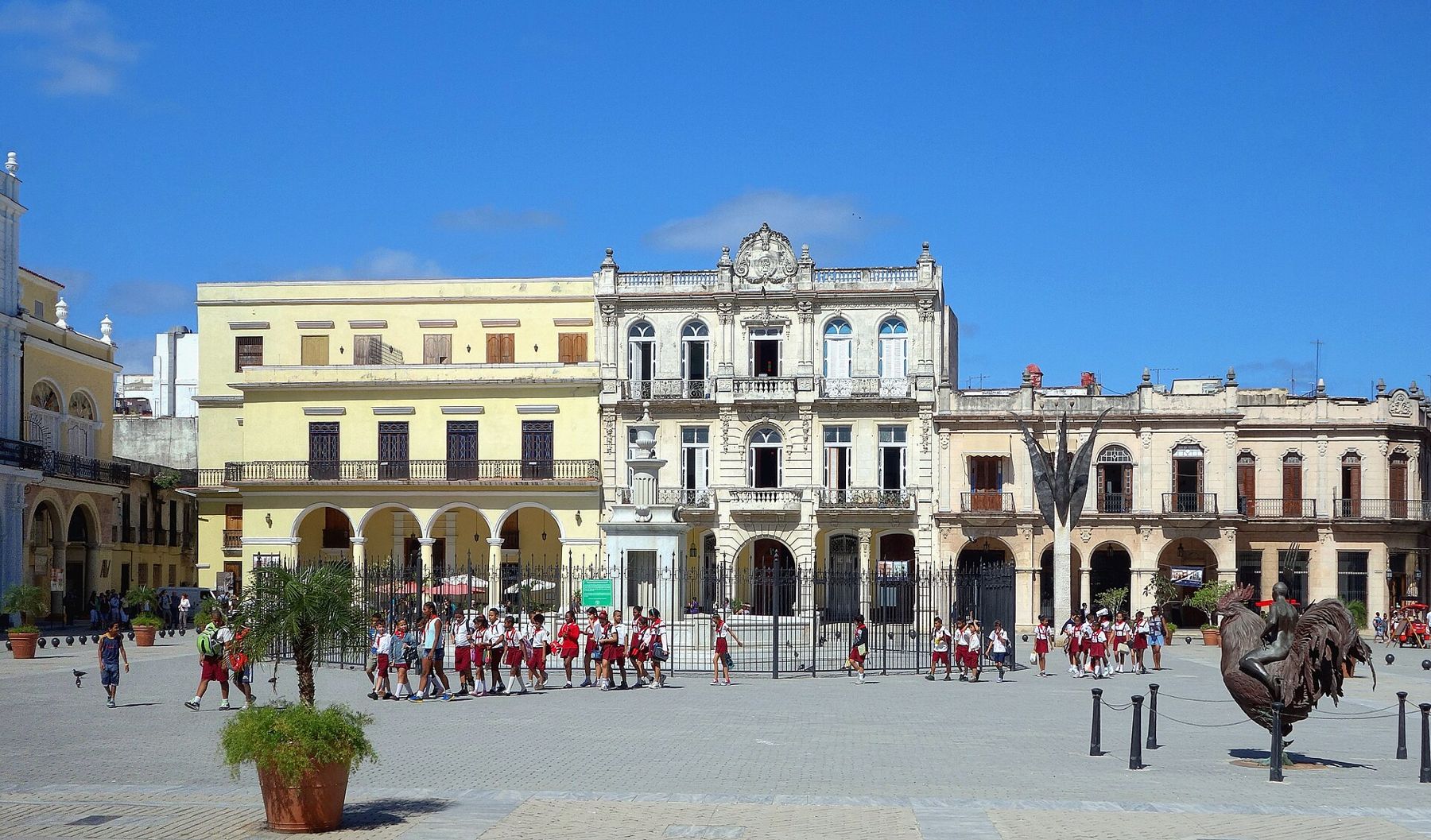
Despite its name, the Old Square was laid out later than Plaza de Armas, in the sixteenth century, as an open market and a place for public events. By the late twentieth century it had been badly neglected, with an underground car park dug beneath it. Since the 1990s the square has been rebuilt facade by facade, and today it is the best place to see the full range of Havana's architecture in one turn of the head: colonial arcades, a tall art nouveau building, iron balconies and painted shutters.
i
Photograph by Burkhard Mücke, CC BY-SA 4.0Much of this work has been led by the Office of the City Historian, a state body that reinvests income from tourism into restoration and housing. The results are uneven by design. One block gleams; the next still has families living behind cracked plaster and propped balconies. That contrast is part of what you are seeing, and it is worth walking a few streets beyond the restored core to see daily life in the old city.
One block gleams; the next still has families living behind cracked plaster and propped balconies.
i
Photograph by Velvet, CC BY-SA 4.0A camera obscura at the top of one building on the square projects a live view of the old city onto a dish, and the guide inside explains what you are looking at. Opening times vary, so ask on the day.
Walking it with soltura
The order above, from Plaza de Armas to the cathedral, then down to San Francisco and Plaza Vieja, keeps you moving roughly in a loop. Calle Obispo, the pedestrian street that runs from Plaza de Armas up to Parque Central, ties the walk to the rest of the city. Calle Mercaderes, parallel to it, is quieter and lined with small museums. Use Obispo to arrive and Mercaderes to wander.
- Go early. Before nine the squares belong to people sweeping doorsteps and walking to work. Cruise passengers and tour groups arrive mid-morning.
- Follow the shade. The arcades around each square were built for exactly this. Duck into museum courtyards when the sun is high.
- Carry small notes. Museum entry fees, toilets and musicians all expect cash, and change is often short. Check current prices before you go, as they change often.
- Watch your feet. Kerbs are high, paving is uneven and some streets have open drains after rain.
When you have seen the squares, walk west and follow the sea wall described in the Malecón and Vedado guide. For the cannon fired across the harbour every night, see the story on El Morro and La Cabaña. And when the old city starts to feel small, it is a good moment to plan the road west, starting with the Viñales valley.