
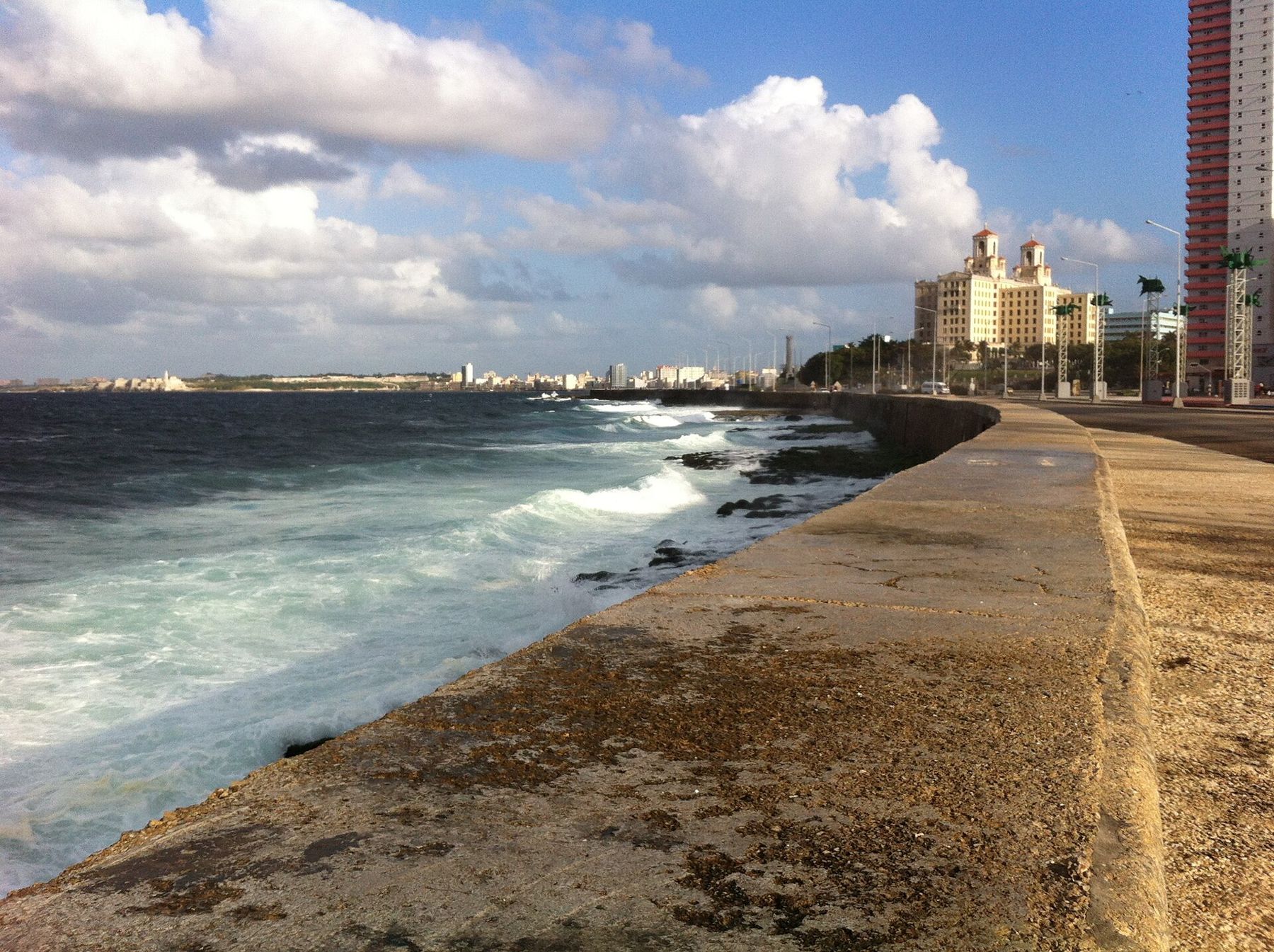
The Malecón is less a road than a long seat. Its low wall runs for about eight kilometres along Havana's northern shore, from the mouth of the harbour near Old Havana to the Almendares river, and in the evening it fills with people doing very little: fishing with a hand line, sharing a bottle, courting, singing, or simply catching the breeze that the city's streets lack. Walking it at sunset, with the waves on one side and a curve of faded facades on the other, is one of the simplest pleasures Havana offers.
Behind the wall lies Vedado, the district that grew up in the late nineteenth and early twentieth centuries when the city spilled out beyond its old walls. Where Old Havana is colonial and cramped, Vedado is leafy and spread out, with mansions, apartment towers and wide avenues.
The sea wall and its story
Work on the Malecón began in 1901, during the period of United States military government after the war with Spain, and it was extended westward in stages over the following decades. Its purpose was practical: to protect the shore and open a broad seafront drive. It also gave the city a public space that belonged to everyone, and that is how it is still used.
i
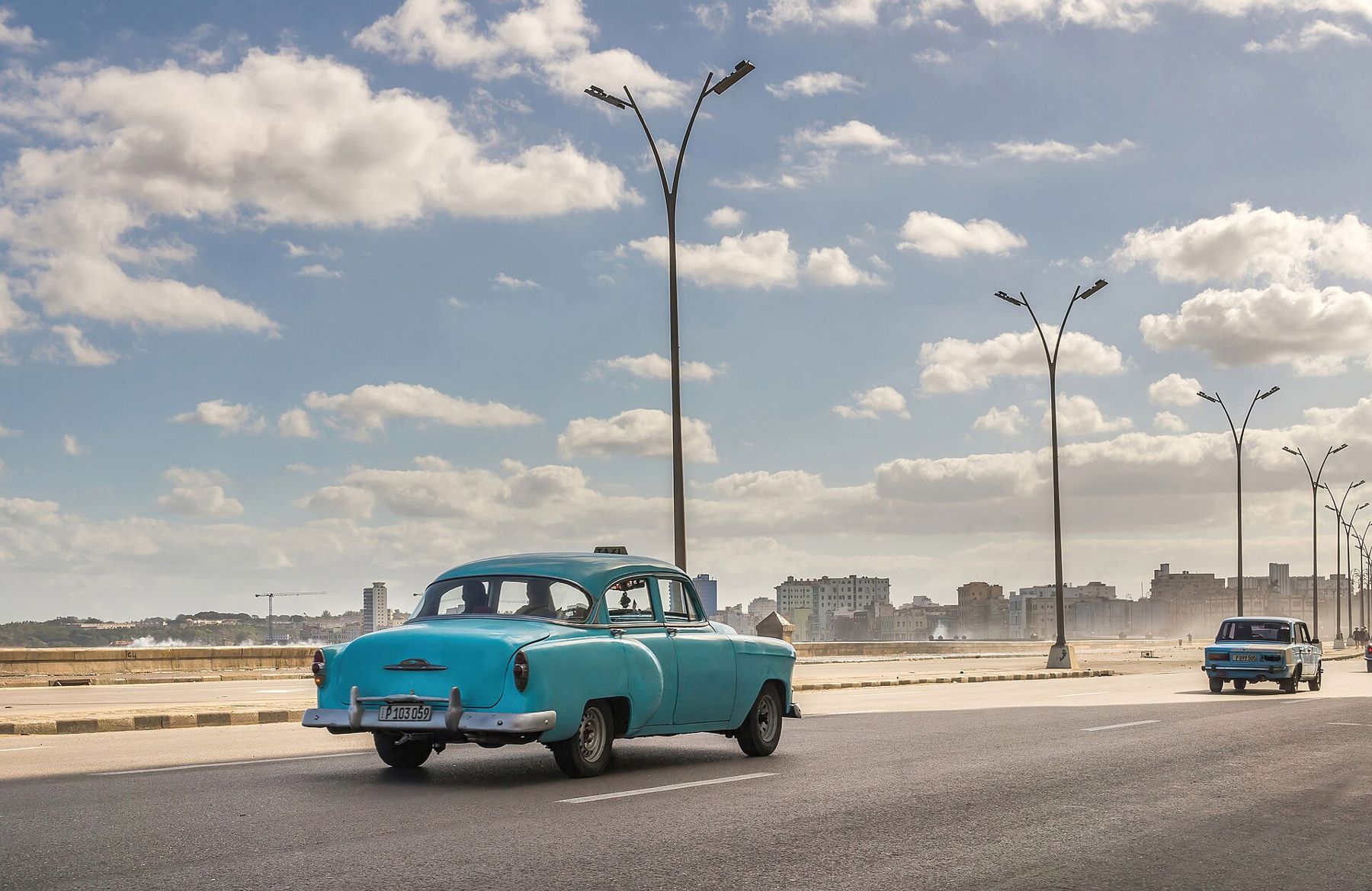
Photograph by Ezarate This is a retouched picture, which means that it has been digi, CC BY-SA 4.0The stretch closest to Old Havana, in the district of Centro Habana, is the most battered. Salt air eats at the arcaded buildings that face the sea, and many stand propped and half empty, though restoration work appears block by block. Further west, near the monument to Antonio Maceo, the general of the wars of independence, and the small colonial watchtower of San Lázaro, the road widens and the views open.
Small details reward a slow walk. Iron rings for mooring and old stone steps survive in places, and the wall itself changes height and finish from one stretch to the next, a record of the decades over which it was built. Benches are few, so the wall is the seat, and nobody minds you joining the people already sitting on it.
Classic American cars still roll along this road, and you will see them in every photograph, but they are only part of the scene. Watch instead for the fishermen with their lines wrapped around a can or a plastic bottle, and for the boys diving off the rocks on calm summer days.
When the sea comes over
From late autumn to early spring, cold fronts from the north push big swells against the wall. On those days waves explode over the parapet, soaking the road and sometimes flooding the first streets inland. The spray is spectacular from a distance and genuinely dangerous up close: the water carries stones and the road can be closed to traffic. Watch from a safe distance and from higher ground, and do not walk on the seaward side of the road when the waves are big.
i
Photograph by Unknown author, Public domain
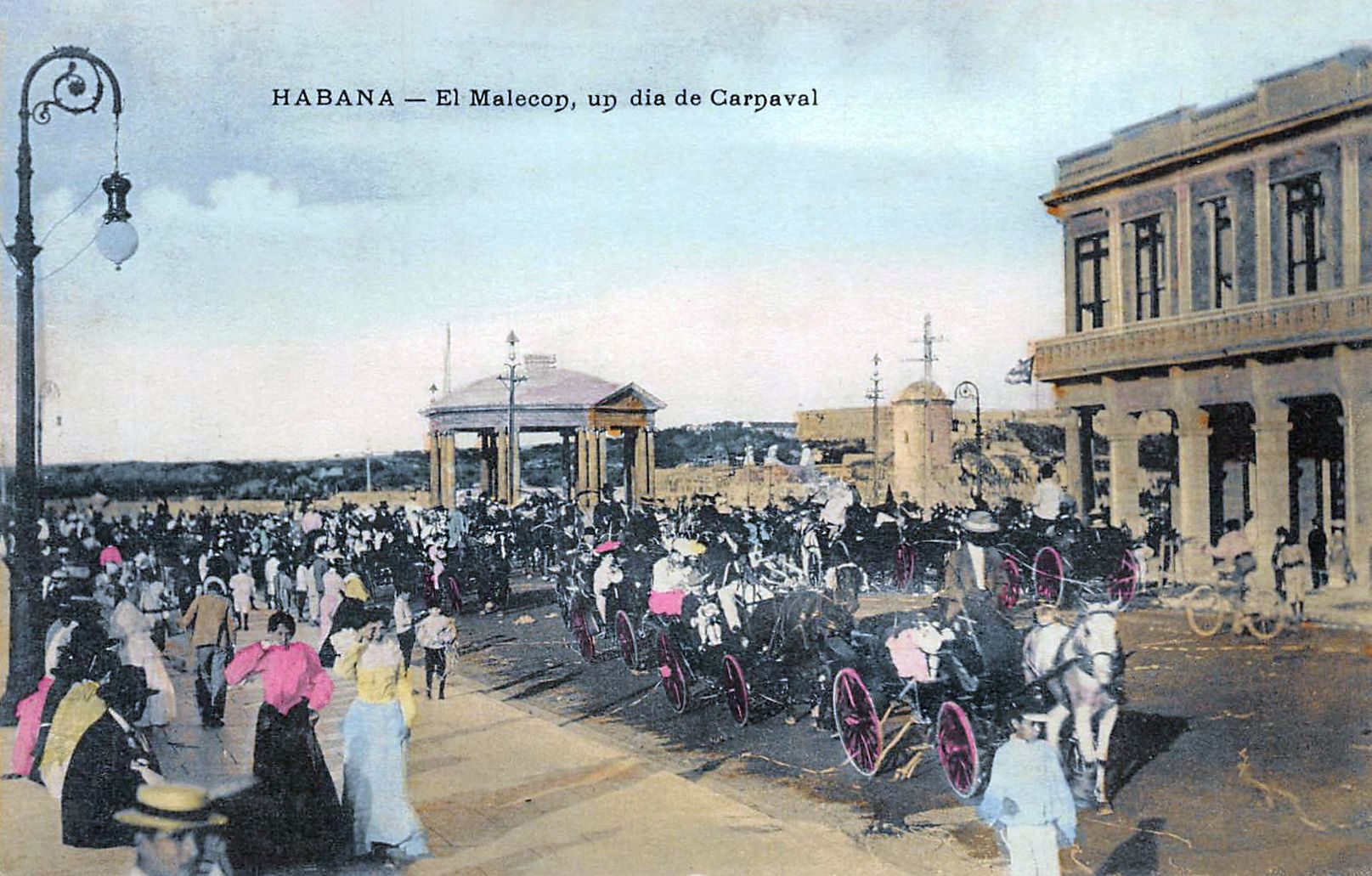
The same seafront has long been a stage for public life. Early twentieth-century postcards show crowds and carriages packed along the Malecón for carnival, and the road is still used for parades and celebrations when they are held. Check locally, as dates and events change from year to year.
Vedado's grid
 Further along · HavanaMiramar, Fifth Avenue and the National Aquarium
Vedado means "forbidden": in colonial times this land was kept clear of building as a defensive buffer. When it was finally laid out from the 1850s onwards, planners used a strict grid with numbered and lettered streets, wide pavements and space for gardens. It became the address of choice for the sugar-rich families of the early twentieth century, and their eclectic mansions, now often divided into flats or used as offices and cultural centres, still line streets such as Calle 17 and Línea.
The landmark you will see from almost anywhere on the western Malecón is the twin-towered Hotel Nacional, opened in 1930 on a low hill above the sea. Even if you never go inside, it helps to orient yourself: the seafront in front of it is a natural place to pause, and the hill behind it marks the start of La Rampa.
La Rampa, Coppelia and the university
La Rampa is the stretch of Calle 23 that climbs from the Malecón towards the centre of Vedado. In the 1950s it was the city's most modern street, lined with offices, cinemas and airline counters, and it keeps a mid-century look with its tall towers and flat-roofed blocks. Small pavement tiles set into the footpath carry designs by Cuban artists.
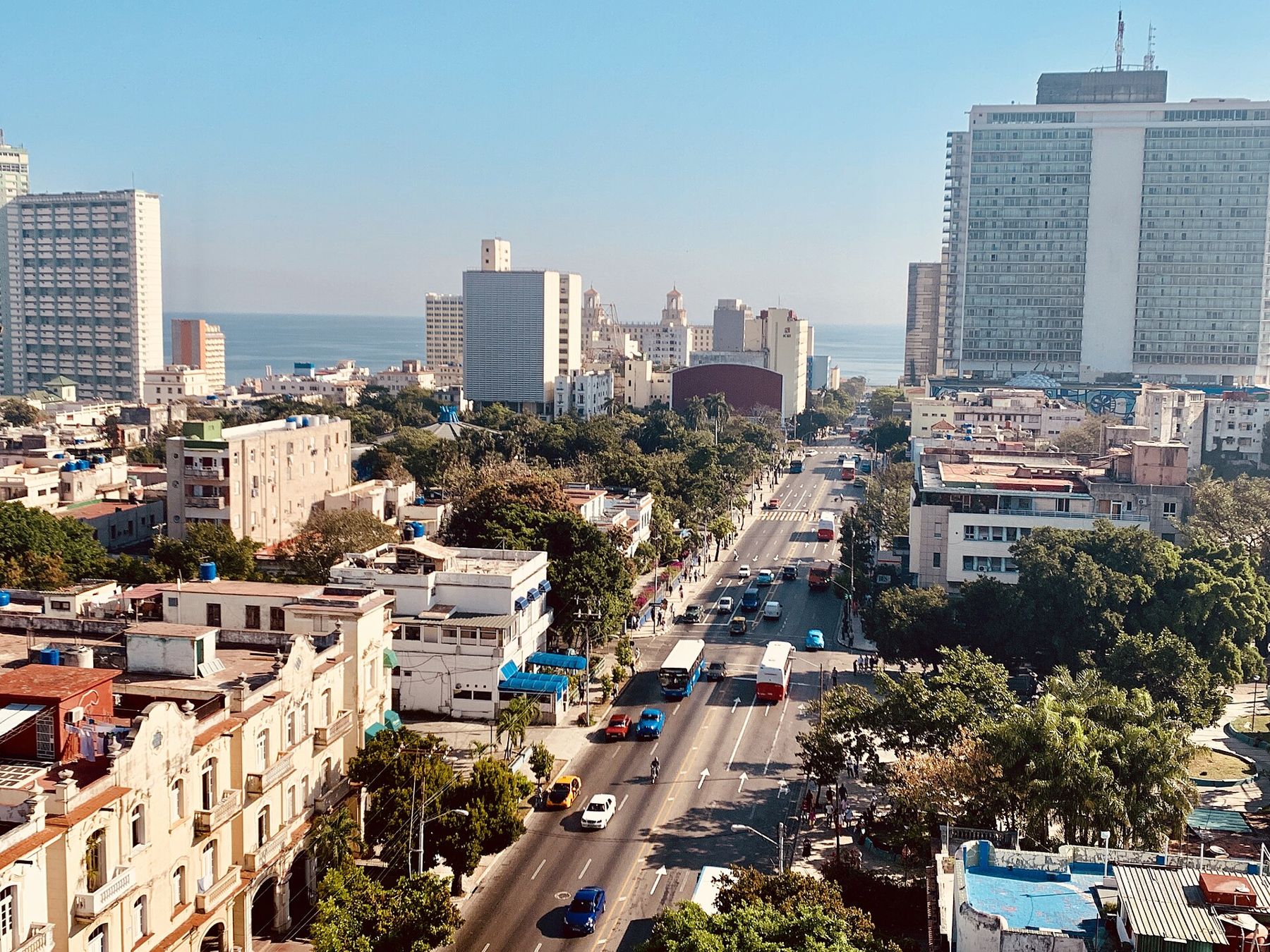
i
Photograph by Tacorontey, CC BY-SA 4.0At the top of La Rampa, a park takes up an entire block around Coppelia, the state ice-cream parlour opened in 1966, with a futuristic concrete pavilion raised on legs. Habaneros queue here for a long time, and the queue is part of the ritual. Separate counters and payment methods have existed for different customers over the years; the system changes, so watch what others do and ask politely. The park became famous abroad through the 1993 film Fresa y chocolate (Strawberry and Chocolate), whose opening scene is set here.
A few blocks east, a broad flight of steps known as the Escalinata climbs to the University of Havana. The university was founded in 1728, making it one of the oldest in the Americas, and moved to this hill in the early twentieth century. At the top of the steps sits the Alma Mater, a bronze statue of a seated woman with open arms, unveiled in 1919. The steps have been a stage for student protest and political speeches through Cuban history, and the campus, with its neoclassical columns and shady quadrangles, is a calm place to walk when classes allow visitors.
The Malecón is less a road than a long seat.
Walking it with soltura
A good afternoon starts in Old Havana and follows the sea wall west through Centro Habana to the foot of La Rampa, about an hour of slow walking. Climb La Rampa to Coppelia, cut across to the university steps, and come back down to the Malecón for sunset. If your legs give out, shared taxis run along the seafront, and asking any driver which way they are going is normal.
- Timing: late afternoon to dusk is when the wall comes alive. Midday is hot and empty.
- Safety: the seafront is busy and generally relaxed, but keep phones and cameras close at night, as in any large city.
- Blackouts: power cuts can leave streets dark; carry a small torch.
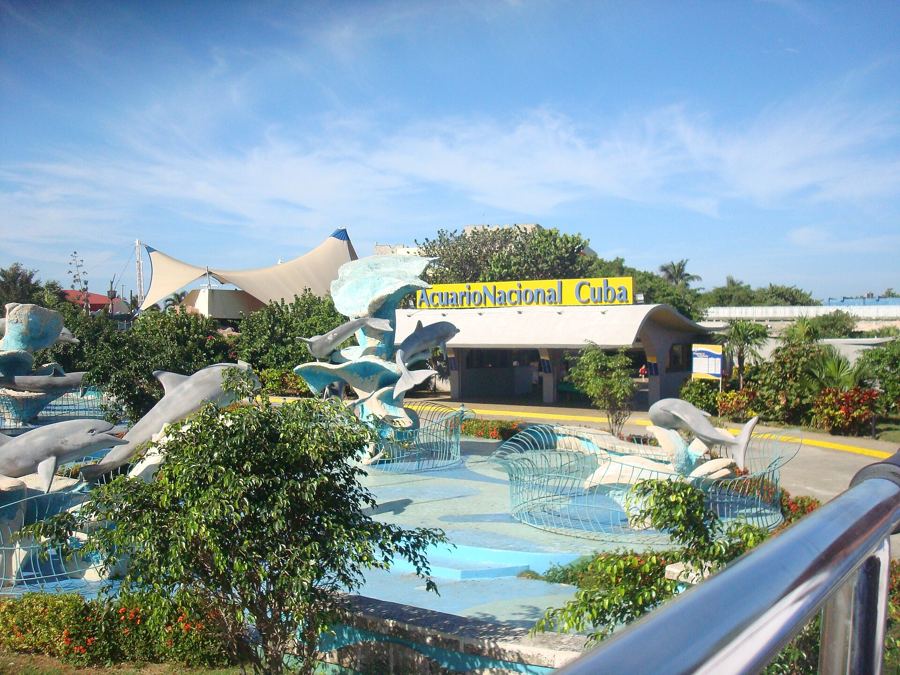
From the western end of the Malecón, the tunnels and bridges across the Almendares lead on to Miramar and the National Aquarium. Back east, the walk links naturally with the four squares of Old Havana, and on clear evenings you can watch the lighthouse of El Morro begin to flash across the harbour.