
Two of the best trips from Santiago de Cuba lead in opposite directions. To the west, a winding road through green hills reaches the village of El Cobre and the basilica of the Virgen de la Caridad del Cobre, the most important shrine in Cuba. To the east, a steep mountain road climbs to the Gran Piedra, a huge rock with views over the Sierra Maestra and the sea, passing the ruins of coffee estates built by French refugees. You can do both in one long day, or split them.
The shrine of the Virgen de la Caridad
The basilica stands on a hill about twenty kilometres west of Santiago de Cuba, its cream walls and red domes visible from far off. Inside, above the altar, is a small wooden statue of the Virgin, dressed in gold and holding the infant Jesus. She is Nuestra Señora de la Caridad del Cobre, Our Lady of Charity, and in 1916 the Pope declared her the patron saint of Cuba. The present church was completed in 1927.
The story of the statue goes back to the early seventeenth century. Three young men, two indigenous brothers and an enslaved African boy, were out in a small boat in the Bay of Nipe on the north coast when they found the figure floating on the water, dry despite the waves. Known as the three Juans, they appear in many images of the Virgin. The statue was brought to El Cobre, where it has been venerated ever since.
For many Cubans, believers and not, the Virgen de la Caridad is a national symbol. She is also identified with Ochún, the goddess of rivers and love in Santería, the Afro-Cuban religion that blends Yoruba belief with Catholic saints, and you will see yellow, her colour, among the flowers and offerings. Popes have visited the shrine, and pilgrims come from all over the island, especially around her feast day on 8 September.
Offerings and the copper mine
Beside the main church is a room of offerings left by those who believe the Virgin answered their prayers. There are crutches, letters, photographs, baby clothes, university diplomas, military medals, sports trophies and models of houses and boats, a moving record of private hopes. Ernest Hemingway gave the Nobel Prize medal he won in 1954 to the shrine, and it is now kept away from public view. Visitors may leave their own offerings, and flowers are sold outside.
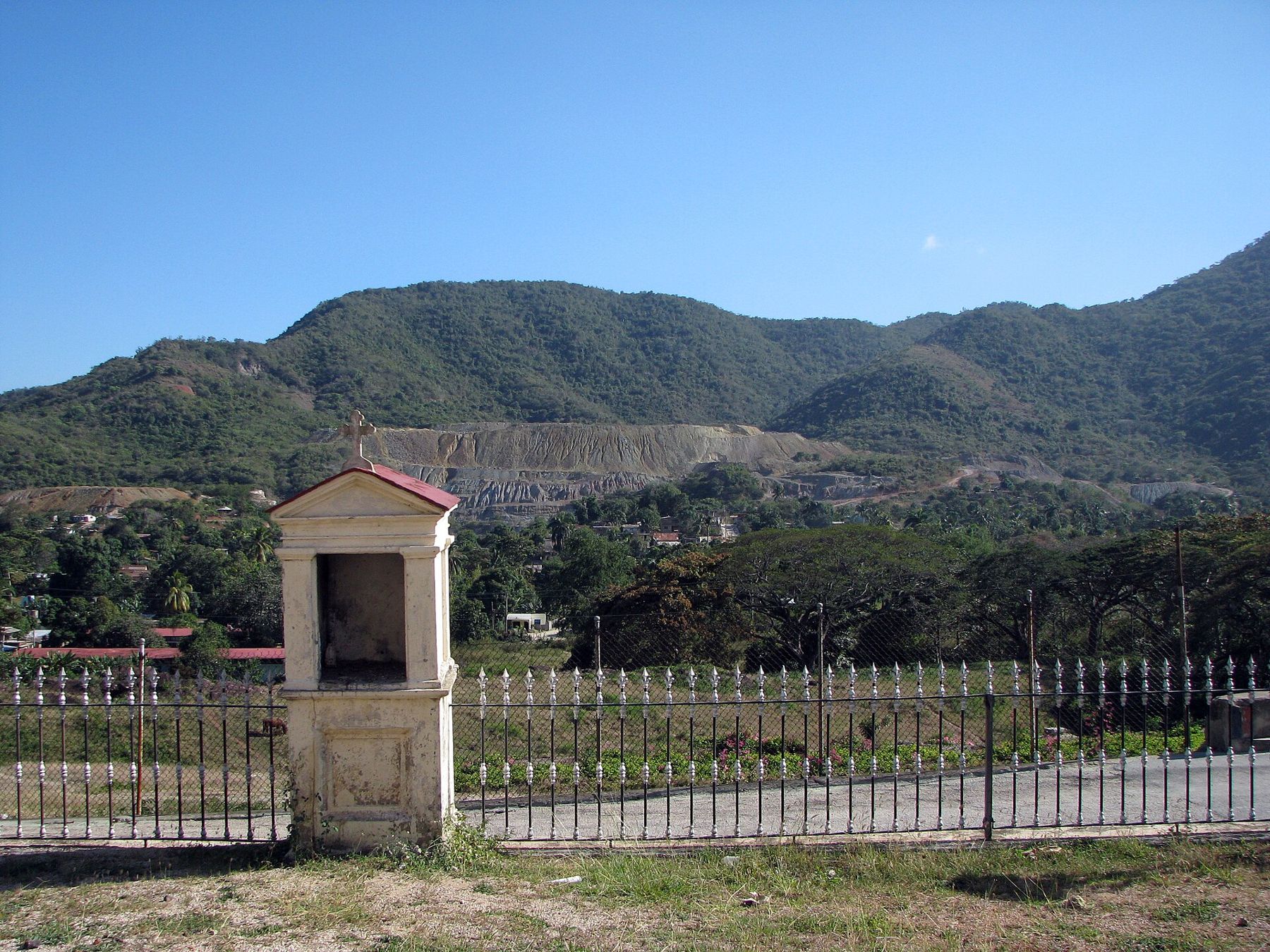
The village takes its name from copper, cobre in Spanish. The mines here were worked from the sixteenth century, among the earliest copper mines in the Americas, largely by enslaved Africans owned by the Spanish crown. Their descendants petitioned for their freedom for generations, and it was finally granted around 1800. The scarred hills and spoil heaps of the old workings can still be seen from the village.
i
Photograph by Hyppolyte de Saint-Rambert, CC BY-SA 4.0 Further along · The centreThe Valley of the Sugar Mills
Dress respectfully inside the basilica, keep voices low during services, and expect people selling flowers, small statues and pieces of copper ore outside. A polite refusal is enough. On a hill near the village a large sculpture commemorates the escaped slaves, the cimarrones, who resisted in these mountains; it can be reached on foot by a path and steps.
The road to the Gran Piedra
The Gran Piedra lies east of Santiago, in the mountains above the coast. The road leaves the coastal highway and climbs steeply for about twelve kilometres through forest, with sharp bends and few places to pass. It is narrow and can be in poor condition, so a taxi with an experienced driver is easier than driving yourself. The air grows cooler and damper as you rise, and the vegetation changes from dry coastal scrub to pines, ferns and wild flowers.
The area is part of the Baconao biosphere reserve, a wide stretch of mountains, coast and forest east of the city. There is a botanical garden near the summit road, known for its flowers, and the views on the way up open over the coast and the Caribbean.
Climbing the great rock
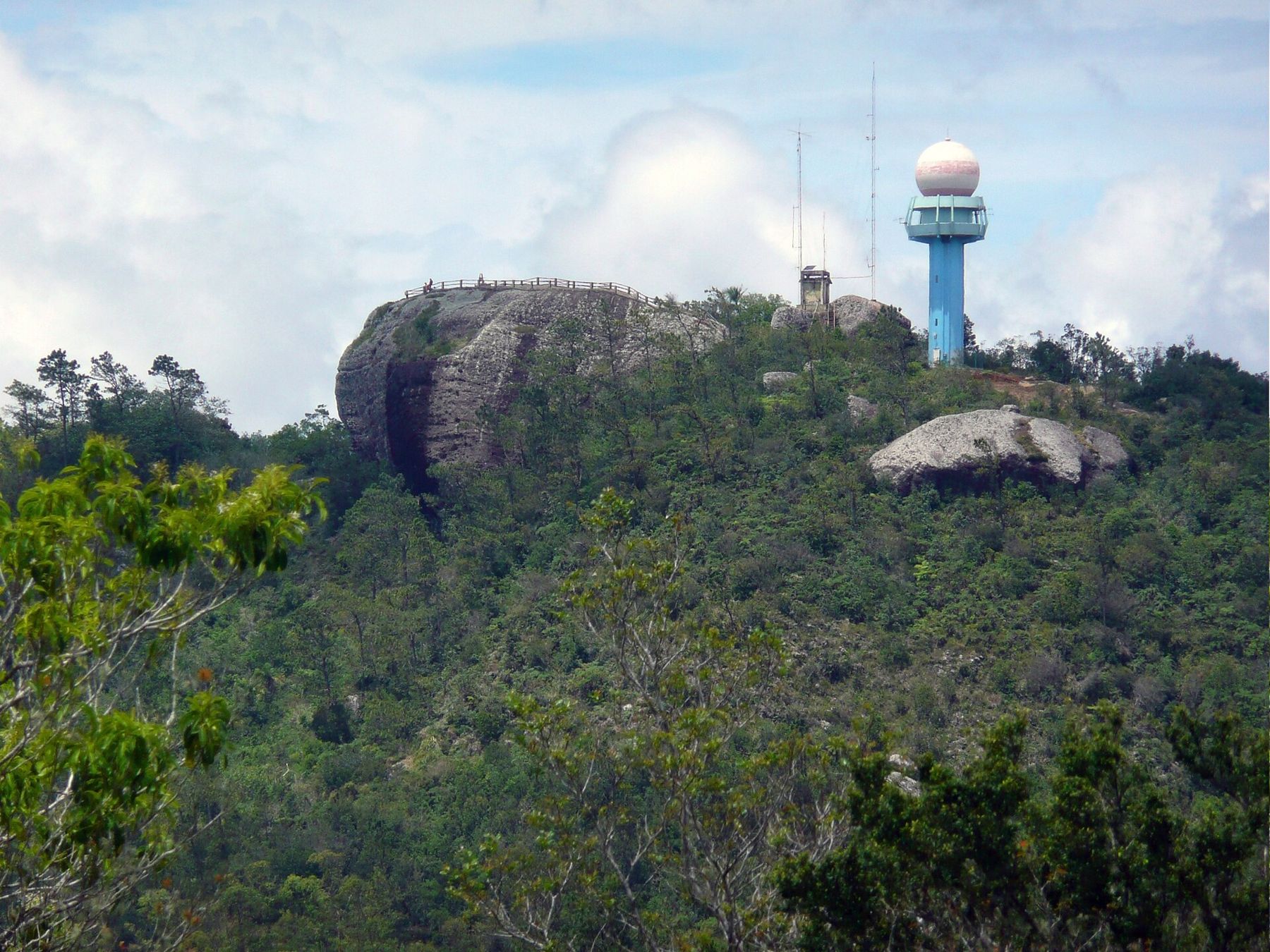
The Gran Piedra itself is an enormous block of volcanic rock, said to weigh tens of thousands of tonnes, sitting on the top of the ridge at over 1,200 metres. A stairway of some four hundred and fifty steps leads up from the end of the road, followed by a metal ladder to the flat top, where a railing runs around the edge. On a clear day the view is enormous, over the Sierra Maestra on one side and the sea on the other.
Clouds often gather by late morning, so go early if you can. The climb is steady rather than difficult but tiring in the heat; take it slowly and carry water and a light layer for the top. A small fee is usually charged, and access depends on the weather and the state of the steps, so ask before you set out.
La Isabelica and the French coffee estates
After the revolution in Saint-Domingue, now Haiti, at the end of the eighteenth century, French planters fled to eastern Cuba and set up coffee estates in these mountains. By the early nineteenth century the slopes were covered with them, worked by enslaved Africans. In 2000 UNESCO listed the archaeological landscape of these first coffee plantations in south-eastern Cuba as a World Heritage site.
La Isabelica, a couple of kilometres beyond the Gran Piedra, is the best-known estate. Its stone house has been turned into a museum, with furniture, tools and the large drying terraces where coffee beans were spread in the sun. It is a quiet, often misty place, and it tells the same story of wealth and forced labour that runs through the tobacco country of the west and the sugar valleys of the centre. For the coffee itself, see eating at Cuban tables.