
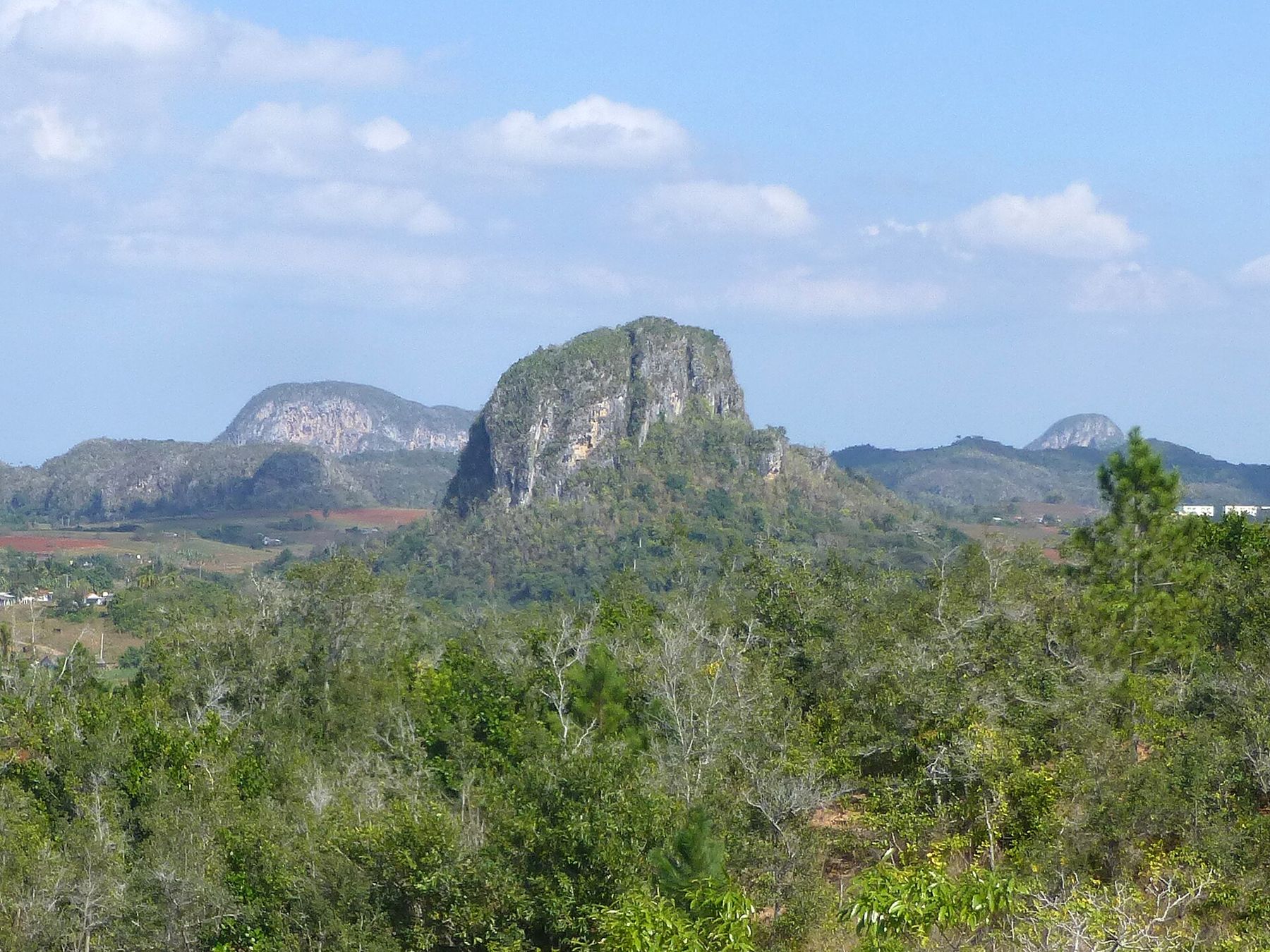
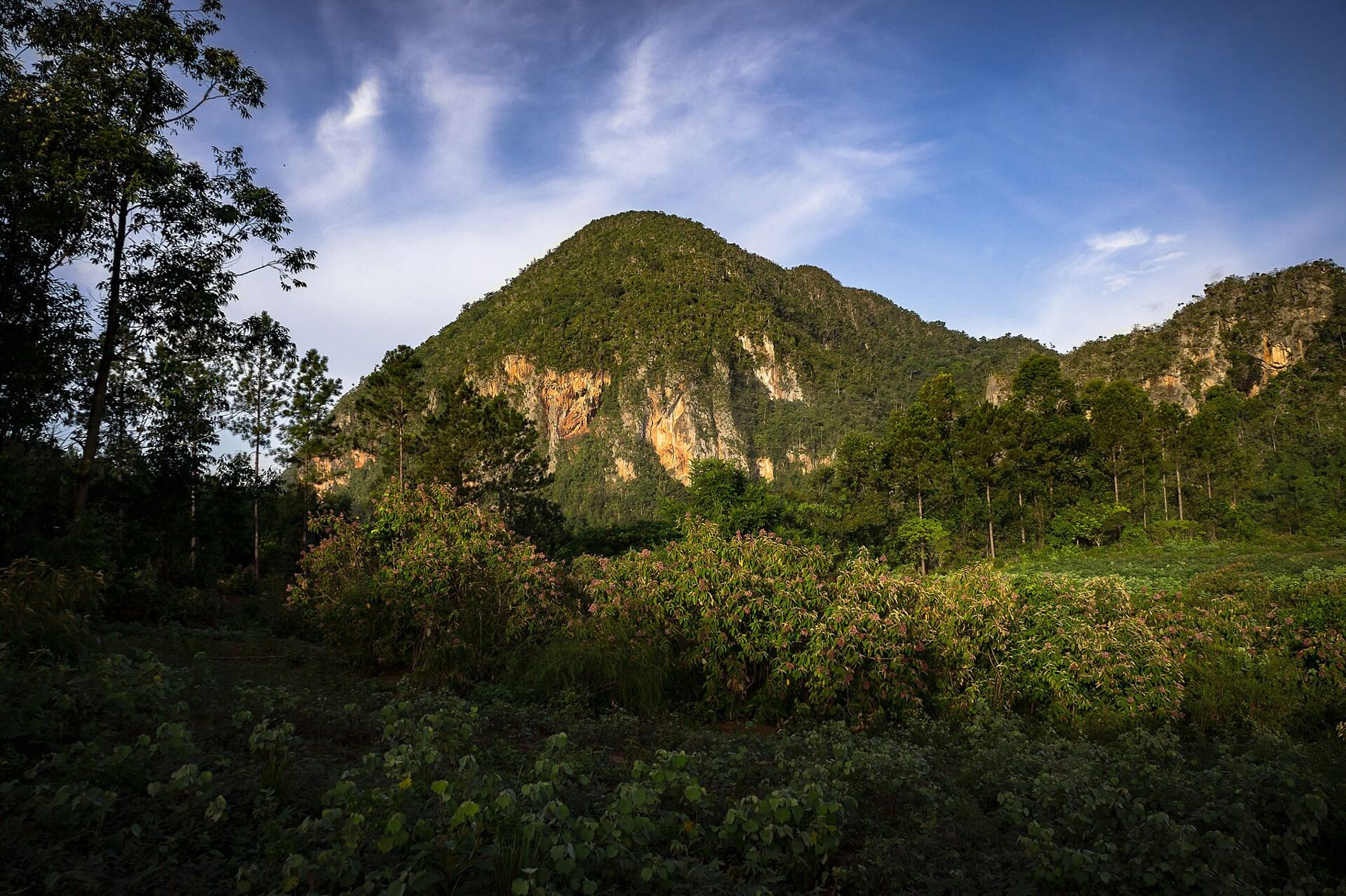
The road west from Havana runs for hours across flat farmland. Then, past the provincial capital of Pinar del Río, it climbs into low hills and drops into a valley that looks unlike anywhere else in Cuba. Rounded limestone hills, steep-sided and covered in green, rise straight out of red earth like loaves set on a table. Between them lie fields of tobacco, maize and beans, thatched drying barns, and small farmhouses with rocking chairs on the porch. This is the Viñales valley, in the Sierra de los Órganos.
In 1999 UNESCO listed the valley as a World Heritage cultural landscape, recognising both the natural scenery and the traditional farming that still shapes it. It is part of the Parque Nacional Viñales, and it has become one of the most visited places in Cuba outside Havana. Even so, a short walk away from the main road brings you into quiet countryside.
The mogotes
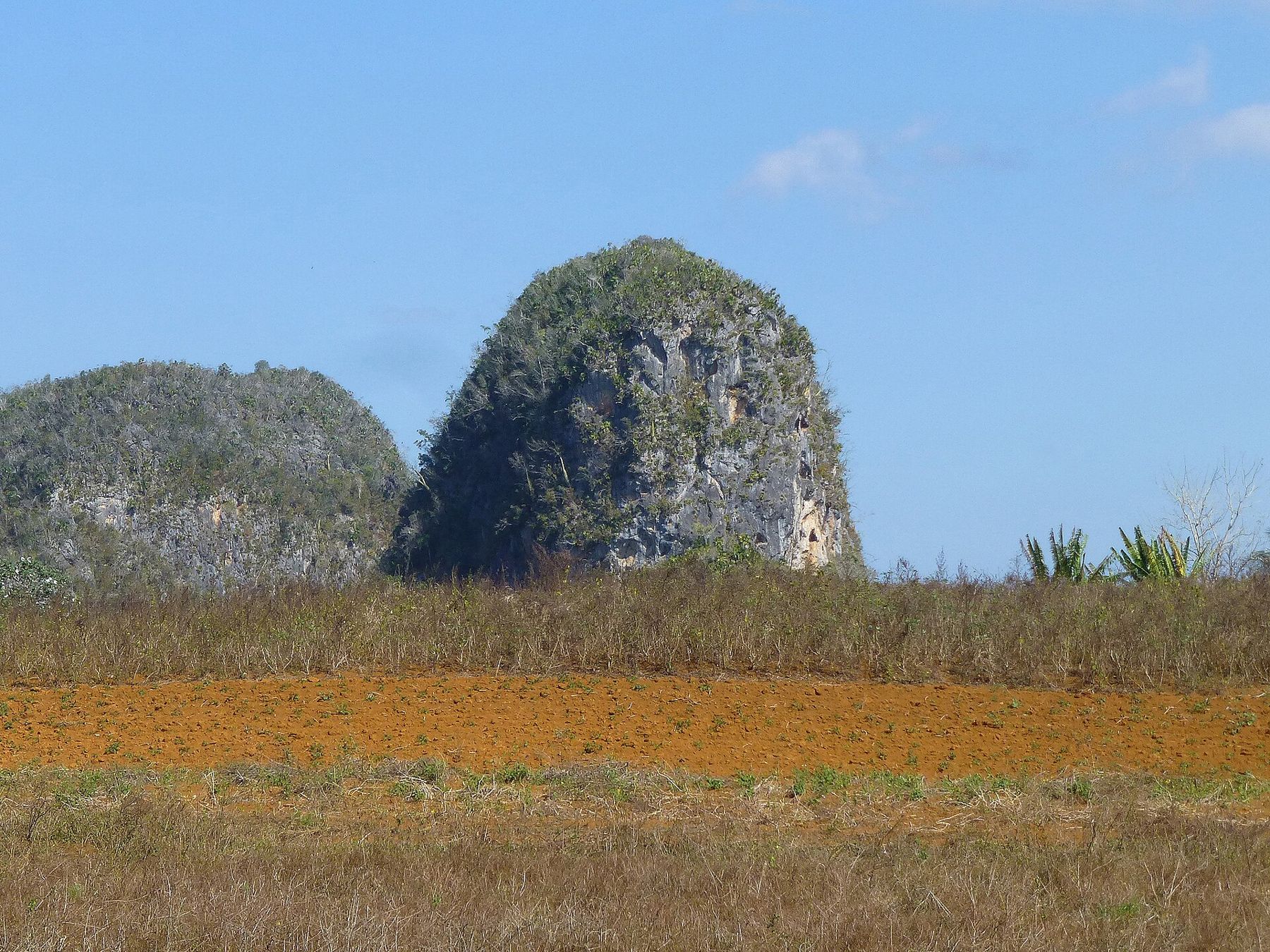
The hills are called mogotes. They are what remains of a vast limestone plateau that was slowly dissolved by rain and underground rivers over millions of years, leaving isolated towers with near-vertical walls. Their tops are covered in dense vegetation that thrives on thin soil, including plants found nowhere else, and their cliffs are riddled with caves.
i
Photograph by Ji-Elle, CC BY-SA 4.0Their shapes change with the light. In the early morning, mist pools in the valley and the mogotes seem to float. At midday they flatten in the glare. At sunset they turn gold and then purple. If you can, spend at least one night in the valley to see the full cycle.
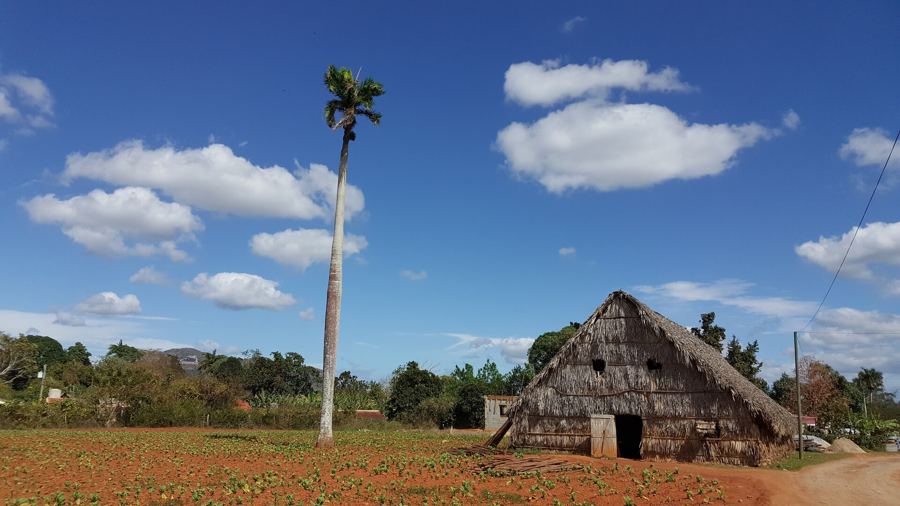
The valley floor sits on softer rock and holds the soil washed down from the hills, which is why the fields are so fertile. The mogotes, by contrast, are too steep to farm, so they have kept much of their forest. That contrast, wild hilltops above worked fields, is exactly what makes the view. Look for the royal palms that stand alone in the fields, left by farmers for shade and for their fronds, which are used to thatch barns and roofs.
The town of Viñales
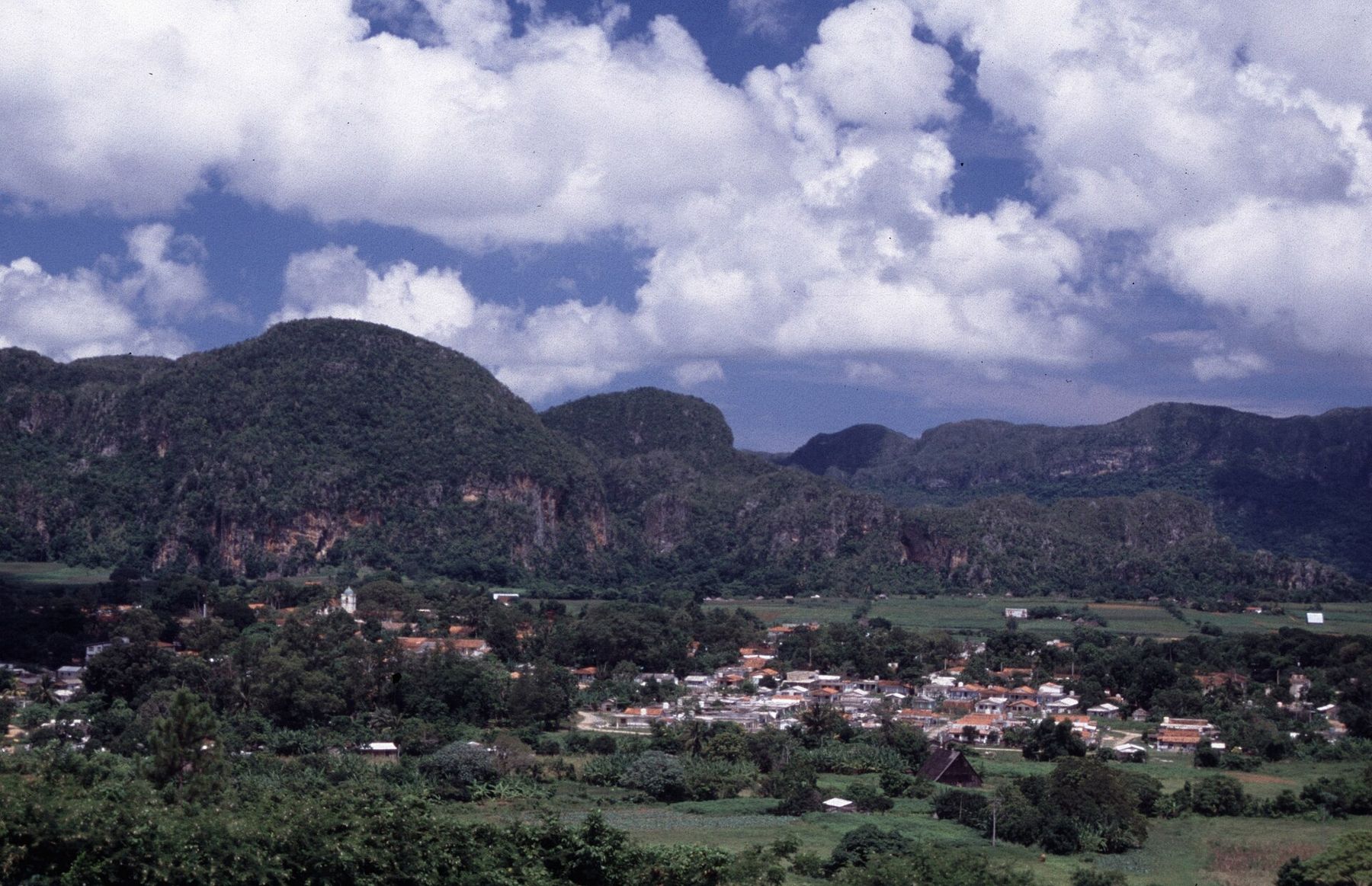
The town itself is small and low, built along a main street with a church and a central square. Most houses are single-storey, with columned porches and painted shutters, and many families now rent rooms to travellers. The town makes a convenient base: you can walk into the valley from its edges, and buses and taxis leave from the centre.
i
Photograph by AxelF, CC BY 2.5Viñales is busy and well used to visitors, and you will be offered rooms, rides and excursions as soon as you arrive. A friendly no is enough, and it is easy to make your own plans. Power and water can be irregular, as elsewhere in Cuba, so carry a torch and use water carefully.
 Further along · The westHow Cuban tobacco is grown and cured
Fields, oxen and tobacco
The valley floor is farmland, and the farming is old-fashioned by necessity and by choice. Fields are ploughed with pairs of oxen, partly because machinery and fuel are scarce and partly because farmers say the animals compact the soil less. The red, iron-rich soil and the climate suit tobacco particularly well, and the western end of the island produces some of the most prized tobacco leaf in the world.
Tobacco is planted in autumn and harvested in the first months of the year, and the leaves are hung in tall, thatched barns to cure. If you walk the valley in winter you will see the fields green and the barns filling. Many farmers welcome visitors to see the barns and explain the process; you will usually be offered cigars to buy, which you are free to decline. The story of how the leaf becomes a cigar is told in more detail in how Cuban tobacco is grown and cured.
i
Photograph by Ricardusmd, CC BY-SA 4.0Rounded limestone hills, steep-sided and covered in green, rise straight out of red earth like loaves set on a table.
Caves, lookouts and the mural
The mogotes are full of caves, some of which are open to visitors. The best known, the Cueva del Indio, a few kilometres north of town, includes a short boat trip along an underground river. It is popular and can be crowded, but it gives a quick sense of the hidden waterways that shaped the landscape. Further west, the Gran Caverna de Santo Tomás is one of the largest cave systems in the Caribbean, explored with a guide, helmet and lamp. Arrangements, fees and opening times change, so check locally.
West of town, the Mural de la Prehistoria covers part of a cliff face on the Dos Hermanas mogote. Despite its name, it is not ancient: it was painted in the early 1960s, a huge, brightly coloured scene of evolution from molluscs and dinosaurs to early humans, designed by the Cuban artist Leovigildo González Morillo. Some find it striking and others think it spoils the cliff. Either way, it is a piece of 1960s Cuban history rather than a prehistoric site, and it is worth seeing with that in mind.
For the classic view over the whole valley, head to the lookout at Los Jazmines on the road south of town, where the mogotes line up in rows across the fields.
Other side valleys are quieter still. Small, enclosed basins among the mogotes, reached by farm tracks, hold scattered farms where the only sounds are cockerels, birds and the creak of an ox cart. These are the places where a slow walk pays off most, and a guide can show you the way. Birdwatchers can look for the Cuban trogon and the tiny Cuban tody along the forest edges, especially in the early morning.
Walking the valley with soltura
The real pleasure of Viñales is walking or cycling the farm tracks between the mogotes. Local guides, licensed through the national park, lead walks to farms, caves and viewpoints. The park has rules on which trails require a guide, and a good guide will also explain the plants, birds and farming you pass. Ask at the park's visitor centre in town about current routes and arrangements.
- Start early. Mornings are cooler and the light is soft. Walk out at dawn and be back by midday.
- Dress for mud. The red soil turns slippery after rain and stains clothes and shoes.
- Bring water and repellent. There are few places to buy water on the trails, and mosquitoes are active at dusk.
- Respect the farms. Fields and barns are private working land: ask before you enter or photograph people at work.
Viñales is about three hours by road from Havana. State-run tourist buses and shared taxis make the trip, and seats fill up, so book or confirm a day ahead. On the way, the forested hills of Las Terrazas and Soroa make a good stop. For more on long-distance travel, see getting around Cuba.