
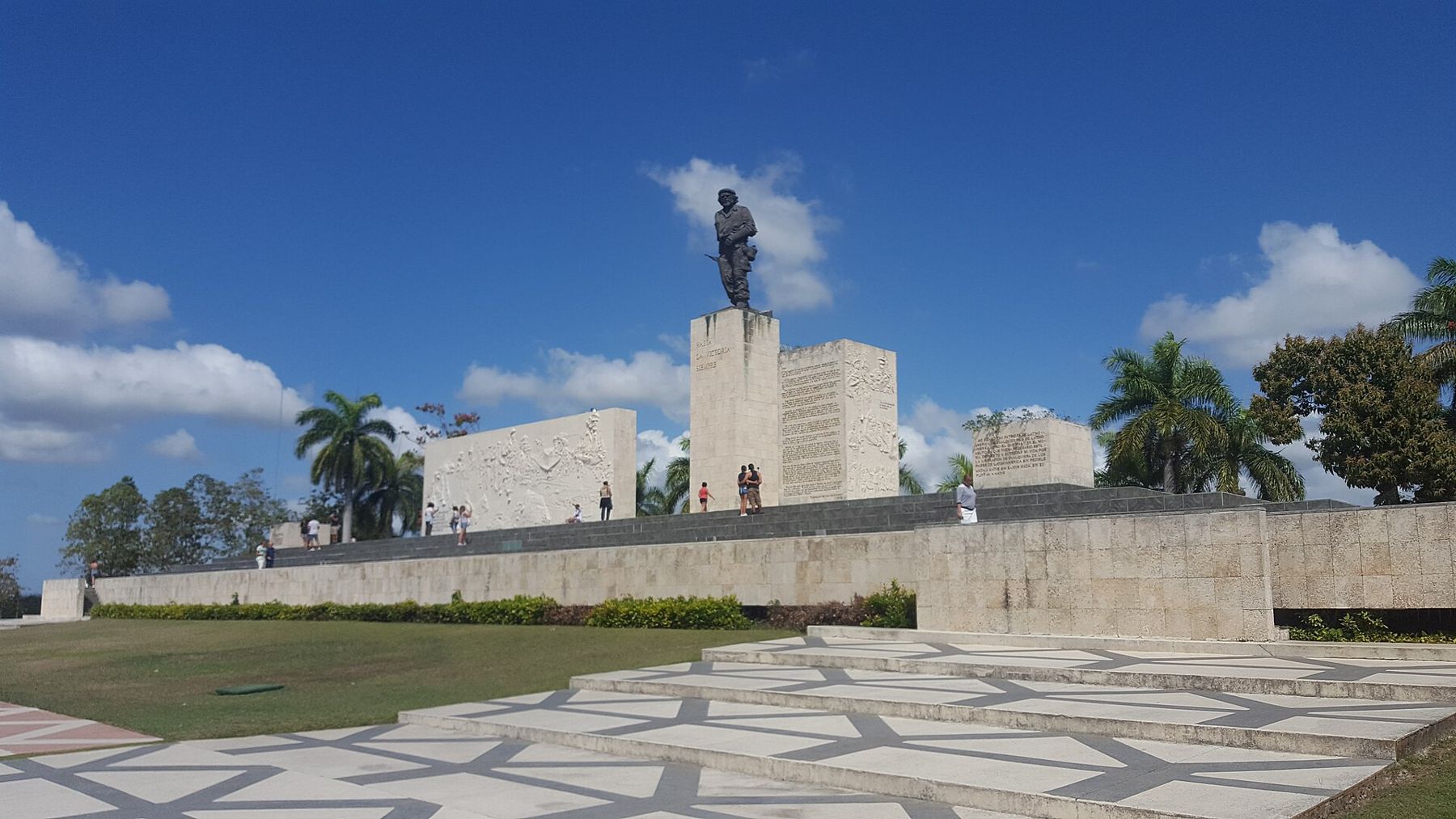
Santa Clara is a busy inland city in the centre of Cuba, with a university, a long colonial history and little of the polish of the coastal towns. Most visitors stop for one reason: it is where the decisive battle of the Cuban Revolution was fought, at the end of December 1958, and where Ernesto "Che" Guevara is buried. The city has built its identity around those facts, and the monuments are worth seeing whatever you think of the man and the events.
It also rewards a night's stay. Away from the memorials, Santa Clara has a lively central park, theatres and a student population that fills the streets in the evening. It sits on the main road between Havana and the east, close to Trinidad and Cienfuegos, so it fits easily into a journey across the island.
The battle of December 1958
By late 1958 the rebel army led by Fidel Castro had held the Sierra Maestra in the east for two years, and columns had moved west into the centre of the island. Guevara, an Argentine doctor who had joined the rebels in Mexico, led one of them. In the last days of December his forces, with other rebel groups, attacked Santa Clara, the most important city in the centre and a key point on the routes to Havana.
The government sent an armoured train loaded with soldiers and weapons to hold the city. On 29 December rebels lifted a section of track with a bulldozer, the train derailed, and after a short fight the soldiers inside surrendered. Fighting went on for several days around the city's barracks, police posts and other strongpoints, and many civilians helped the rebels with barricades and supplies. The city fell at the turn of the year. In the early hours of 1 January 1959 President Fulgencio Batista fled the country, and the revolutionary government took power.
The armoured train monument
The Monumento a la Toma del Tren Blindado stands on the spot where the train came off the rails, near the railway on the east side of the centre. Several of the original wagons lie at angles beside the track, as if just derailed, and the bulldozer used to lift the rails stands on a plinth. Inside some wagons there are photographs, weapons and documents from the battle.
It is a short visit, easily combined with a walk into town. Sculptures and concrete markers around the site recreate the scene. Labels are in Spanish and tell the official story, which is the only version you will find on site. Go in the morning, when the site is quiet and the light falls on the wagons.
The Che Guevara memorial and mausoleum
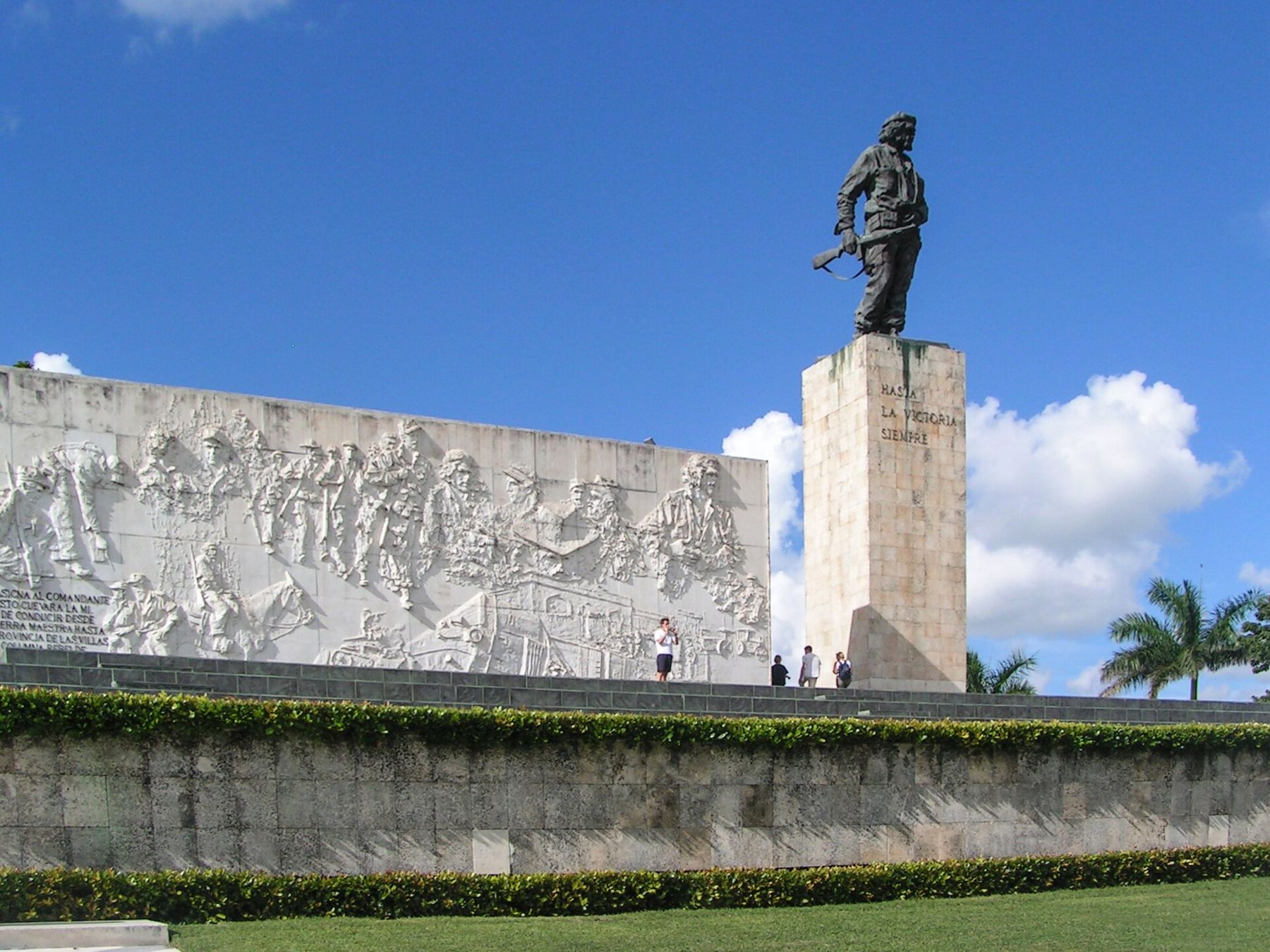
On the western edge of the city, on a vast open square, stands the memorial complex dedicated to Guevara. A tall bronze statue shows him in uniform with a rifle, above the words Hasta la victoria siempre, "Ever onward to victory". Stone walls carved in relief show scenes from his life and from the war, and a long inscription reproduces his farewell letter to Fidel Castro.
i
Photograph by Man-ucommons, CC BY-SA 3.0Guevara left Cuba in the mid-1960s to fight in other countries and was captured and killed in Bolivia in 1967. In 1997 his remains, and those of fellow guerrillas who died there, were found and brought to Santa Clara and placed in the mausoleum beneath the monument. There is also a museum about his life. He remains a revered figure in official Cuba and a divisive one elsewhere, and the memorial is presented as a place of honour, not debate.
 Further along · The eastSantiago de Cuba, the Caribbean city
Behave as you would in any place of mourning: quiet voices, covered shoulders and no photographs where they are not allowed. Bags and cameras usually have to be left outside or in a locker before you go into the mausoleum and museum, and the complex closes on some days of the week. Check before you go, and arrive early to avoid groups.
Parque Vidal and the old centre
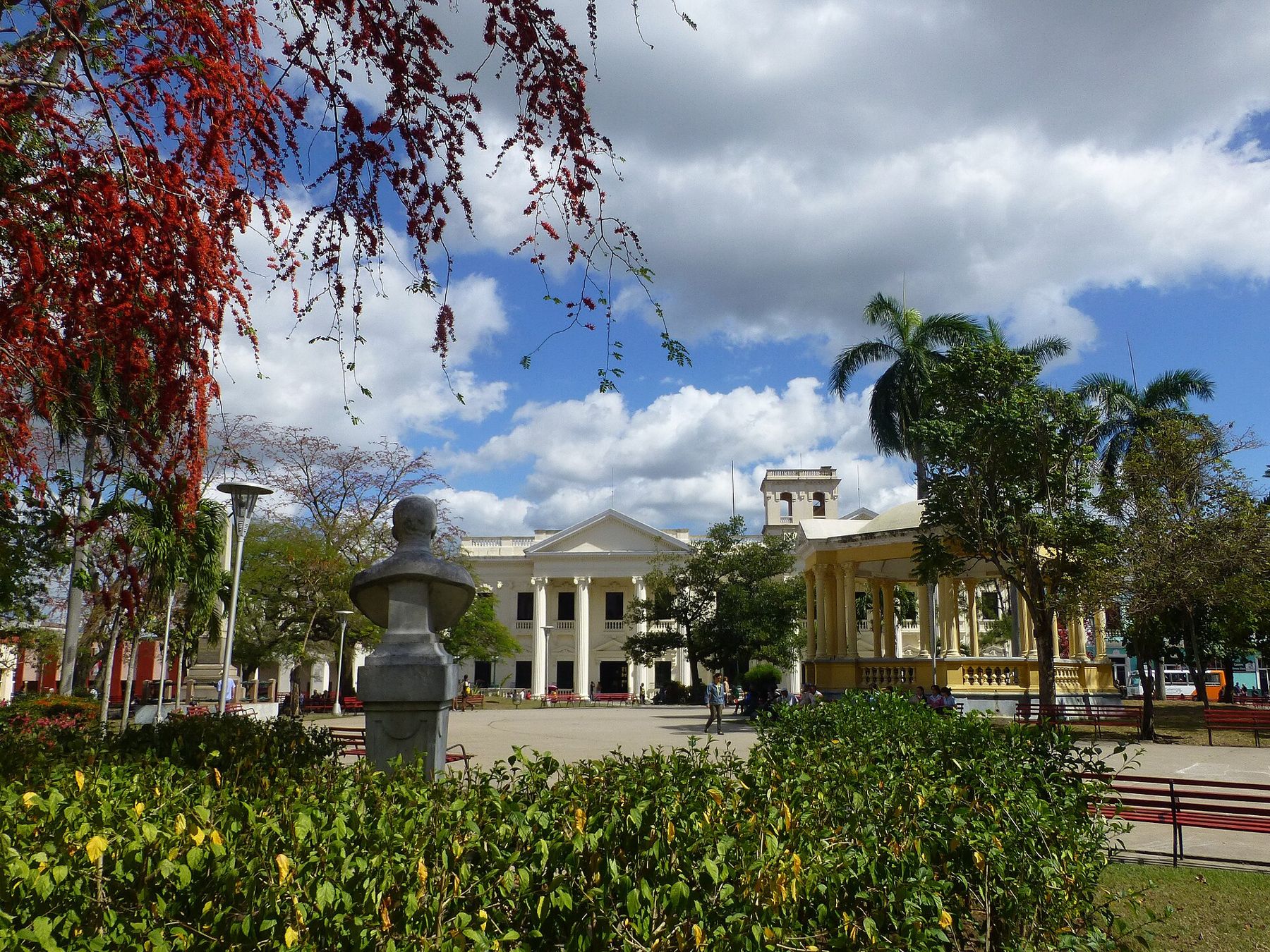
The heart of Santa Clara is Parque Vidal, a large square named after Leoncio Vidal, a colonel in the wars of independence who was killed on this spot in 1896. It has a bandstand, benches, shady trees and a ring of handsome public buildings. In colonial times the square was divided by social class and colour; it is now a place where everybody comes in the evening.
i
Photograph by Ji-Elle, CC BY-SA 4.0On one side stands the Teatro La Caridad, opened in 1885 and paid for by Marta Abreu, a wealthy local woman who funded schools, a theatre and public works and is still remembered as the city's great benefactor. The theatre has a richly painted ceiling and still hosts performances when it is open. The Central University of Las Villas, named after her, is on the edge of town.
A university city's evenings
Because of the university, Santa Clara is young. In the evening, Parque Vidal fills with students, families and couples, and the pedestrian streets around it stay busy late. There are cultural centres with live music, poetry and theatre, and a reputation, unusual in Cuba, for alternative music and an open-minded crowd. Programmes change from week to week, so ask locally or look for posters around the square. Bring a light layer for chilly air-conditioned halls.
A day is enough for the monuments and the centre; a night lets you see the city when it relaxes. Long-distance buses and shared taxis stop here on the way east and west. The guide to getting around the island explains how to plan those legs.