
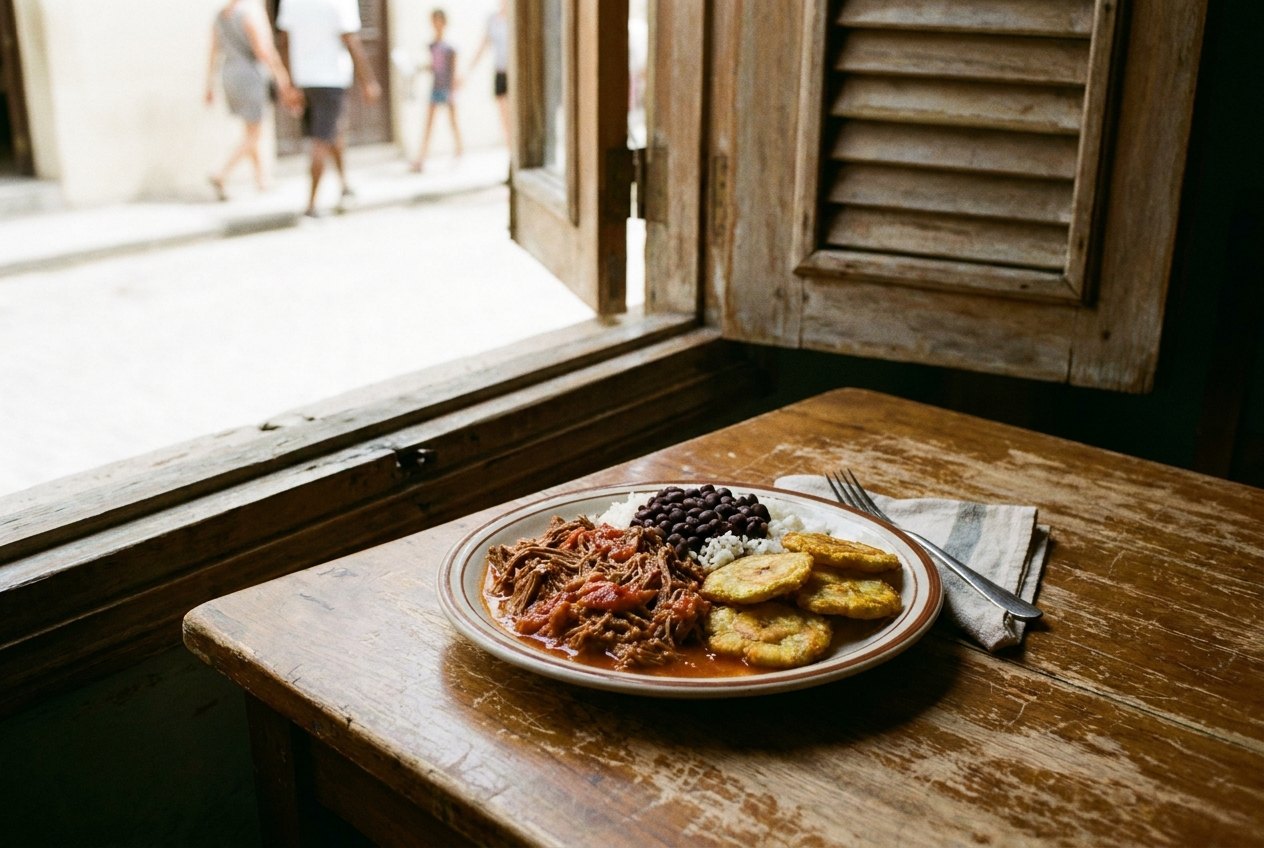
Cuban food is not a cuisine of chefs and restaurants so much as of family kitchens. It grew from Spanish, African and Caribbean roots, shaped by sugar plantations, by what grows in the tropics and, for the last sixty years, by scarcity. The result is simple, filling and often very good: rice and beans, slow-cooked meat, fried plantains and root vegetables seasoned with garlic, onion, cumin and sour orange.
The anthropologist Fernando Ortiz compared Cuban culture to ajiaco, a slow stew of many ingredients that keeps changing as things are added. It is a good way to think about the food, too.
The plate: rice, beans and meat
Rice and beans are the base of most meals. Congrí is rice cooked together with beans, so the grains take on their colour and flavour; depending on the region and the cook it may be made with black or red beans, and in the west a version with black beans is often called moros y cristianos. Alternatively, rice comes white with a bowl of black bean stew on the side.
Ropa vieja, "old clothes", is one of the best-known Cuban dishes: beef cooked slowly until it falls into shreds, then simmered in a sauce of tomato, peppers and onion. Beef has long been scarce and tightly controlled in Cuba, so you will meet it more often in places catering to visitors; pork and chicken are far more common. Lechón asado, whole roast pork, is the dish of celebrations, above all on Christmas Eve, and pork in many forms, roast, fried or as crackling, appears at most family meals.
i
Photograph by Arnoud Joris Maaswinkel, CC BY-SA 4.0Yuca, plantains and the vegetables
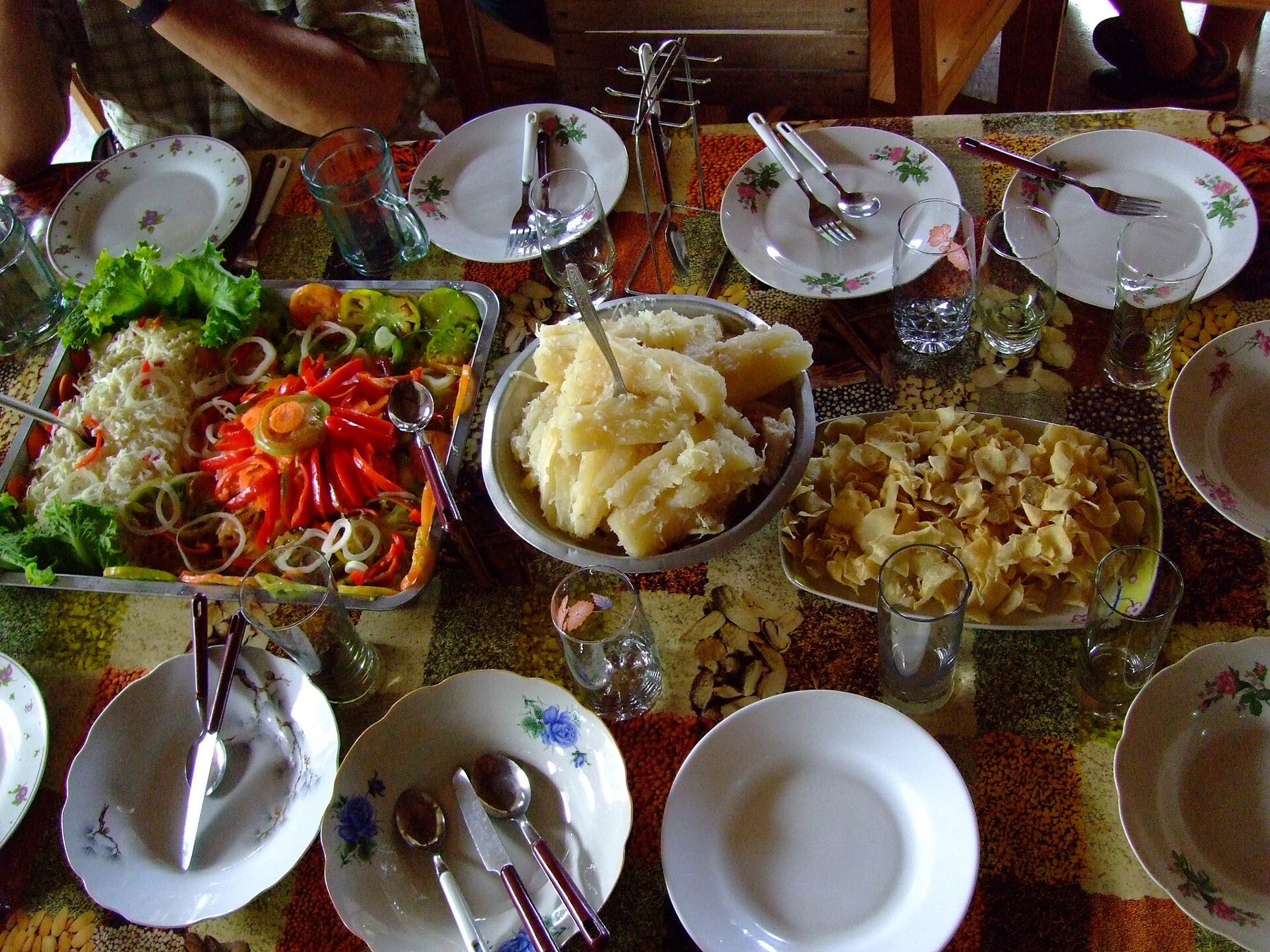
Root vegetables are the other pillar. Yuca, cassava, is boiled until soft and served with mojo, a sauce of garlic, oil and sour orange or lime poured over hot. Malanga, sweet potato and pumpkin turn up in soups and stews. Plantains come in two main ways: green plantains sliced, fried, flattened and fried again into tostones, crisp and salty; or ripe plantains fried until sweet and soft.
Vegetarians can eat well on rice, beans, eggs, salads and root vegetables, but should say so clearly, as meat stock and lard are common in Cuban cooking. Salads are usually simple: sliced tomato, cucumber, cabbage and avocado in season. Fresh fish and seafood are common on the coast, though lobster and some fish are controlled by the state. In Baracoa the cooking uses coconut milk, giving dishes you will not find elsewhere on the island.
 Further along · The craftMoney, cards and the internet in Cuba
Guarapo, juices and coffee
On streets and roadsides in cane country you may find guarapo, juice pressed from fresh sugarcane through a mechanical press, served cold and very sweet, sometimes with lime. Fresh fruit juices and milkshakes, of mango, guava, papaya, called fruta bomba in Cuba, or mamey, are common too, depending on season.
Coffee is a ritual. Cuban coffee is short, very strong and served already sweetened in small cups, often after meals or offered to guests. A cortadito is the same with a little milk. Coffee is grown in the mountains of the east, and the old French estates are part of the story told in El Cobre and the Gran Piedra. The coffee sold on the ration book to Cuban families has long been mixed with other roasted grains to stretch it, so the coffee you drink as a visitor may taste different from what most Cubans drink at home.
Paladares and family tables
Private restaurants, known as paladares, have been legal since the 1990s, and they have multiplied in recent years. Many are family-run, in houses and on rooftops, and the best of them serve the most interesting food in the country. Many guesthouses also cook breakfast and dinner for their guests, often generously. State restaurants still exist, but service and supplies are generally weaker. Breakfast in guesthouses is usually generous: fresh fruit, eggs, bread, juice and coffee.
Street food is cheap and filling: sandwiches of ham and cheese or roast pork, soft-based pizzas, fried snacks and roasted peanuts sold in paper cones. It is sold from windows and doorways, priced in pesos, and it is what many Cubans eat on the go. Desserts lean sweet and simple: flan, rice pudding, guava paste with white cheese, and ice cream, something of a national passion.
The best way to choose is to ask the people you are staying with, or other travellers, rather than following people who approach you on the street, who may earn a commission. Check prices and the currency before you order, as menus do not always show them clearly.
Shortages and what they mean for you
Cuba has been through serious shortages of food, fuel and power, especially since the economic crises of recent years. Ordinary Cubans still rely partly on the ration book, introduced in the early 1960s, for basic goods, and on markets, private sellers and money sent by relatives abroad. Menus often list dishes that are not available that day, and power cuts can affect what a kitchen can cook.
As a visitor you will rarely go hungry, but it helps to be flexible and gracious. Ask what is available rather than insisting on a dish. Drink bottled or treated water, not tap water, and be cautious with ice from unknown sources. Tipping is customary in restaurants and for guides and drivers; how much is expected varies, so ask your hosts what is normal now. For the bigger picture of moving through the island, see getting around the island.